
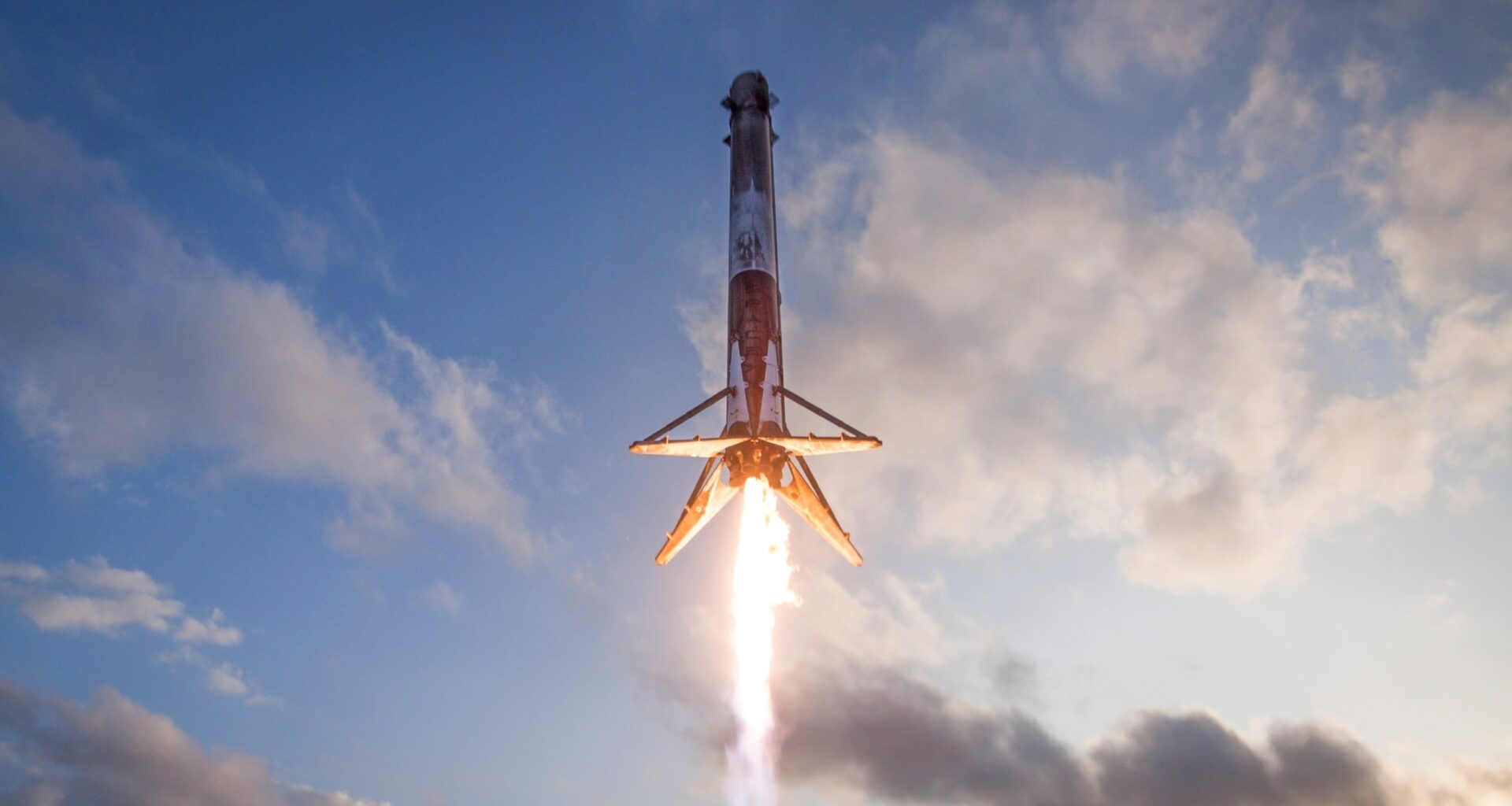
Getting something into space has always been incredibly expensive. Every extra pound of equipment has come with a huge price tag, limiting who could launch missions and what they could accomplish.
That reality may be changing much faster than many people expected.

New research suggests the cost of reaching orbit is on track for a dramatic drop over the next 15 years.
If those forecasts prove accurate, space could become a place where businesses build products, researchers run experiments, and entirely new industries take shape.
Space would not be limited to governments and a handful of major companies.
A rapid drop in launch costs
The researchers found that sending one kilogram of payload into low Earth orbit cost an average of $3,868 in 2025.
That figure is expected to fall by more than 58% to $1,569 by 2030. By 2040, it could drop to just $273 per kilogram.
To reach those estimates, researchers examined the largest global database of rocket launches assembled so far.
The database covers more than 4,400 launches between 1960 and 2025 and tracks how launch prices have changed over time.
The researchers also found that the cost of reaching orbit has fallen about 96% since 1960.
Why economists are paying attention
The research was led by Dr. Alessio Terzi of Cambridge’s Bennett School of Public Policy and Dr. Francesco Nicoli from the Politecnico Institute of Turin.
“Space is no longer a science-fiction fantasy or a purely scientific pursuit, it is becoming a marketplace,” said Dr. Terzi.
“As launch costs fall and commercial activity expands, we are entering an era where spacefaring is like any other economy, driven by incentives, trade and investment, and economists should be paying more attention.”
The idea is simple. Lower transportation costs usually make it easier for new businesses to grow.
Railroads, container shipping, and commercial aviation all expanded markets by making transportation cheaper. Space could follow a similar path.
Growth is already speeding up
Since 2020, the space industry has seen rapid development.
This is mainly due to the increasing demand for satellite launches for purposes such as communications, navigation, weather forecasts, and Earth observations.
The payload sent into orbit has seen an annual increase of 31% since 2020. The average annual growth from 2000 to 2019 was just 4%.
Approximately 4,900 tons were launched into orbit in 2025. The authors predict that the annual capacity of sending payloads could be 9,100 tons by 2030.
In 2024, the value of the space industry exceeded $600 billion dollars, which is approximately equal to the entire economy of Sweden.
“SpaceX alone could achieve this with eighty flights of its new superheavy rocket Starship, which will be fully reusable,” said Terzi.
He thinks the figure could hit 32,000 tons a year by 2040.
Space launch costs keep dropping
The researchers discovered a clear pattern. Every time the total amount of payload launched into space doubled, the average cost of sending one kilogram into orbit fell by 21.2%.
They compared that trend with the rise of steamships during the 1800s. As global trade expanded, steamship freight costs dropped by about 15.5% each time cargo volumes doubled.
“The cost of space launch technology is now falling faster than during one of history’s greatest transport revolutions,” said Terzi.
“Steamships cut costs through explosive growth in global trade. Space technology, by contrast, has achieved even steeper declines at a far smaller scale.”
“This suggests there is plenty of scope for further cost reductions and the industry may now be on the cusp of a comparable economic boom.”
Cheaper access to space
According up the study, launch costs fell more than two-and-a-half times faster after the Berlin Wall came down in 1989 than during the Cold War years.
“State-led competition during the Cold War did not foster cost efficiency on the same scale as the ensuing era of international space cooperation and private sector involvement,” said Nicoli.
Lower launch costs could support activities that are difficult or too expensive today.
Scientists have long been interested in using the weightless environment of space to grow crystals, manufacture advanced fiber-optic cables, and study how living tissues develop.
Companies are also exploring ways to produce medicines and even 3D-bioprinted organs in orbit.
New possibilities will open up
Researchers also note that traveling farther into space is different from traveling across Earth.
Escaping Earth’s gravity requires enormous amounts of energy, but once a spacecraft reaches orbit, moving to destinations such as the Moon or Mars requires much smaller increases in energy than many people assume.
“Rapidly falling launch costs could open the way to space colonization and commercial activity far beyond low Earth orbit,” said Terzi.
“Ever cheaper launch costs could open up possibilities around solar power production in orbit, asteroid mining, and a self-sustaining economy producing fuel, food, and infrastructure in orbit or on the Moon.”
“Major polluting industries currently devastating the biosphere could even be offshored to sit outside the Earth’s atmosphere.”
One challenge could slow the trend
The researchers also warn that lower costs are not guaranteed forever.
Today, SpaceX carries roughly 80% of all payload sent into orbit worldwide each year.
The study argues that if one company gains too much control over launch services, or if geopolitical tensions push countries to rely only on their own launch systems, competition could weaken and prices could stop falling as quickly.
For now, though, the long-term pattern points in one direction.
Reaching space is becoming less expensive at a pace rarely seen in the history of transportation, opening the door to economic activity that once existed only in long-term plans and science fiction.
The full study was published in the journal PNAS Nexus.
—–
Like what you read? Subscribe to our newsletter for engaging articles, exclusive content, and the latest updates.
Check us out on EarthSnap, a free app brought to you by Eric Ralls and Earth.com.
—–