

Experts explain what to do if you encounter an animal in the wild
Viyoohan Sayooran’s favourite wild animal is a coyote.
That’s because he thinks “they’re really cool,” and because they pop up most often on a wildlife app he created.
The eight-year-old from Markham, Ontario, saw the opportunity to create his own app, Urban Wild Watch, after hearing about wild animal encounters on the news and from his parents.
Human-wildlife encounters can be trouble for both humans and animals.
Recent headlines have highlighted the dangers when animals and humans get too close.
As human populations continue to grow, these incidents become more common.
That’s why experts say this app can be useful for people wanting to remain aware, safe and respectful of wildlife.
Recent incidents
There have been recent incidents in the news involving human-wildlife encounters.
Although tragic encounters with wild animals are rare, experts say they can happen.
On July 5, a two-year-old child was bitten by a coyote in Whitby, Ontario, and was taken to hospital with non-life-threatening injuries.
In June, a woman walking her dog in Kananaskis Country, Alberta, was approached by an aggressive grizzly bear.
She filmed the incident and left untouched after yelling and scaring the bear away.
And on July 15, a couple from Regina, Saskatchewan, were killed after a bear encounter near Lake McTavish.
Viyoohan’s story
Viyoohan saw recent animal encounters in his area as a problem that technology could solve.
He wanted to keep people safe while making sure animals remained protected.
He cracked open his laptop and prompted artificial intelligence to help him make an app.
In a process known as vibe coding, Viyoohan made the app and tested it over a few days.
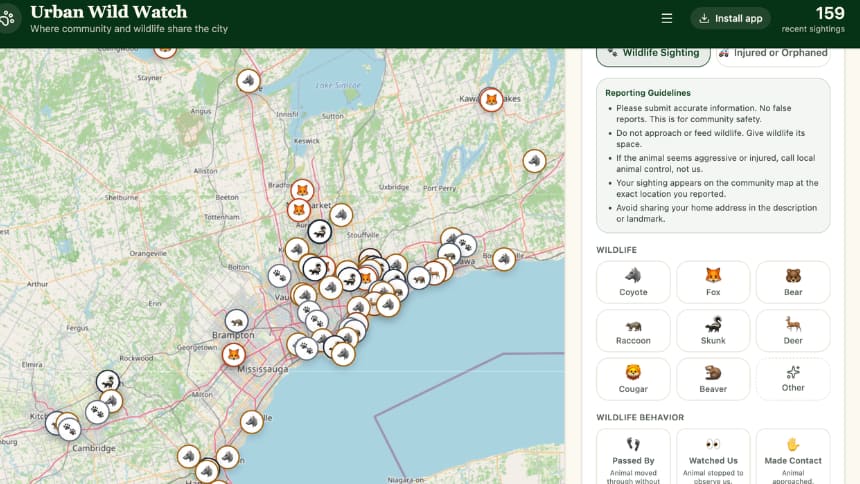
Here’s what the application looks like on a computer. You can report seeing various animals in the wild and what the encounter involved. Specifically, there are prompts if you see an injured or orphaned animal and whom to call to safely report the incident. (Image credit: Urban Wild Watch)
He prompted AI with words, making the process simpler than coding the entire app.
Viyoohan said he likes to use AI to solve problems that people are facing.
The result of this work was an app (available on phone and desktop) that has been used to register more than 158 wildlife encounters across Canada and the United States.
It launched on June 5.
For safety, the app doesn’t show the exact location of the animal in order to protect it.
Instead, it does show the general area and time it was spotted to allow people to be more aware.
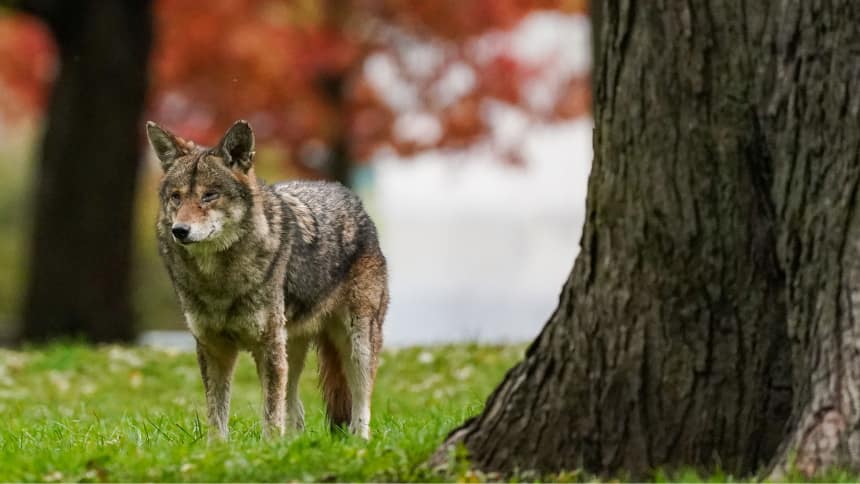
A coyote photographed in Toronto, Ontario, in 2021. (Image credit: Evan Buhler/The Canadian Press)
Viyoohan is proud that his app has connected humans across the country with the idea of living peacefully and safely alongside animals.
“We have to coexist together,” he said, otherwise these animals “might be erased from our world.”
Keep your distance from wild animals, say experts
Colleen St. Clair is a professor of wildlife sciences at the University of Alberta in Edmonton.
She studies animal behaviour — how animals change and adapt to life around them.
She said as human populations continue to grow and expand into areas that were once wild, animals are learning from us.
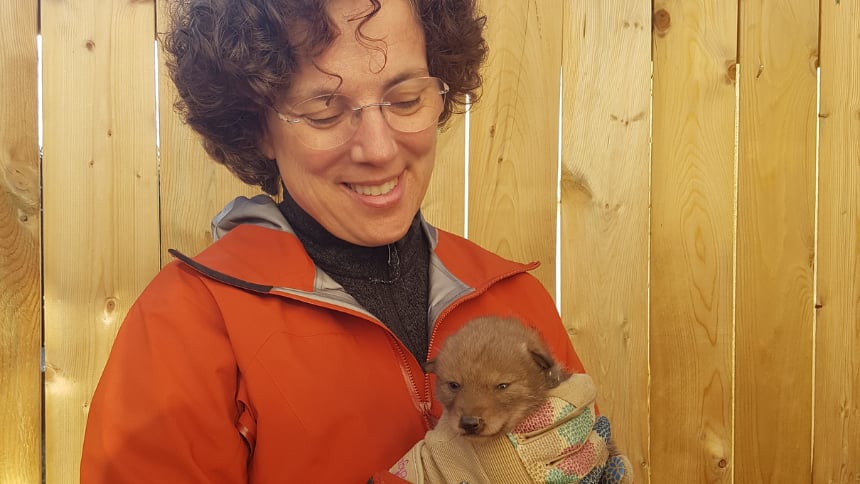
Colleen St. Clair, pictured here with a baby coyote, has been studying and working with wild animals for more than 28 years. (Image submitted by Colleen St. Clair)
So what can we do to keep coexisting?
St. Clair wants humans to consider what they are teaching a wild animal with their behaviour.
For example, if you let a wild animal get close, provide it shelter, food and other resources, even unintentionally, you’re teaching animals not to be afraid of people and to come closer.
That’s where the potential danger happens.
“We need to be teaching coyotes [and other animals] that humans aren’t safe, they aren’t predictable and they never give us food, so we might as well keep our distance.”
Leonardo Cabrera is an ecologist and team lead at Rogue National Park in Markham, Ontario, agrees.
He keeps Canada’s first national urban park safe for all its residents, furry and not.
He encourages people to get out and explore nature while keeping in mind the 3 Rs — respecting the environment and animals by giving space, being responsible for following rules and, when necessary, reporting animal behaviour you see to local wildlife authorities.
Both St. Clair and Cabrera congratulate Viyoohan on his app and the awareness he is creating for coexistence with wild animals. But Cabrera also wants to see the observations reported to proper authorities.
Specifically, to keep all animals safe, he said to report what you see to park officials, the Ministry of Natural Resources and local animal services who can manage the information on internal maps and use the data responsibly for research.
.png)
The Urban Wild Watch has safety features like emergency numbers to call if physical contact with a wild animal is reported. (Image credit: Urban Wild Watch)
Tips to stay safe when you encounter wildlife
Both St. Clair and Cabrera shared their top tips for coexisting with wild animals.
1. Never feed wild animals or leave food out for them
Unsecured compost, fallen fruit, outdoor pet food or spilled birdseed all attract wild animals to come closer to humans and provide food for them to survive. This creates a dangerous chain reaction. Animals get too comfortable in an area. Wild animals can also carry parasites in their poop or ticks on their bodies, which can spread to humans.
2. Do your research on the area or trail you are going to explore
Pay attention to where you are going. When out in nature, unplug your headphones, get your eyes off your phone and be aware of your surroundings. And always keep your dogs on a leash because they can scare and disturb animals in the wild.
3. Travel in groups and make noise
Don’t be afraid to use a big voice in nature. Shake your keychain or a bell to let animals know you’re coming. Cabrera says this is the best way to avoid surprising an animal in the wild.
4. If you run into wild animals — don’t run
Stay calm. Carry bear spray and don’t be afraid to use it. When you run from animals, it triggers a biological switch in their brain that tells them you’re prey. Stand your ground and act big.
Have more questions? Want to tell us how we’re doing? Use the “send us feedback” link below. ⬇️⬇️⬇️
TOP IMAGE CREDIT: Submitted by Viyoohan Sayooran