
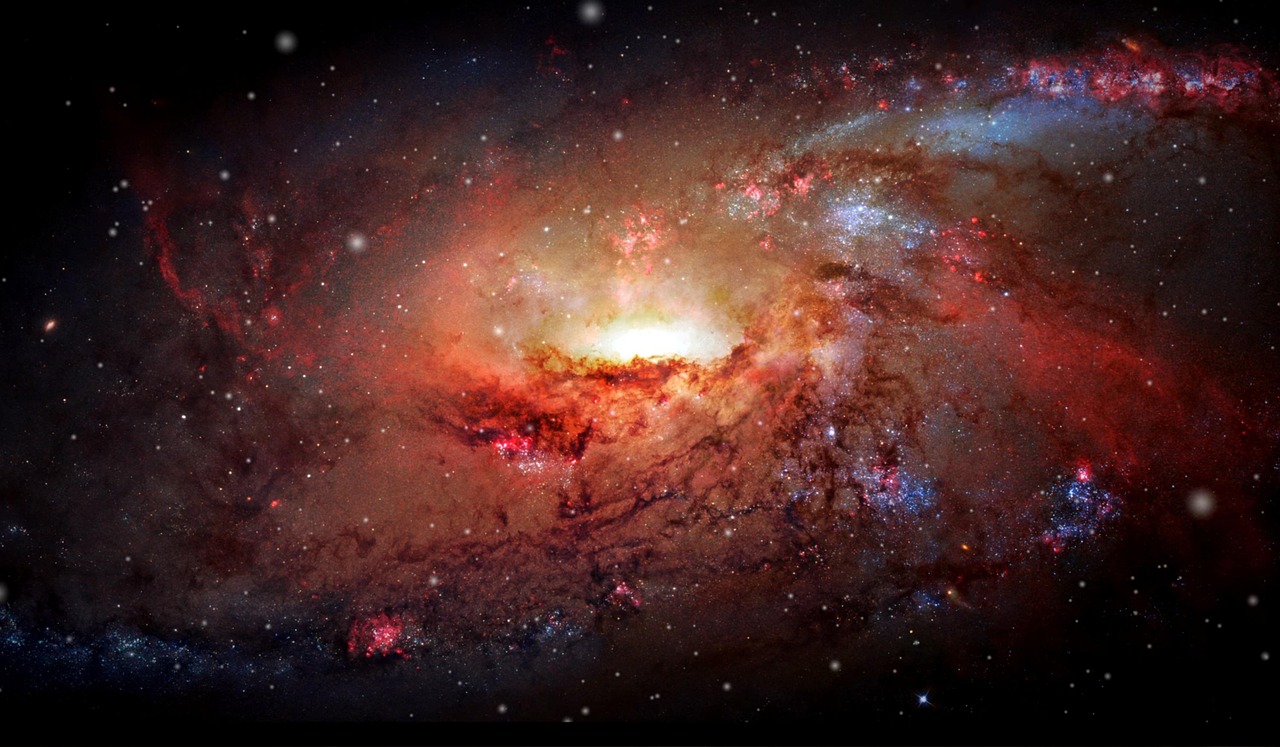
Within the framework of a Chinese–Hungarian research project, scientists have proven the presence of a hidden black hole in a system formed by the collision of three galaxies. The team used archival data from radio telescope networks spanning multiple continents, announced the HUN-REN CSFK Konkoly Thege Miklós Astronomical Institute on Monday.
Galaxy collisions are among the most spectacular events in the Universe: during these events, not only are the orbits of billions of stars rearranged, but the supermassive black holes hidden at the centers of galaxies can also interact with one another.
Systems in which the merger of three galaxies can be observed simultaneously are relatively rare.
A Chinese–Hungarian research team led by doctoral student Xu Wancheng studied the rare UGC 2369S galaxy system. Xu Wancheng is from the Chinese Academy of Sciences’ Xinjiang Astronomical Observatory and is currently spending a one-year scholarship period at the HUN-REN CSFK Konkoly Thege Miklós Astronomical Institute. The researchers found direct evidence of an active black hole hidden in one of the system’s nuclei, which is consuming matter from its surroundings.
The UGC 2369S system is located relatively close to Earth on a cosmic scale, at a distance of 450 million light-years. It is rich in interstellar dust and gas, making observations in visible light difficult. For this reason, the researchers examined the system in the radio wavelength range and used the technique of very long baseline interferometry (VLBI).
This observational method is based on measurements taken by coordinated radio telescopes located far apart from one another, potentially spread across the entire Earth.
By analyzing archival observations from the European VLBI Network (EVN) and the American Very Long Baseline Array (VLBA), the researchers were able to map the galaxy’s center with milliarcsecond-level resolution. Like many astronomical observatories, radio telescope networks have archives filled with valuable older data that is now publicly available, but which the original observers did not process or publish for various reasons.
Related article
Most Ambitious Sky Survey Ever Begins with Hungarian Scientists on the Team
By the mid-2030s, the project is expected to deliver the most complete inventory of our Solar System ever assembled.Continue reading
Measurements carried out decades ago — in 1996 and 2003, across three separate observing sessions and in two different frequency bands — revealed an extremely compact radio source. Its properties clearly indicate that the observed radio emission does not come from widespread star formation, but rather from an active galactic nucleus approximately ten light-years in size.
The most interesting result is that this active galactic nucleus, despite having relatively low power, produces relativistic plasma outflows (jets).
The black hole is surrounded by an extremely dense envelope of gas and dust that almost completely hides it from traditional optical astronomical observations.
However, radio waves can pass through this material unhindered, allowing the VLBI technique to directly identify the hidden central nucleus. The data also suggest that the black hole is currently consuming matter from its surroundings at a relatively modest rate, while its radio-emitting plasma jets return significant amounts of energy to the surrounding galactic environment.
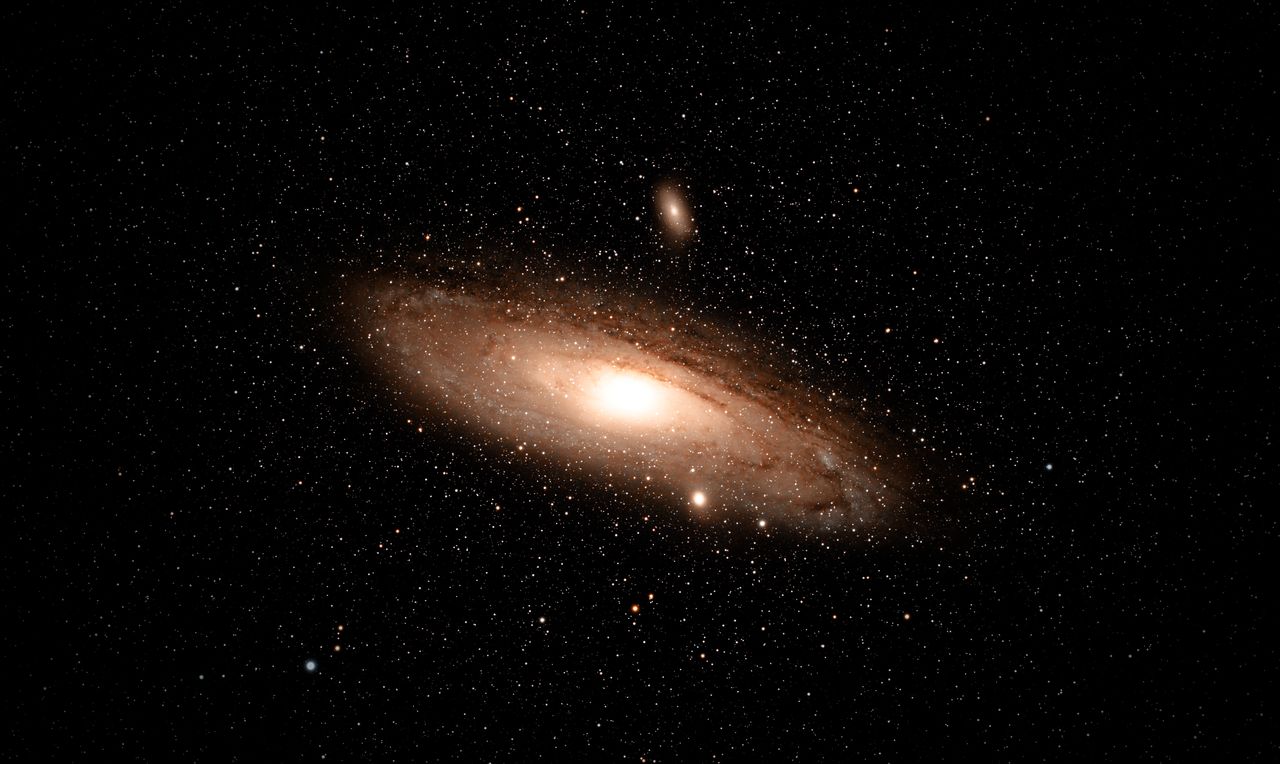
Photo: Pixabay
These findings extend beyond the history of a single galaxy.
The merging of galaxies is one of the fundamental processes shaping the evolution of the Universe,
influencing both the growth of supermassive black holes and the development of star formation within galaxies.
The example of UGC 2369S demonstrates that active galactic nuclei can exist even deep inside the densest clouds of dust, remaining almost completely invisible to conventional observations. VLBI measurements represent one of the most effective tools for finding hidden black holes that produce powerful jets.
The study reporting these results has been accepted for publication in the prestigious journal Astronomy & Astrophysics.
Related article
Tracing Dark Energy: Researchers Map Hundreds of Millions of Galaxies
The methods developed during the experiment will serve as direct models for major upcoming sky surveys in the coming years.Continue reading
Via MTI, Featured image: Pixabay (illustration)