
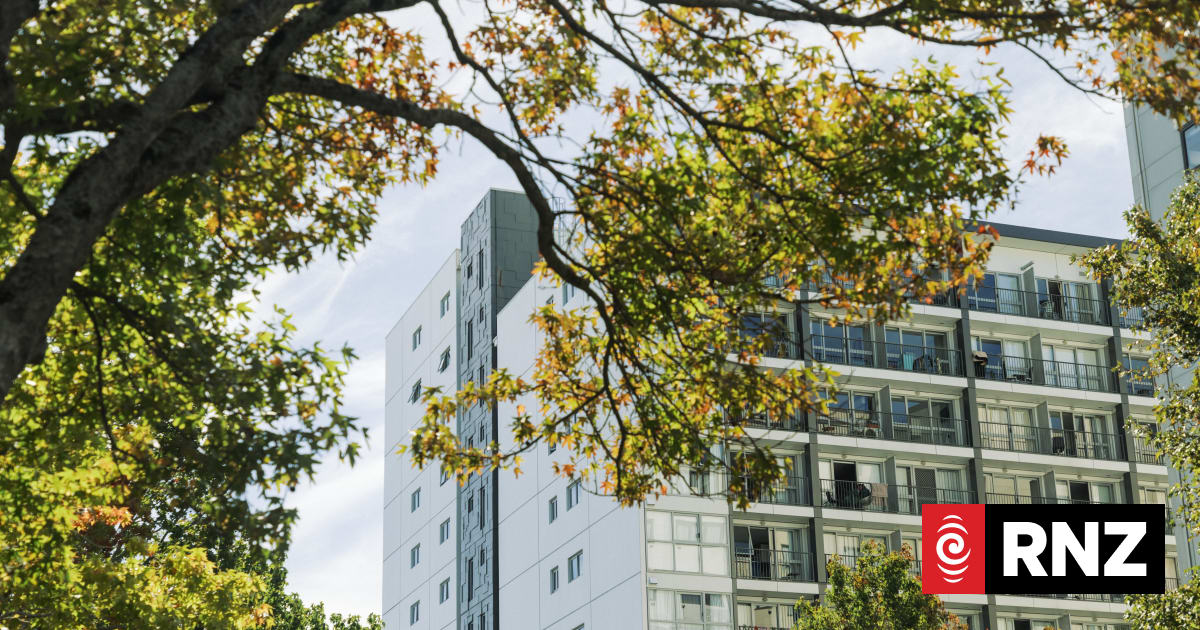
Council approves major housing intensification plan
Morning Report
*This story has been updated to clarify the public will have a chance to have their say on Plan Change 120 in the coming months.
In an act of compromise pretty much no-one is completely happy with, Auckland councillors voted in favour of allowing buildings of up to 15 storeys near transport hubs in central suburbs, and up to six storeys outside a 10-kilometre radius of the CBD.
Plan Change 120 has for five years incited passionate debate about the future of Auckland’s skyline, eliciting over 10,000 submissions to local boards and iwi authorities across the city.
On Tuesday, the plan at last got sign off, meaning taller buildings would be allowed within walking distance from transport hubs, the CBD and other metropolitan centres.
Buildings up to 15 storeys high could go up in inner-Auckland suburbs like Kingsland, Mt Eden and Morningside.
Opponents decried what taller buildings would mean for their suburbs and the loss of protections for some 500 special character homes. Supporters of intensification said it was essential for growth and to house the city’s spiralling population.
The plan councillors eventually voted on was a combination of two options sent out for public consultation – one which offered more intensification, the other less.
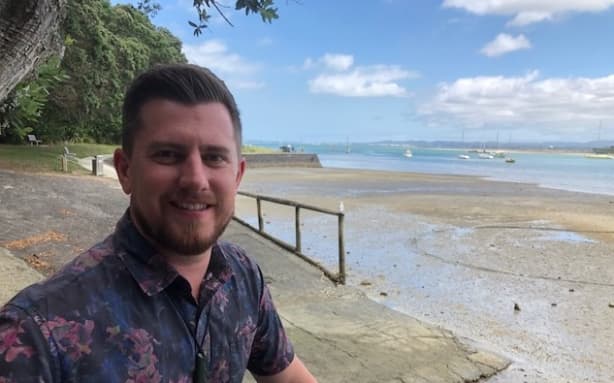
Councillor Richard Hills.
RNZ / Alexia Russell
Richard Hills chaired Tuesday’s extraordinary meeting of the Policy, Planning and Development Committee.
“I hope that we move forward to the compromise position. Do I support everything in here? No. But do any of us support anything perfectly, 100 percent ever? No we can’t, it’s like the budget,” he said.
The plan was a response to a government requirement for the council to allow for more than 1.4 million homes to be built in Auckland.
Councillor Mike Lee tabled an amendment to pause the “extremely unpopular” proposal until after November’s general election.
“This plan is very much the personal creature of the Minister for Housing,” he said.
“Pause this right now and put people out of their agony because a lot of people are extremely adversely affected.”
The amendment failed, as did another by councillor John Gillon seeking to reduce the extent of intensification.

Councillor John Gillon.
Supplied / Auckland Council
Waitakere councillor Shane Henderson supported the hybrid plan but would have preferred if it went further.
He said he did not understand why so much energy was expended trying to slow down growth through intensification.
“We talked about harbour views earlier. Harbour views, I think, to the exclusive enjoyment of those wealthy enough and lucky enough to have been born at the right time.”
The plan also had the support of Mayor Wayne Brown.
“Eighty-five percent of Aucklanders aren’t affected and we are making the most of where we have sunk a lot of cash into public transport,” he said.
“It seems unbelievably sensible.”
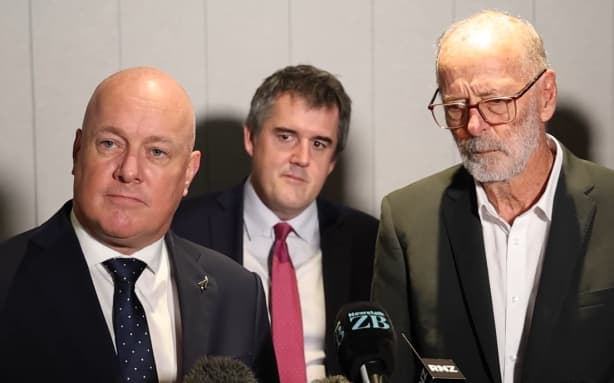
From left: Christopher Luxon, Chris Bishop and Wayne Brown in April 2026.
RNZ
Councillor Daniel Newman pointed the finger at the government for the policy taking so long.
“I can assure people in this room that I am no vassal of the Minister of Housing, Minister for RMA Reform, Minister of Transport, Chris Bishop. This process obviously has been a shambolic process and it does start with that minister.”
Plan Change 120 includes provisions for down-zoning in areas predicted to be hardest hit by flooding, based on new rainfall data.
Councillors voted in favour of the plan by 17 to five.
Outside of the council chamber, Sally Hughes of the Character Coalition said the group was “deeply disappointed” that councillors did not address its concerns.
“This new hybrid does provide some relief from intensification in areas outside of the 10km circle that the council invented, but they haven’t provided any relief for some of those inner suburbs that will really suffer from 15 storey buildings being able to be built on one side of the road when there are special character houses on the other side of the road. That’s how crazy the plan is.”
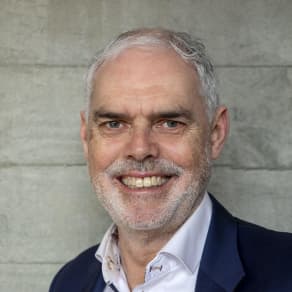
Patrick Reynolds.
Supplied / City Vision
However, Patrick Reynolds from Greater Auckland said upzoning around these rapid transport stations in the inner suburbs was critical.
“I think there is a condition that I call ‘height fright’ that is extremely endemic. It’s almost like the only thing that people can picture about the future being different is taller buildings, so they focus on that.
“The much more important thing to focus on is the quality of the design of the building and the places between them, whatever height they are.”
The public will have a chance to have their say in the coming months when submissions open for Plan Change 120.