
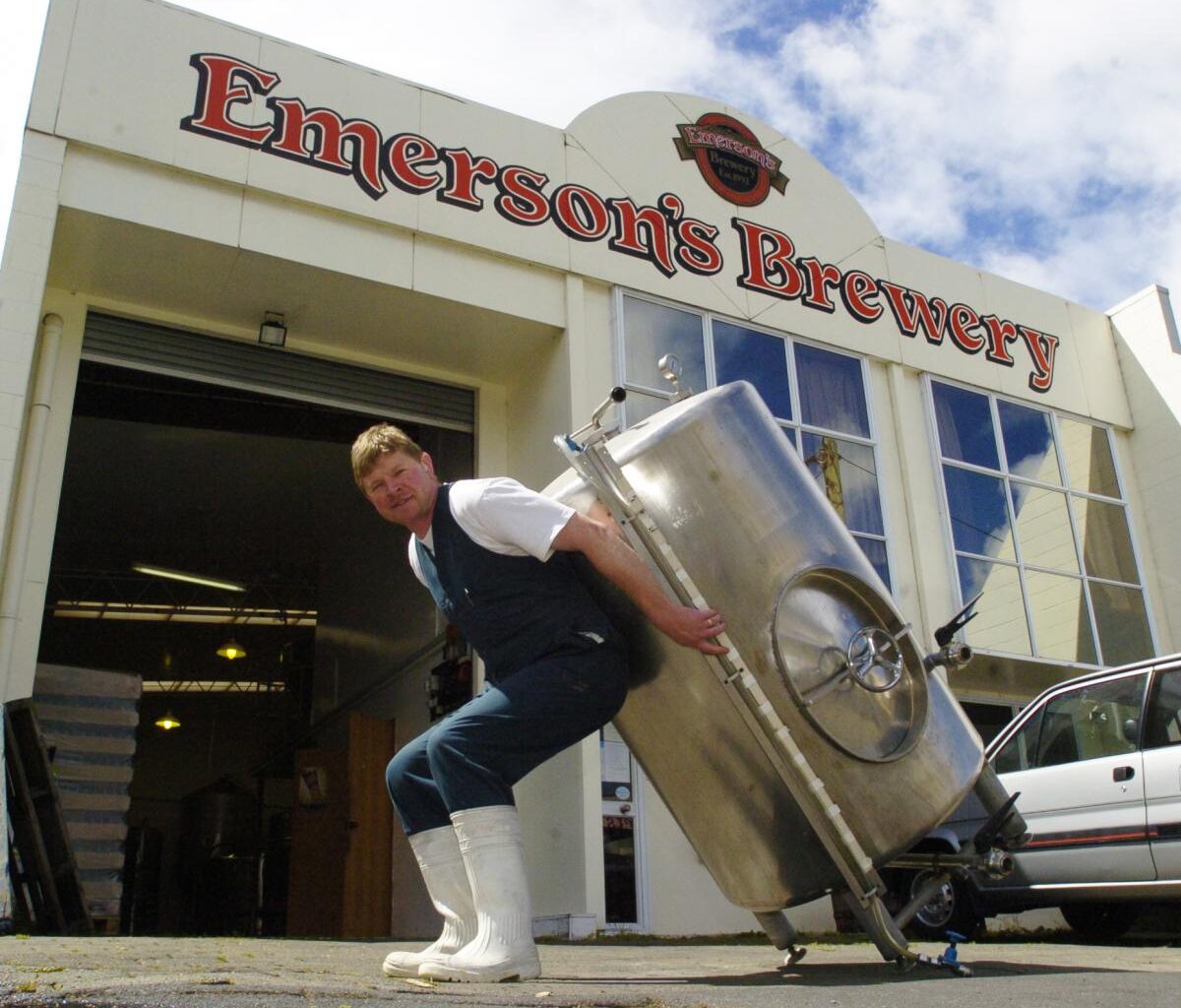
New Zealand’s brewing community will descend on Dunedin this weekend to celebrate the Brewers Guild of New Zealand’s 20th anniversary and award the country’s top beers. Rebecca Fox discovers its Dunedin connection.
On November 21, 2006, Richard Emerson, from his Dunedin brewery, sent off the papers to create the Brewers’ Guild of New Zealand.
He and 15 others from the country’s burgeoning craft brewing industry, who were passionate about their work, had come together deciding they needed an organisation to promote their views.
They registered the ‘‘guild’’ as an incorporated society with the aim of growing and protecting New Zealand’s brewing industry.
‘‘It is fantastic that the NZ Brewers Guild is honouring the origin of the guild founding in Dunedin and to host the beer awards here,’’ Emerson says.
It also means a lot to Emerson’s Brewery as there are very few breweries remaining where the original founders are still present, he says.
Back in the early 2000s the craft brewers wanted to be able to vote on industry matters without being dominated by the larger breweries.
‘‘Therefore we developed the guild mantra as ‘one Brewery — one vote’ regardless of size. We are a passionate lot, wanting to offer, as well as educate, the public about the various beer styles and why we love those beer styles.’’
Fellow guild founder Ralph Bungard, founder and former owner of Christchurch’s Three Boys Brewery, says it was an important move as the industry was growing really fast at that time.
‘‘It was an exciting time with people’s flavours changing and their demand changing.’’
The regulations around brewing and the alcohol industry meant they were able to provide support for smaller businesses that would otherwise struggle with the complexity of the industry.
They also saw it as an opportunity to create a more positive voice in the alcohol industry in the debate around social harm.
‘‘The different approach that craft breweries had, higher price, lower volumes, drinking for the flavour rather than simply to get intoxicated, that kind of thing. So, giving a voice to those parts of what the alcohol industry is as well, the good parts.’’
Emerson says creating the guild also meant they could host beer awards and festivals as a means of reaching out to the public.
‘‘It is always good to see festival visitors enjoy tasting the brewers’ beers and talking with the brewing teams.’’
Those sort of events have gone a long way to helping New Zealanders embrace the various new beer styles and appreciate the variety that the mainstream beers of the day lacked at the time, he says.
‘‘Those days the mainstream beers mostly consisted of lagers, draughts and the occasional dark ale.’’
Bungard says the craft brewers drove massive change in the industry.
‘‘When you think about it, there was no real pressure on the larger companies, multinationals, to change what they were doing in the market.’’
Due to the rise in the craft beer industry modern day Kiwi drinkers are able to enjoy India pale ales (IPA), porters, Pilsners, hazy pale ales to mention but a few.
‘‘Just look around in the supermarket shelves and you’ll see beer styles that you never thought existed only 20 years ago,’’ Emerson says.
The popularity of craft beer soon came to the attention of mainstream breweries who started buying craft breweries with the purpose of capturing some of that market.
‘‘The public now is far more more aware of craft beers than ever before.’’
But changes have also happened within the craft beer industry itself.
‘‘As we saw a move towards craft beer, brewers felt emboldened to let the creative juices flow and make beers that were unheard of.
‘‘Chilli beers, chocolate beers, sour beers, wheat beers . . . you name the ingredient or the style and you’ll find that someone has attempted that. Sometimes with more success than others.’’
It also pushed passionate home brewers into experimenting and many, if not all the craft breweries in New Zealand, started out in someone’s garage or kitchen, he says.
There has also been a move towards making low and 0% alcohol beers, and trying to appease the more health conscious beer drinkers by making low carb beers.
‘‘While this movement started by the big breweries, the craft beer industry has followed in its footsteps, but with more flavour.’’
Bungard describes the changes in the industry over the past 20 years as being ‘‘back to the future’’.
‘‘Because we went from having hundreds, literally hundreds of breweries in New Zealand in the early parts of the 19th century, where every town had a brewery. So there was that kind of number of probably 300 or 150 breweries in New Zealand. And then by the late 1970s, we were down to two breweries. Now there has been a massive turnaround and we’re back up again.’’
Emerson says people’s attitude to drinking has also changed in that time.
‘‘Over the years I have noticed that people who enjoy craft beers are less likely to overdo it. While that is just my personal ‘pint of view’, I firmly believe there is a move among people over the age of 25 to drink less but better. Of course there is always exceptions to the rule, but the craft beer industry is making strong attempts to educate people in this regard.’’
Guild chairman Brian Watson, of Hamilton’s Good George brewing, says this weekend’s conference is a chance for brewers from around the country to get together and celebrate the industry’s achievements.
‘‘Not only do we get to have some fun and catch up with the people in the industry that we don’t see because we’re all kind of tied to our breweries and we get to be able to share insights, and learn stuff from each other.’’
Times have been tough for brewers as they have been for any small business, he says. Like others they have had to seek efficiencies, retain staff and drive forward.
‘‘I think the future will always be incredibly strong because we’re an adaptable bunch.’’
The guild is also advocating for the government to change excise taxes to support smaller breweries and the hospitality industry.
‘‘There’s over 120,000 people between the brewing and hospitality industry that would benefit from an excise reduction on keg tax.’’
It was important those coming into the industry realised it was not just about brewing a good beer.
‘‘It’s one thing to make beer, but it’s quite another to be able to have a strong business plan, a good work ethic and make it successful.’’
So part of this weekend’s conference will be a focus on the business-side with speakers including Sir Ian Taylor and high-performance coach Mike Cron.
The conference will end with the announcement of this year’s top beers.