
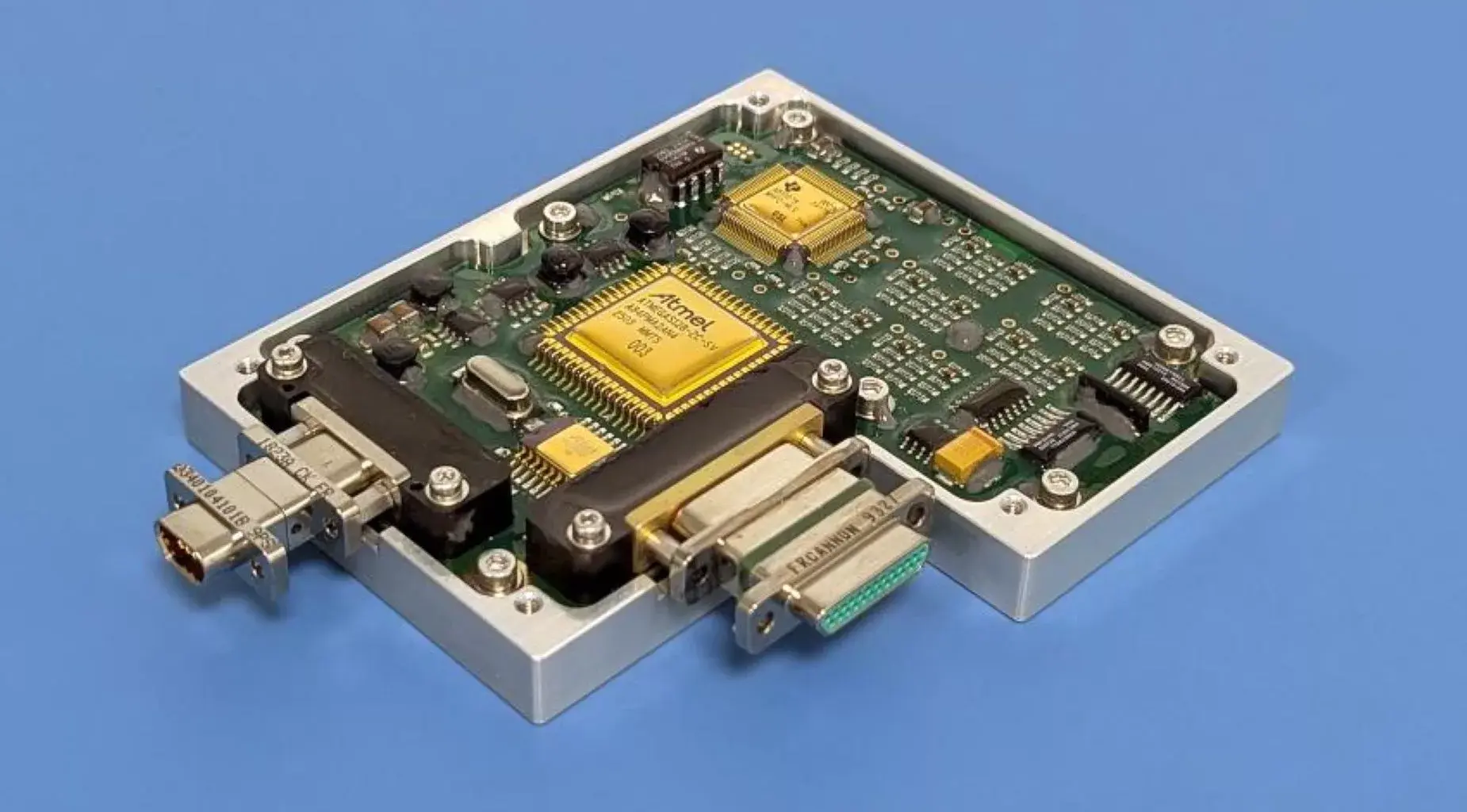
Imagine being able to brace for a solar storm not just minutes before it hits Earth, but hours in advance. That’s the promise of MAGIC, a miniaturized magnetometer built at Imperial College London, soon to fly aboard ESA’s HENON CubeSat mission in 2027.
Currently, space weather monitors sit at the Sun–Earth L1 point, about 1.5 million km away. For the fastest coronal mass ejections (CMEs), this gives forecasters barely 15 minutes’ warning. HENON will push ten times farther upstream, around 15 million km from Earth, sampling the solar wind much earlier.
Professor Jonathan Eastwood, presenting the work at the Royal Astronomical Society’s National Astronomy Meeting, explained: “I am really excited to be working on the HENON mission because it paves the way for a dramatic improvement in our ability to respond to severe space weather.”
Solar storms can be disruptive for satellites, GPS systems, communications, and even power grids. The magnitude of this effect varies depending on the orientation of the CME’s magnetic field, which can be measured directly only as it propagates through space. MAGIC will collect those magnetic field measurements soon, which may give warnings for two or three hours earlier.
The instrument will fly alongside two others from Czech and Finnish teams, together testing whether earlier, more accurate forecasting is possible. If successful, HENON will pave the way for ESA’s planned SHIELD mission, designed to provide continuous early warning of hazardous solar storms.
Eastwood summed it up: “The success of HENON will be a step change in our ability to forecast space weather, and paves the way for a future operational space weather mission, SHIELD.”
It’s a striking example of how small, smart instruments can deliver big advances, turning a 15‑minute scramble into a multi‑hour window of preparedness for the next great solar storm.