
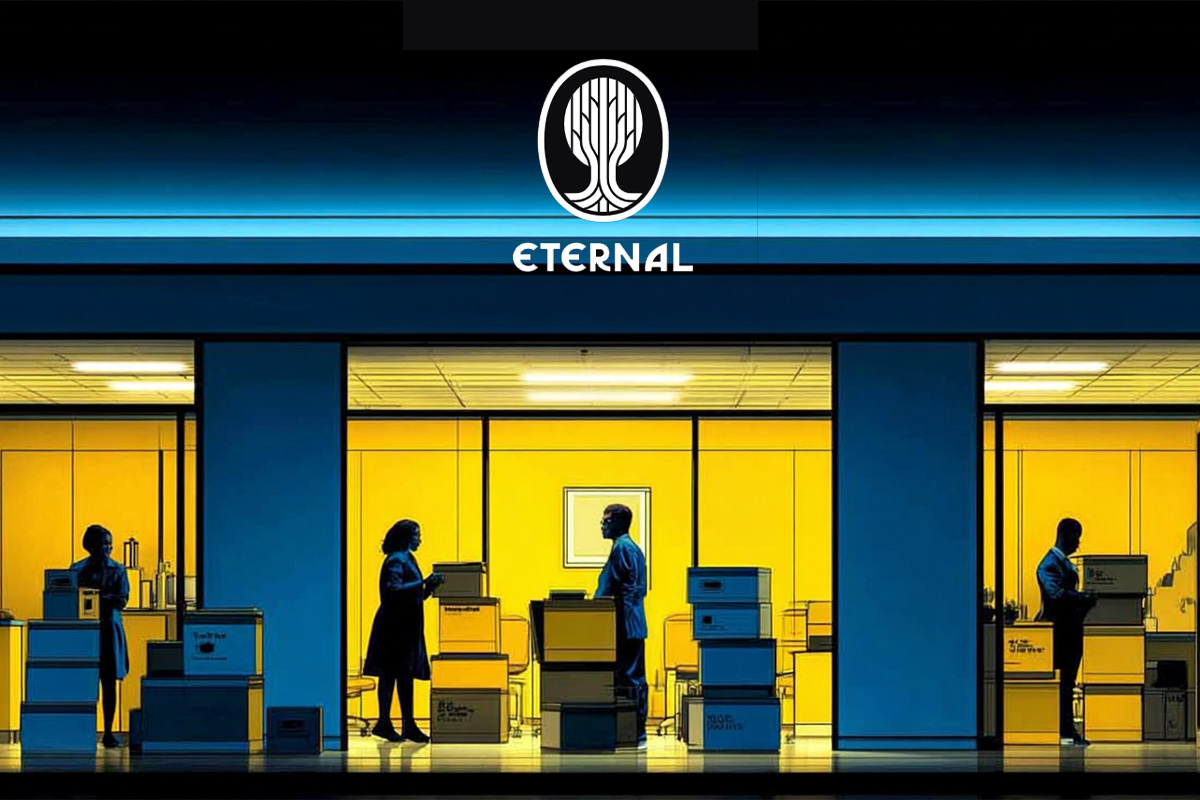
Report says performance health startup winding down despite calls for preventive care, raising questions about how longevity medicine scales.
Fitt Insider reports that Eternal, the venture-backed health platform founded in 2025, is closing its San Francisco and New York clinics and ceasing operations after informing members by email that services will end later this month. According to the report, the company had explored several strategic directions – including expanding beyond physical clinics into digital care and AI-powered coaching – before ultimately deciding to wind down [1].
Fitt Insider also reports that CEO Alex Mather told members the company had been unable to make the business viable over the long term, writing that: “we were not able to build a sustainable business to support our long-term vision [1].” The news brings an abrupt end to a company that had raised $13 million to build a preventative, performance-focused healthcare model combining physician-led care with advanced diagnostics including DEXA scans and VO2 max testing.
Longevity.Technology: Eternal’s closure does not suggest that the appetite for proactive, performance-oriented healthcare has been misplaced; rather, it exposes the less glamorous question now confronting a rapidly expanding longevity clinic sector – who can deliver sophisticated, longitudinal care without allowing the machinery required to provide it to consume the business itself? Diagnostics, physicians, physical sites, continuous support and digital infrastructure may combine into an attractive proposition for patients, but they also create a formidable stack of fixed costs, clinical responsibilities and operational complexity; add venture expectations, customer acquisition and the expensive business of persuading people to trust a healthcare brand with their bodies, and even strong demand can find itself outpaced by the burn rate. The next generation of longevity care may therefore be shaped not by who assembles the most comprehensive menu of tests, coaching and optimization, but by who identifies a delivery model in which clinical rigor, trusted physician relationships and sustainable economics can coexist – healthcare, after all, has a stubborn habit of refusing to scale quite as obediently as software.
Optimization, unbundled
Eternal entered an increasingly crowded market with a proposition that reflected broader shifts in healthcare – replacing episodic, reactive medicine with continuous optimization supported by diagnostics, physician oversight and personalized guidance. It’s a model that appeals to consumers who are willing to pay directly for preventative care, while also seeking to bridge the gap between fitness tracking and traditional healthcare.
Alongside in-person clinical services, the company explored digital offerings and AI coaching as it sought to broaden access and improve scalability. However, while software may extend engagement between consultations, it cannot eliminate the practical realities of delivering clinical care – physician time, regulatory oversight and physical infrastructure remain significant operational commitments.
The giants are circling
The closure also arrives as competition within longevity and preventative health continues to intensify. Dedicated longevity clinics now sit alongside established healthcare providers, digital health platforms and wearable technology companies, all competing to become the primary destination for consumers seeking to understand and improve long-term health.
 Phil Newman, CEO and Founder, Longevity.Technology
Phil Newman, Founder and CEO of Longevity.Technology, believes further consolidation is likely.
“Eternal’s closure won’t be the only one we will witness over the coming year,” he told us. “As larger companies enter the market with deeper pockets and large, existing, customer bases the market will consolidate further. Smaller startups will never build the customer scale in time; they need to create defensible IP that makes them attractive to acquirers – the smart move is to ensure forward compatibility with the wearable platform players like Whoop and ŌURA and the behemoth EMR players like Epic Systems and Oracle Health who, in my opinion, will turn their attention to health and longevity, if they haven’t done so already, and mop up.”
Newman’s point reaches further than Eternal’s particular misfortune. Clinical service, on its own, is starting to look like a commodity; what differentiates now – or soon will – is proprietary technology, interoperability and a seat at the table within the digital health ecosystems that bigger players are already assembling around it. Data, not diagnostics, may be the moat.
Science was never the tricky part
For longevity medicine, the question has never been whether consumers value prevention; growing investment, expanding diagnostic capabilities and rising public awareness suggest that they do. The challenge now lies elsewhere. Building businesses that can sustain preventative healthcare over decades – rather than funding cycles – may prove every bit as important as refining the science that underpins them.
Photograph of Phil Newman by Ivan Weiss.