
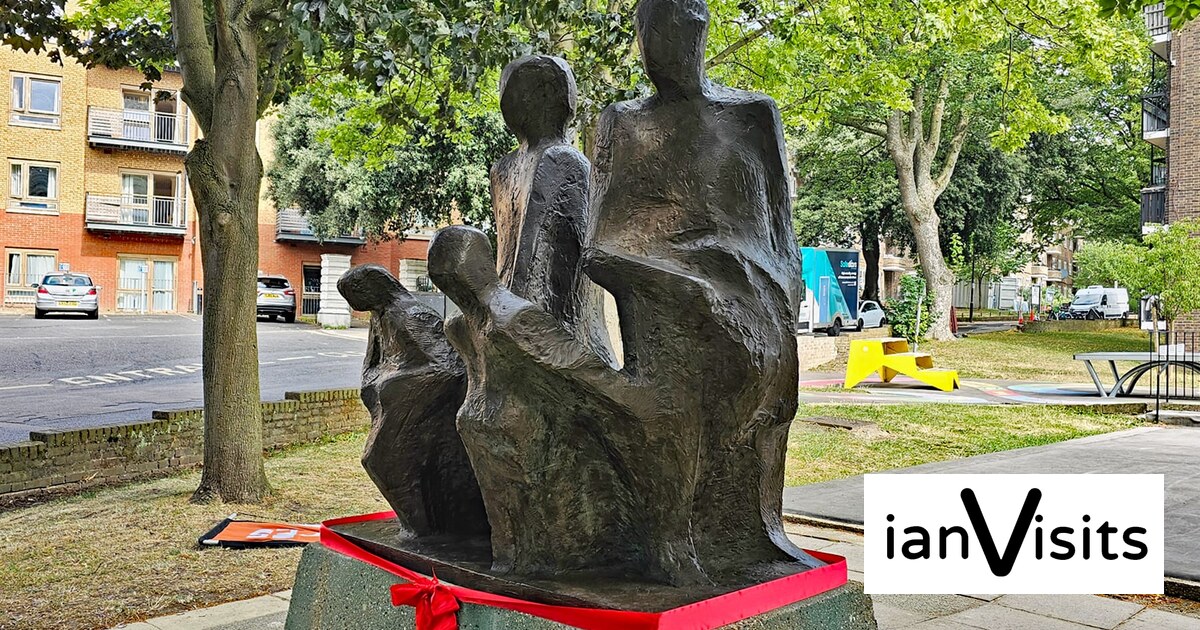
A sculpture that looks like it should be a 1960s bronze but is actually made from an experimental material – fibreglass – has recently been restored to its original appearance.
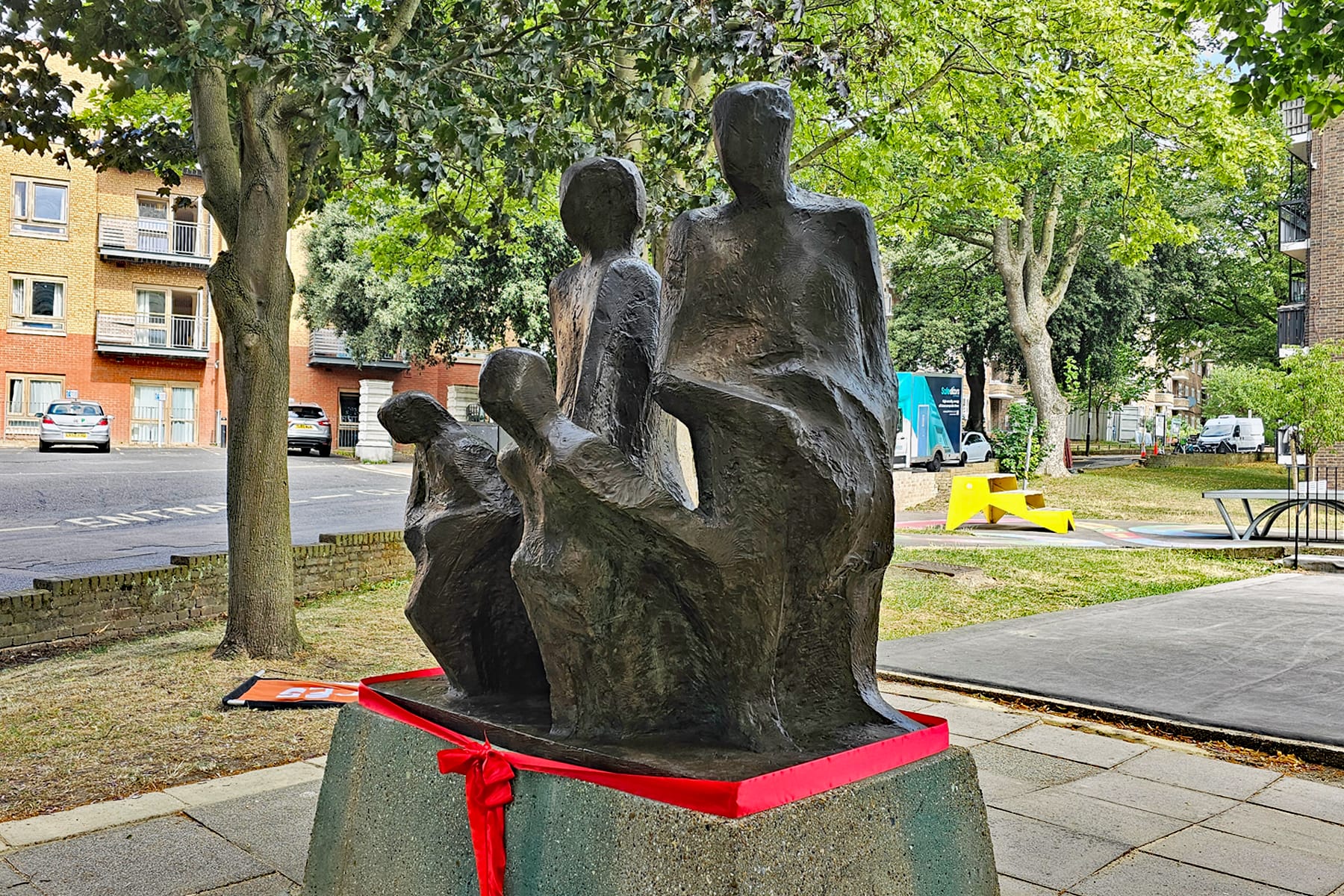
It’s called Generations, representing two generations of a family, and is by one of Henry Moore’s assistants, the sculptor Geoffrey Harris. Sadly, Geoffrey Harris was not a commercially successful sculptor, but was a good lecturer at several London arts colleges. Much of his work was lost in a house clearance after his death, although it seems some works were saved – possibly by people walking past the skip.
However, back in the 1960s, he was exhibiting at galleries and winning commissions, such as this one from the London County Council (LCC) as part of their Patronage of the Arts Scheme.
The LCC allocated £20,000 a year (about £500,000 today) to public art to adorn its post-war housing estates in the belief that public art enhances and educates. And in 1963, they commissioned Harris to create Generations for a new housing estate, the Maitland Park Villas in Chalk Farm.
He was paid £850 for the work, and although he worked in bronze, he was also part of the group of artists experimenting with alternative materials – so this “bronze” is actually made from fibreglass.
Go up and tap it if you don’t believe me.
The date it was installed is unclear, but probably 1964 – and there’s a photo of it in 1971 here. Sadly, over time, the sculpture suffered from the weather and less-than-artistic additions by graffiti artists.
But not any more, as it has been restored by the Heritage of London Trust.
 HOLT director Dr Nicola Stacey at the unveiling
The restoration project included cleaning, removal of graffiti, a resin fill where the old fills were missing, closing and filling seams, repainting to match the original surface, and applying wax to protect the statue.
A new interpretation panel now tells the story of the sculpture and its artist. The paving and plinth have also been enhanced through cleaning and repointing, as well as re-laying the pavers where necessary.
The restoration was carried out by Taylor Pearce Conservation and the project supported by Imago Interiors.