
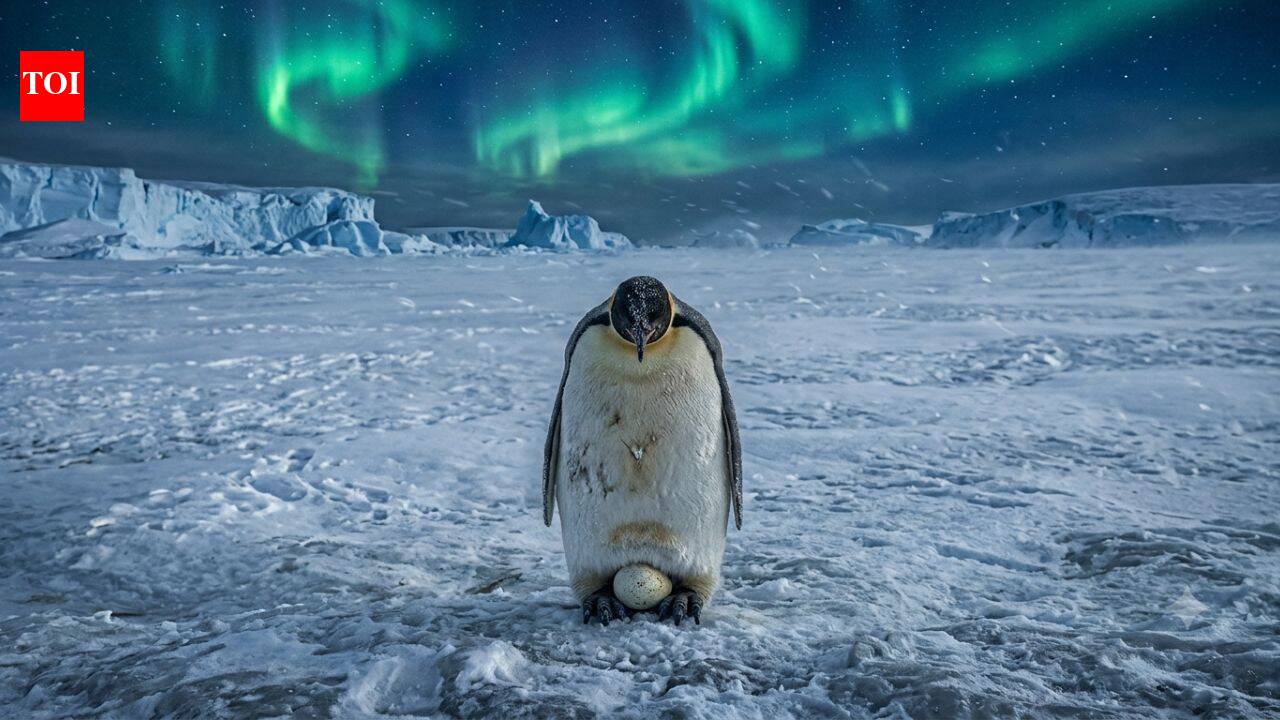
 On the frozen plains of Antarctica, emperor penguins begin a breeding cycle that seems almost impossible. As temperatures fall and darkness covers the continent for weeks, males remain behind on the sea ice with a single egg resting on their feet. They do not hunt, leave the colony, or search for food. Their only task is to keep the egg alive until the female returns. The months-long wait tests the limits of their bodies, forcing them to rely on stored energy, social cooperation, and a remarkable ability to endure one of the harshest environments on Earth.
How emperor penguins protect their eggs through the Antarctic darkness
Whereas other species escape from the harsh conditions of the Antarctic winter season, the emperor penguins have adapted to it. Emperor penguin breeding cycle starts in the cold season when it is easier for their offspring to gain maturity and become able to live independently due to the abundance of food sources in summer.It starts with the gathering of the colony on the sea ice in autumn. Then the female lays an egg and quickly passes it on to the male. The transfer should take place fast enough; otherwise, the embryo inside the egg may be frozen to death.The Australian Antarctic Program reports that once the handover is complete, the female leaves the colony and heads toward open water to feed. She may travel long distances before returning, leaving the male responsible for protecting the egg during the most difficult period of the year.For more than two months, he remains almost completely still, balancing the egg above his feet and covering it with a fold of warm skin known as the brood pouch.
The enormous physical cost of guarding a single egg
The male emperor penguin begins this period with a large reserve of body fat built up before breeding. That stored energy becomes his only source of fuel while he guards the egg.A healthy male can lose a significant portion of his body weight during the fast. Some arrive at the colony weighing close to 40 kilograms, but after weeks without feeding, their weight can drop dramatically. Their bodies are designed to use fat efficiently, allowing them to preserve valuable muscle tissue for as long as possible.The challenge is not simply hunger. The Antarctic winter creates a constant battle against cold. Temperatures around the colonies can fall below minus 50 degrees Celsius, while powerful winds make conditions even more demanding.At those levels, a penguin standing alone would spend enormous amounts of energy trying to maintain its body temperature. Survival depends on a behaviour that has become one of the most recognisable features of emperor penguin life.
How thousands of penguins create their own shield against the cold
Thousands of males gather tightly together to form a huddle, creating a living barrier against the wind. From a distance, the colony may appear motionless, but inside the group there is constant movement.The birds stand shoulder to shoulder, reducing the amount of exposed surface area and trapping warmer air between their bodies. Temperatures within the centre of a huddle can rise dramatically compared with the freezing conditions outside.But staying in the middle comes with a problem. Some penguins would remain trapped at the cold outer edge, facing stronger winds and losing more energy. The solution is a slow, collective movement that allows the entire group to rotate.Small waves of movement pass through the colony as penguins take tiny steps and gradually change positions. A bird that spends time near the outside eventually moves inward, while another takes its place. The process happens gradually, allowing thousands of penguins to share both the warmer and colder positions.The huddle is not controlled by a single leader. Instead, the movement emerges from simple responses between neighbouring birds, creating a constantly shifting formation.
How timing determines survival in the Antarctic winter
Although emperor penguins can survive extraordinary periods without food, there is a limit. As fat reserves decline, the male’s ability to continue protecting the egg becomes increasingly difficult.Before reaching a dangerous point, the bird begins showing signs that it needs to return to the ocean. Restlessness increases, and eventually the need to feed becomes stronger than the need to remain with the egg.The timing of the female’s return is therefore critical. If she arrives with food before the male reaches that limit, the chick has a chance to survive. If the wait becomes too long, the male may have to leave the egg behind and return to the sea.The breeding cycle leaves very little room for error. Conditions such as the distance to feeding areas, the stability of the sea ice, and the health of the parents all influence whether the attempt succeeds.
Why emperor penguins choose the harshest season
Winter breeding does not sound like an effective idea; however, it provides chicks with a critical advantage because they have time to grow up and become independent before the beginning of summer.With the arrival of the warm season, the productivity of the sea increases, and there are more chances to find food. The parents will have the opportunity to hunt much more actively than before without struggling with harsh conditions. The whole process requires coordination and depends on the right timing. The female should come back from the ocean, the male needs to live through the harsh period of hunger, and the sea ice should be reliable enough to keep the colony together.