
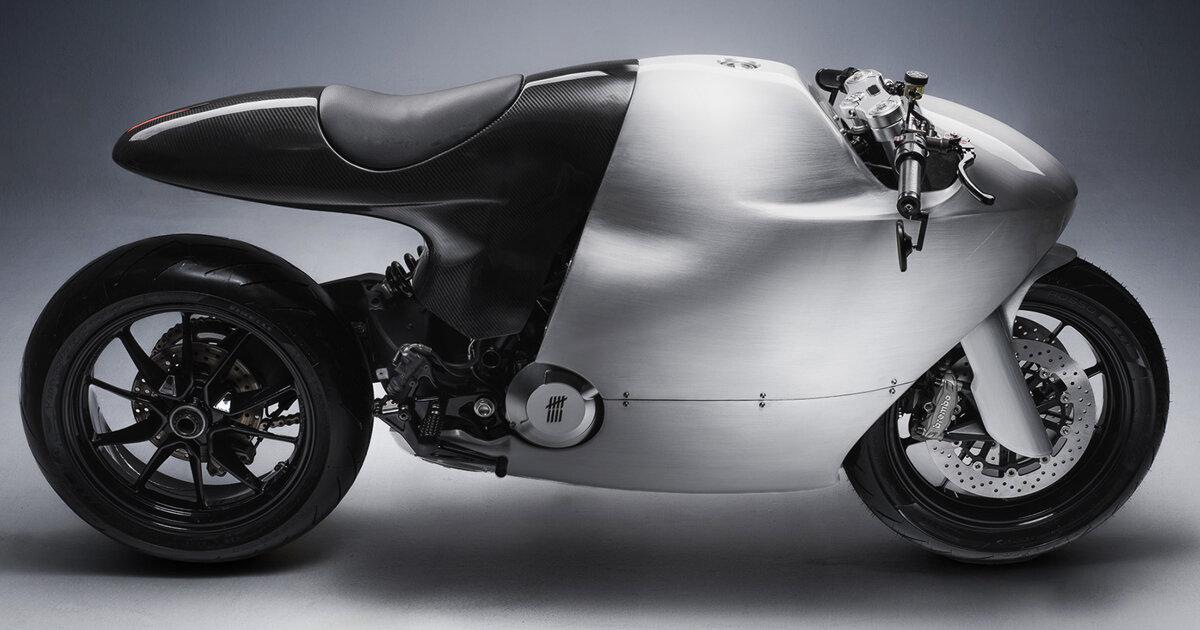
Hand-Finished Aluminum and Carbon Fiber Reframes Ducati 821
Bandit9 introduces a new iteration of its Ducati 821, combining hand-brushed aluminum and carbon fiber with a surface treatment focused on the relationship between material, finish, and form. The 2026 version features new upgrades and details, with production limited to nine models.
The Ducati 821 is based on Ducati’s 821cc Testastretta L-Twin engine, producing 110 horsepower and 65.8 ft-lb of torque, with a 0–60 mph time of 3.3 seconds. The motorcycle is equipped with Brembo monobloc brakes and Sachs suspension at the front and rear. Bandit9, a Saigon-based motorcycle design studio founded by Daryl Villanueva, approaches the model as a study in material and surface transformation, extending the technical foundation of the Ducati 821 through a highly developed exterior treatment.
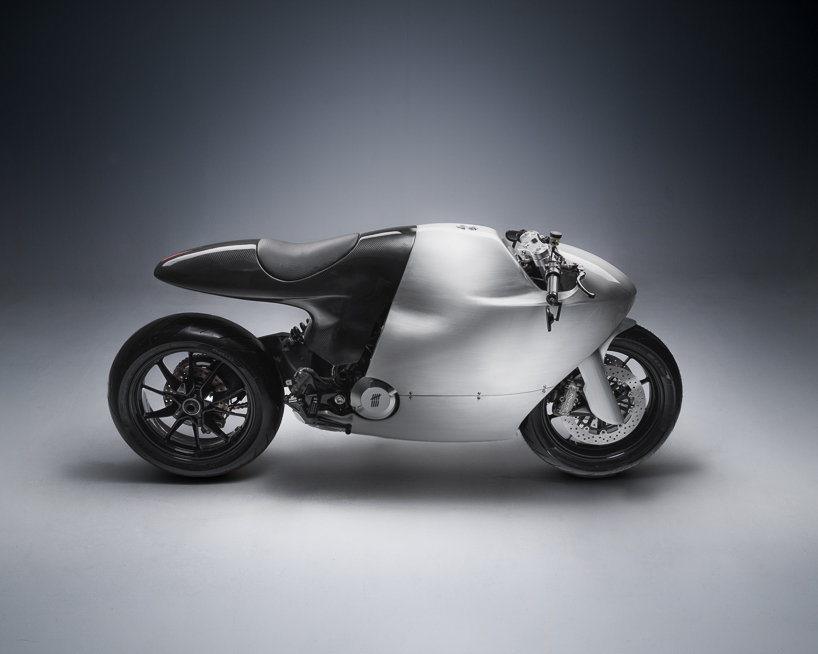
all images ©Bandit9
Two-Tone Material Strategy Shapes Ducati 821’s Silhouette
For the bodywork, motorcycle atelier Bandit9 combines brushed and mirror-polished aluminum with carbon fiber, creating a two-tone composition in which the division between materials follows the geometry of the motorcycle itself. Rather than functioning as a surface-level graphic treatment, the transition between aluminum and carbon fiber is integrated into the form, defining the relationship between individual body panels and the overall silhouette.
The aluminum surfaces are finished by hand, with changes between brushed and reflective treatments responding to the changing direction of the bodywork. The process emphasizes the depth and texture of the metal rather than introducing a painted or wrapped surface, allowing the material itself to become a defining part of the motorcycle’s appearance.
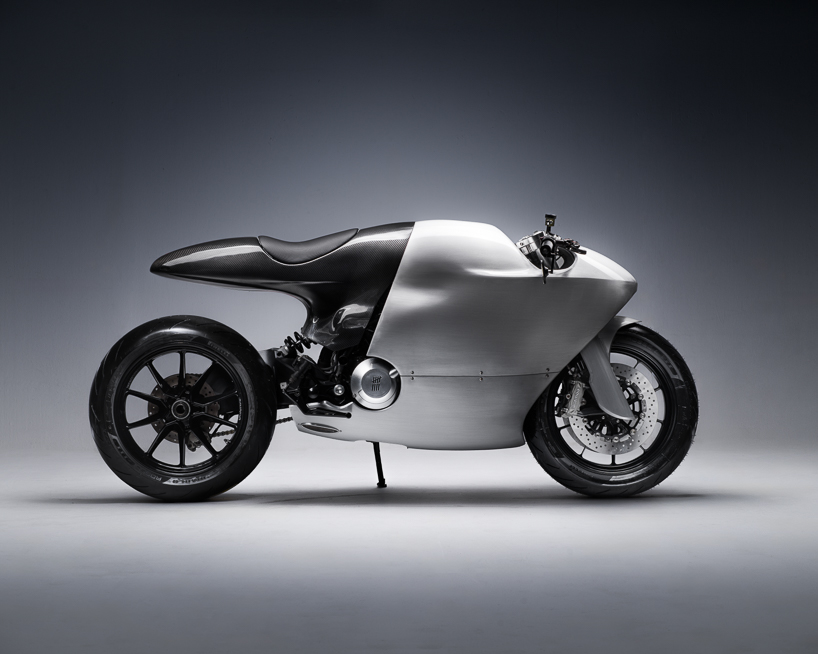
Bandit9 reworks the Ducati 821 through aluminum, carbon fiber, and surface detail
Hand Fabrication Shapes the Complex Aluminum Bodywork
The geometry of the bodywork also requires a highly manual production process. The large, compound surfaces combine continuous transitions between harder edges and softer curves, extending from the front cowl across the tank and along the length of the motorcycle. The combination of complex geometry and changing surface finishes requires a level of hand fabrication more closely associated with specialized craft processes than conventional motorcycle manufacturing.
The 2026 Ducati 821 represents Bandit9’s approach to motorcycle design through the combination of mechanical performance, sculptural form, and material experimentation. Each motorcycle is produced to order using aluminum and carbon fiber, with the fabrication and finishing process taking several months.
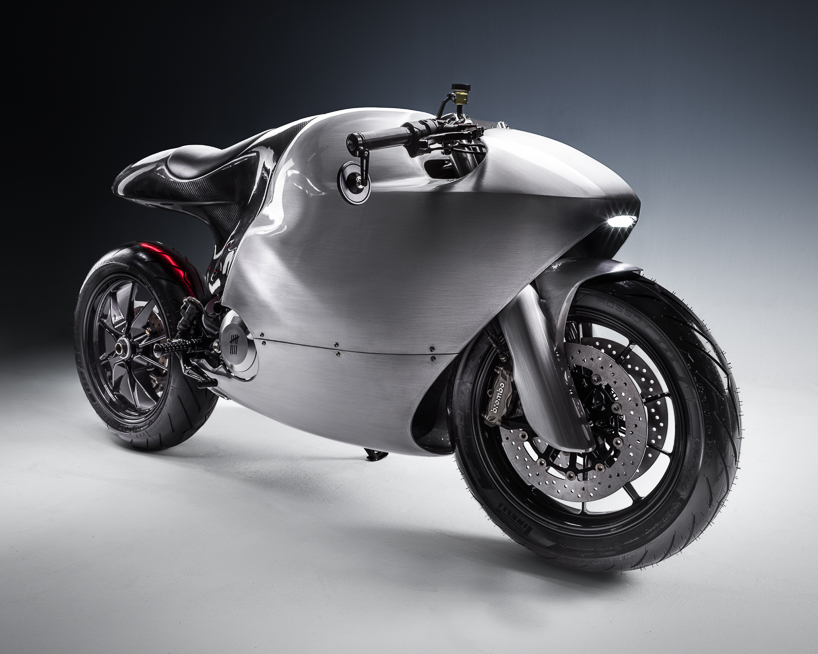
the 2026 Ducati 821 combines mechanical performance with material experimentation