

Listen to this article
Estimated 5 minutes
The audio version of this article is generated by AI-based technology. Mispronunciations can occur. We are working with our partners to continually review and improve the results.
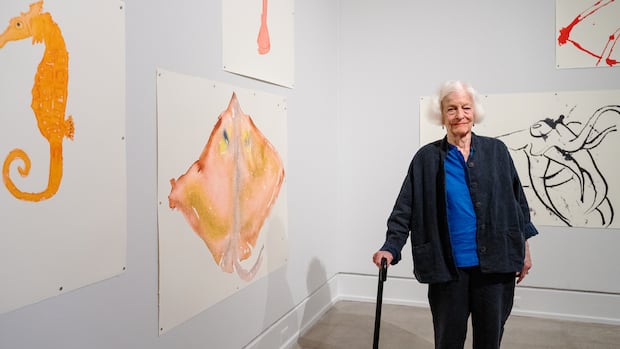
Visual artist Joan Jonas has always loved the ocean. A key figure in several modern art movements, the 90-year-old Jonas says she can’t recall a time when the ocean didn’t enchant her. And it was the waters off Cape Breton, where she has lived part-time for over 50 years, that inspired one of her best known works, Moving Off the Land II, the multi-piece work that comprises the sprawling installation Joan Jonas: We come from the sea, on now at the Art Gallery of Nova Scotia.
“When I came up here, I immediately fell in love with Cape Breton, the landscape, the air,” Jonas says. I’ve done so much work up here, so it’s been an inspiration. And it’s wonderful to be able to show … show my latest work up here, which has to do with the sea.”
Her love of Cape Breton’s cold Atlantic waters runs throughout We come from the sea.
The show is a combination of formats, including drawings, video, soundscapes, installation and projections. While many art shows about the ocean are presented through a folk art lens, Jonas’s work lives very much in the modern art world. (Although, Jonas is quick to share that folk art is a key inspiration for her.). A joint production with the National Gallery, the show will travel across Canada after it wraps at the AGNS this October. Moving Off the Land II, the show’s central work, made its North American debut at New York’s Museum of Modern Art in 2025.
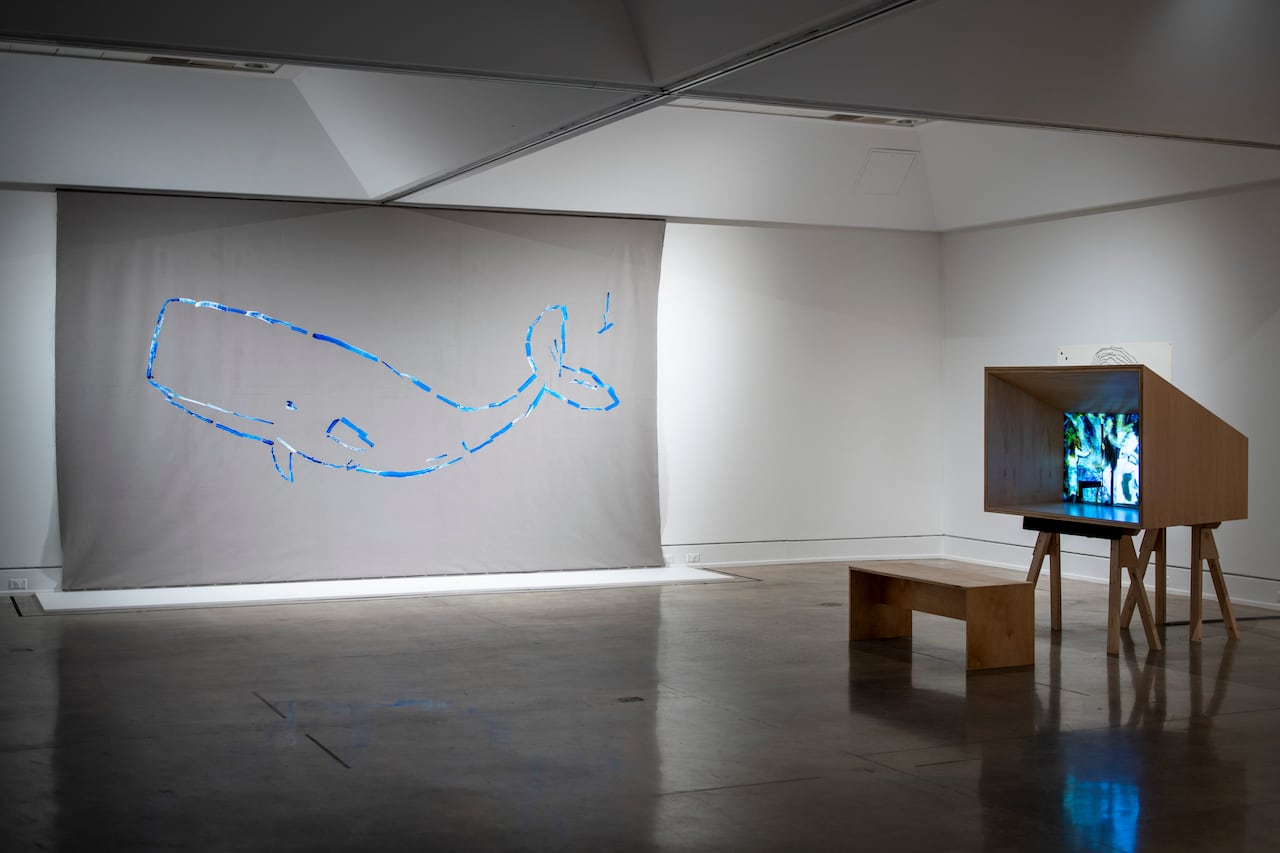 Part of Joan Jonas: We come from the sea, on now at the Art Gallery of Nova Scotia. (Courtesy of the Art Gallery of Nova Scotia)
Jonas has summered in Cape Breton since 1970, one of a loose cohort of artists who made a seasonal migration from New York City. (Lauded painter/sculptor June Leaf and her husband, legendary photographer Robert Frank, were also part of that group.
“It was just friendships, and we never wanted to have a scene,” Jonas says, speaking from Cape Breton on a blazing July day. “We actually were very private about what we did up here, and I wanted to be in a place where I didn’t have to talk about art. I like talking about the everyday, and that was very important.”
Her Cape Breton neighbours might have never known that she was making world-class, genre-pushing art, that’s exactly what Jonas did (and continues to do). David Diviney, chief curator at the AGNS,says Jonas’s artworks “continue to be crucial to the development of many genres: video performance, conceptual art, theatre.” Jonas’s resume backs him up: winner of the Icon Award at the inaugural Art Basel Awards in 2025, she was the subject of a retrospective show at the Museum of Modern Art in 2024, and has shown work everywhere from London’s Tate Modern to the Venice Biennial, where she presented solo works at the USA pavilion.
But the artist’s glittering resume aside, the AGNS show is also a timely, prescient installation: It presents viewers with a meditation on the beauty of the world’s oceans during a time when they, along with the rest of the natural world, are under threat. At the time of our interview., nearly 900 wildfires are burning across the country.
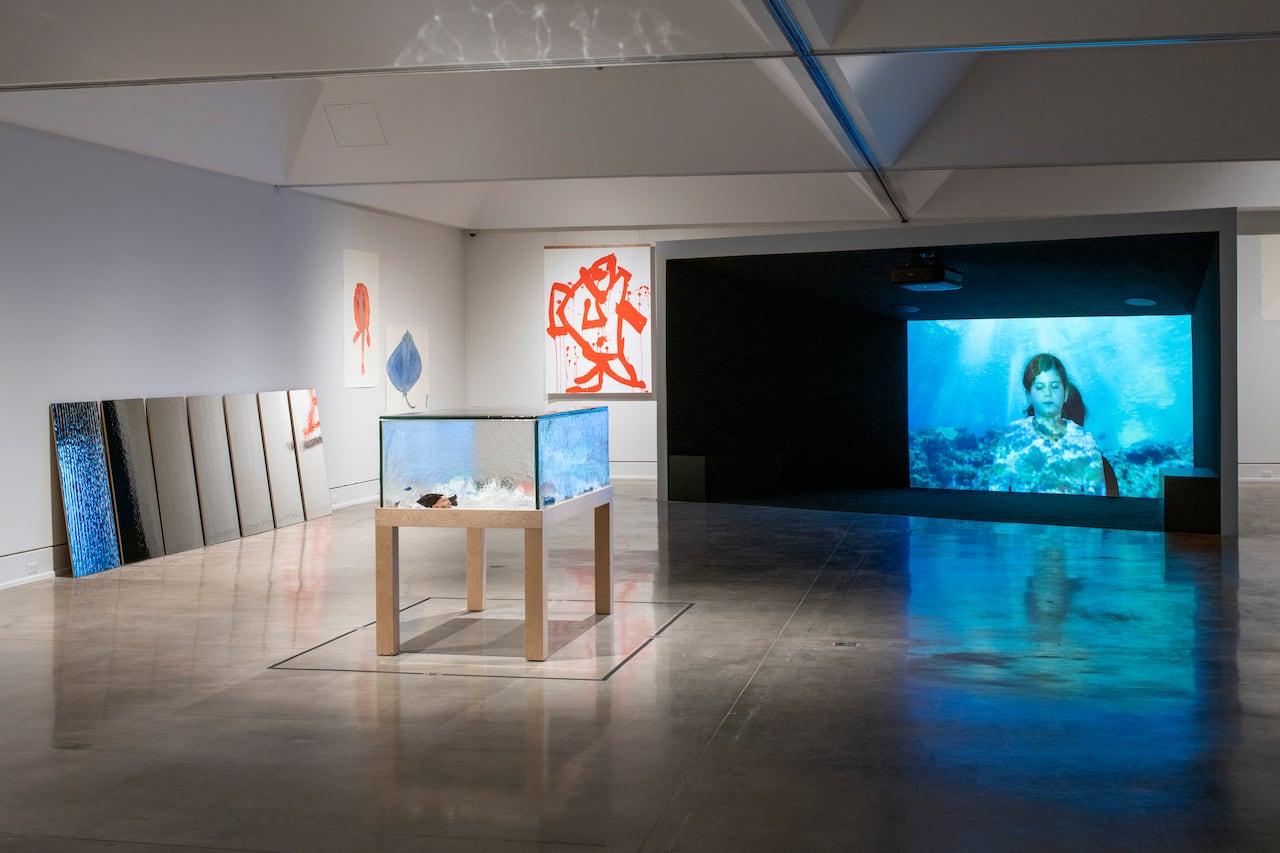 Joan Jonas: We come from the sea, on now at the Art Gallery of Nova Scotia. (Courtesy of the Art Gallery of Nova Scotia)
While viewers doubtlessly will leave the exhibit struck by the ocean’s beauty, Diviney says the show is also “a bit of a call to action … where we’re urged to think about things beyond that: The threat that this ecosystem is under.”
Jonas adds that: many of the whales who have inspired her art are facing habitat loss and worries about the threats posed by both climate change and the continued commercial exploitation of the ocean. “It’s an unexplored territory, and I hope it stays that way, because as we explore, we destroy. I’m very worried about companies taking over and getting minerals from the ocean,” she says.
Jonas’s eco-anxiety also extends to worrying about what the ocean will look like to future generations. Moving Off the Land II includes some performance recordings that feature children of Jonas’s friends: “It’s a little bit about teaching about what’s happening to our environment and what’s going to happen. So, the children are witnesses to that, and they will inherit it,” she adds.
Jonas hopes viewers walk away from the show with a deeper understanding of “the beauty of the ocean, basically, and the complexity of life in the ocean.”
She adds that water shapes our lives. It’s the building block of life, and if you go far enough back, every living creature on this planet is descended from aquatic life. “We come from the sea,” she says, circling back to the show’s name. “We’re made up of all the same elements [as] the sea.”
Some of us may have even come from the sea more recently than we realize.”My theory is that mermaids have the memory. We have the memory of being mermaids, of swimming.”
Joan Jonas: We come from the sea is on at the Art Gallery of Nova Scotia (1723 Hollis St.) in Halifax until Oct. 4.