
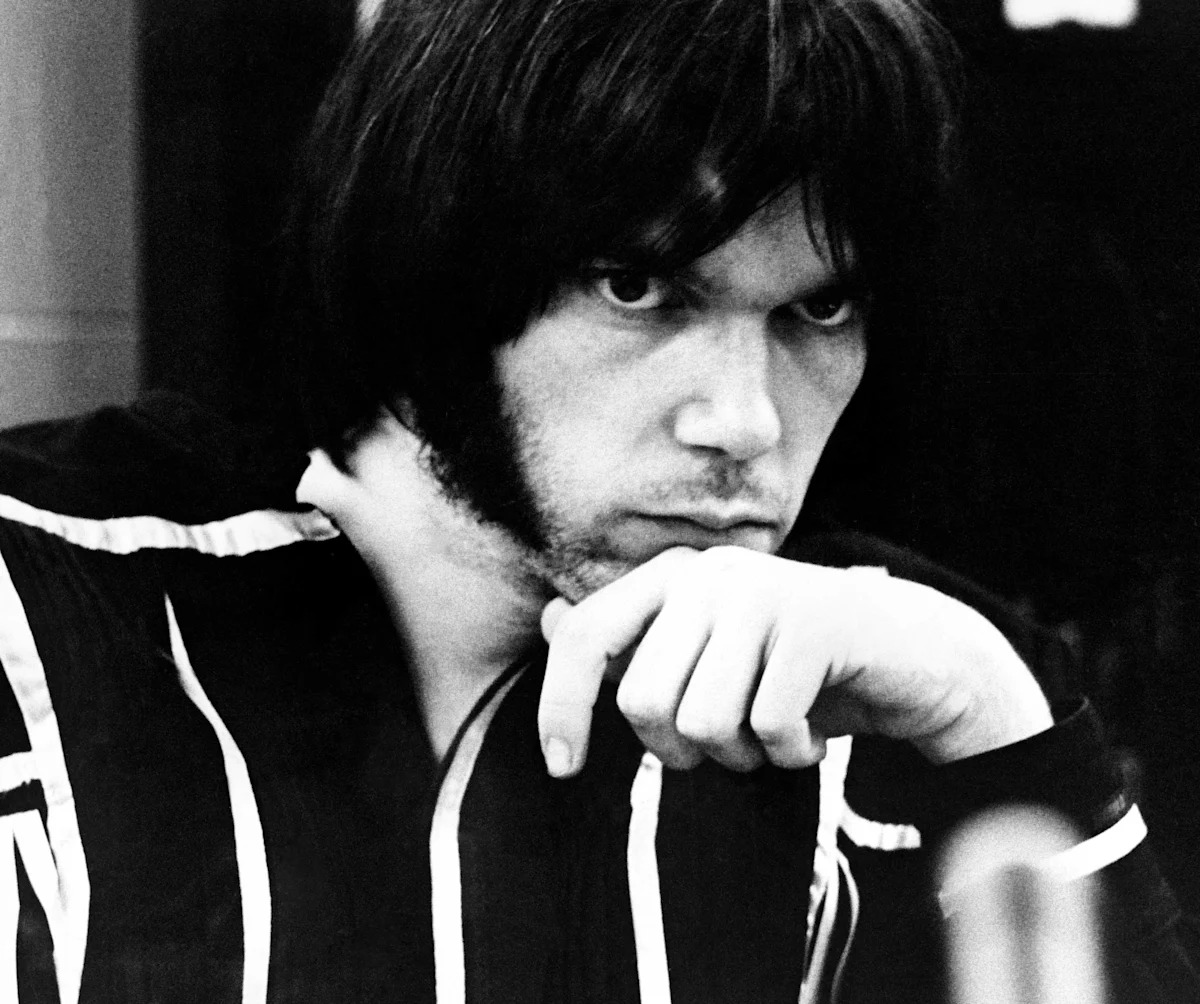
When Neil Young released his career-spanning compilation Decade in 1977, one of its biggest treasures wasn’t a recent hit. It was a song he’d written more than a decade earlier.
“Sugar Mountain” was penned by Young when he was just 19 years old, inspired by the realization that his teenage years were slipping away. Although the wistful ballad had long been an unreleased demo and live favorite among dedicated fans, its official release on Decade introduced it to a much wider audience, helping secure its place as one of the singer-songwriter’s most enduring classics.
Young wrote the song in 1964, shortly after celebrating his 19th birthday. The young songwriter was, at the time, broke and sleeping on friends’ floors, playing the local music circuit to get by.
“At first I wrote 126 verses to it,” Young once told a live audience. “Now, you can imagine that I had a lot of trouble figuring out what four verses to use.”
The lyrics reflect on the bittersweet transition from adolescence into adulthood, centering on the symbolic “Sugar Mountain,” a place representing the innocence and freedom of youth. Young has often acknowledged that the song grew out of his own feelings about growing older and leaving those carefree years behind.
For several years, “Sugar Mountain” existed primarily as a live favorite.
Young regularly performed it in concert during his early career, but he never included a contemporary studio version on one of his regular albums. Instead, the song developed a reputation through live recordings and its appearance as the B-side to his 1970 single “Cinnamon Girl.”
That changed in 1977.
When compiling Decade, Young chose to include a live recording of “Sugar Mountain,” recognizing its importance within his catalog despite its unconventional release history. The three-LP retrospective became one of the definitive collections of his early career, allowing countless listeners to discover the ballad for the first time alongside classics such as “Heart of Gold,” “Old Man,” and “Harvest.”
Part of the song’s lasting appeal lies in its universal message.
While inspired by Young’s own experience of turning 19, its themes of nostalgia, lost innocence, and the passage of time have resonated with listeners of every generation. Its gentle acoustic arrangement and reflective lyrics continue to make it one of the most moving songs in his extensive catalog.
Young is all too aware of how beloved the song is by fans, even all these years later.
“I do ‘Sugar Mountain’ [live] really for the people more than I do it for myself,” he told SongFacts. “I think I owe it to them ’cause it seems to really make them feel happy. So, that’s why I do that. They pay a lot of money to come and see me. I lay a lotta things on ’em that they’ve never heard before. I think I owe it to them to do things they can really identify with. It’s such a friendly song, and the older I get and the older my audience gets the more relevant it becomes, especially since they’ve been singing it for 20 years. It really means a lot to them. So, I like to give ’em the chance to enjoy that moment.”
Nearly five decades after Decade helped bring it to a broader audience, “Sugar Mountain” remains one of Neil Young’s most cherished compositions. What began as the reflections of a 19 year-old songwriter has endured as a timeless classic, reminding listeners that growing older is something everyone eventually must face.
Related: 1977 Classic Ballad, Reimagined 19 Years Later, Became a Timeless Soft Rock Anthem
This story was originally published by Parade on Jul 25, 2026, where it first appeared in the Entertainment section. Add Parade as a Preferred Source by clicking here.