
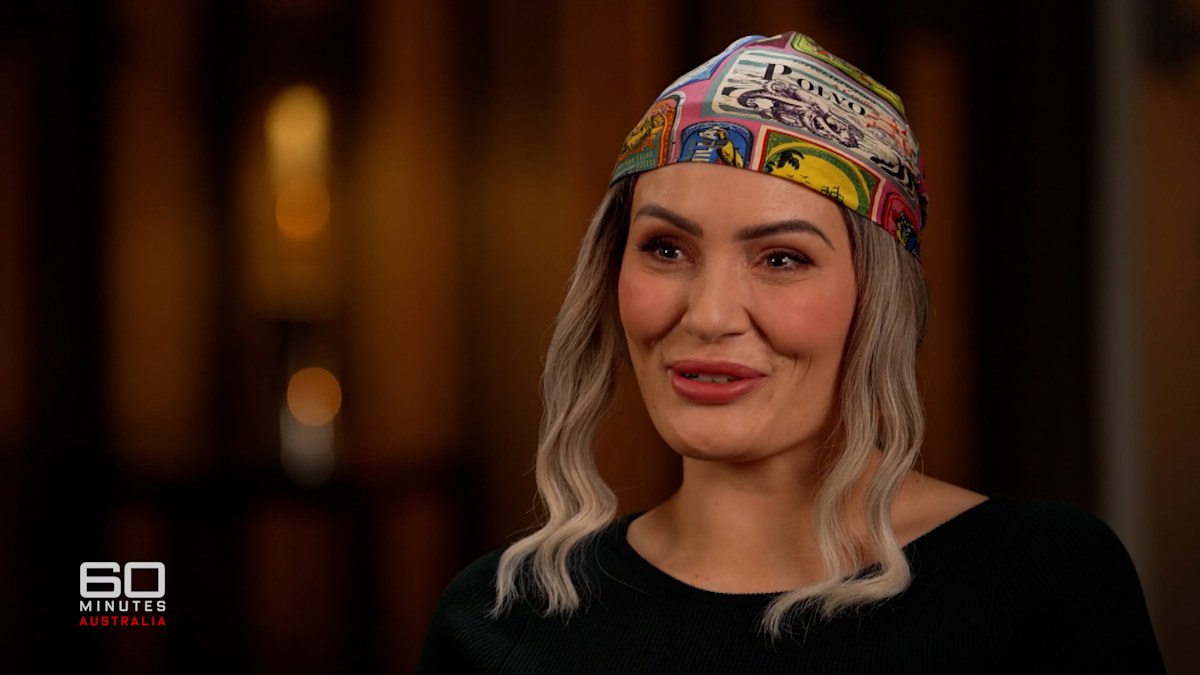
It’s the birthday Kaela Graham-Bowman was told she would never live to see.
But for this newly turned 35-year-old, this celebration couldn’t be sweeter.
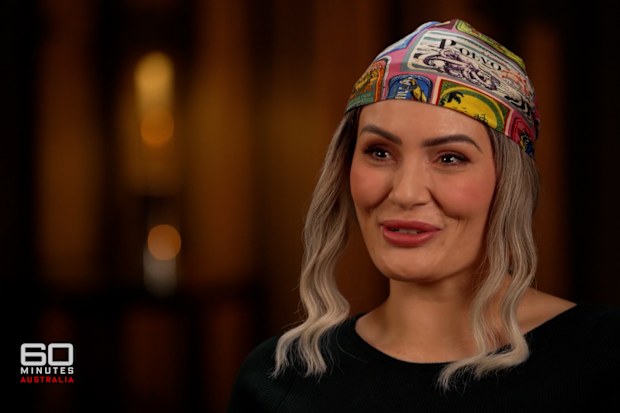
Afghanistan veteran and mother of two Kaela Graham-Bowman was diagnosed with the rarest of rare types of cancer, Sinovial Sarcoma at the young age of 28 years old. 60 Minutes
For the past six years, this Afghanistan veteran has been locked in the battle of her life.
But this time, the enemy isn’t the Taliban – it’s an aggressive, internal threat called synovial sarcoma.
The rare, lethal soft-tissue cancer ruthlessly targets adolescents and young adults.
When Kaela was diagnosed, she had never heard of it.
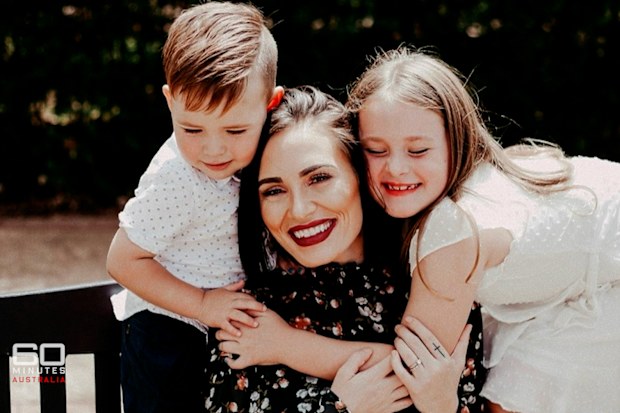
Kaela had already recorded goodbye messages to her children when she discovered a revolutionary new therapy for Sinovial Sarcoma in the United States. 60 Minutes
Sarcoma is so rare it’s often called “the forgotten cancer”.
In nearly four decades, the high mortality rate hasn’t budged.
But now there’s a glimmer of hope.
A revolutionary new therapy developed in the US is offering patients, who have been told their condition is terminal, with the most precious gift of all: time.
It’s exactly what Kaela desperately wants and needs.
It is the chance to defy the odds and spend more time with the ones she loves, her husband Alex and children Violet and Aston.
When she was given the opportunity to be the first Australian patient to undergo the treatment, despite how sick she already was, she didn’t need to be asked twice.
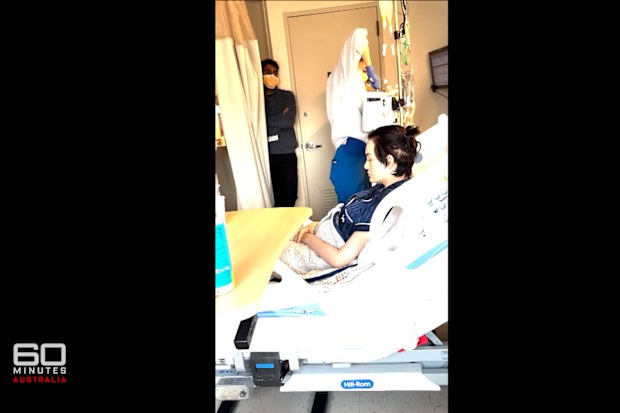
Kaela is the first Australian to undergo Tecelra, a cutting-edge immunotherapy that has shown a 40% success rate among Sinovial Sarcoma patients. 60 Minutes
You don’t have to spend much time with Kaela to understand just how determined and resilient she is.
“You gotta be, you don’t have a choice,” she said.
It’s a quality that she’s needed since receiving the worst news in 2020.
Back then she was living her best life.
She was out of the army, happily watching her young family grow and building a career as an oncology nurse.
But in a cruel twist, the caregiver was about to become the patient.
“I started getting pain in my right thigh and I thought it was an army injury initially, just arthritis or something,” she said.
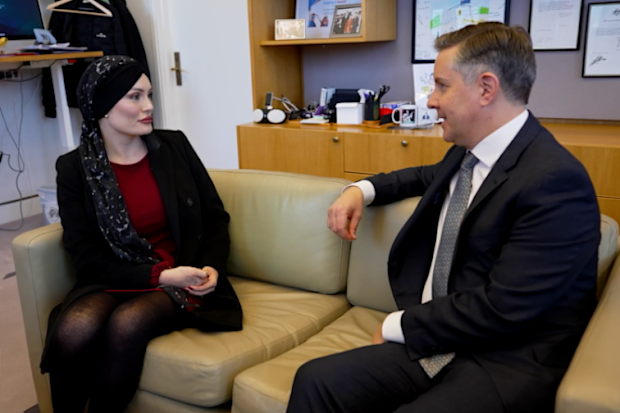
Kaela was able to fund her US$2 million treatment through the Federal Government’s Medical Treatment Overseas Program, overseen by Health Minister Mark Butler. 60 Minutes
“I went to my GP, being the nurse I am, told him what was wrong with me.
“He tended to agree and said, ‘Let’s just send you for an ultrasound though’. And yeah, I saw the look on their faces and everything changed in a minute.”
She soon discovered the dull ache wasn’t a sports injury.
“I was put in for surgery the following week, which was meant to be a biopsy, but I woke up with drains hanging out of me in ICU,” she said.
“They had to take the tumour out then and there because they said if they left it in there, I’d be dead.”
The surgery saved her life at the time, but it would be just the beginning of an exhausting onslaught of chemotherapy and radiation.
Despite battling her own illness, the dedicated nurse kept caring for others.
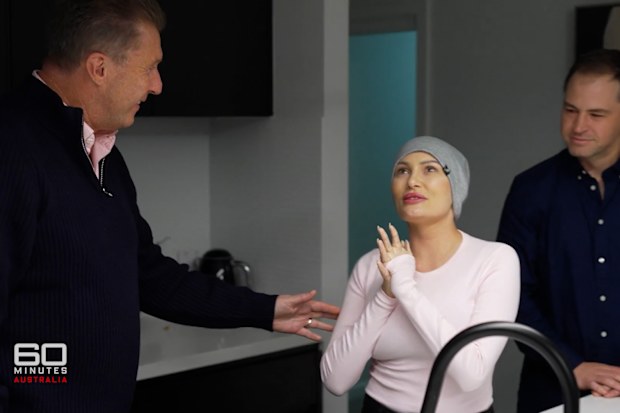
Kaela received news from her doctors that her body has responded well to the treatment. 60 Minutes
“I think it gave me fight, my job gives me purpose and I strongly believe that once you lose that purpose, you lose the fight,” she said.
“So it was really important to me and it was important to me to show the kids that, you know, mum’s OK, she’s still going.”
For a while, the threat seemed to recede.
Each checkup showed a steady, promising turn for the better.
“I thought I was cancer-free. I had a new lease on life,” she said.
“It’s not until you’re in that position that the grass is actually greener.
“Like the sky is so blue, and you don’t take it for granted.”
But Kaela was about to experience just how cruel and merciless this cancer could be.
Believing she was on the brink of remission in 2022 she filmed herself accessing her latest scan result.
The reality was a devastating blow.
“That scan showed that the cancer had spread to both of my lungs,” she said.
“I felt like my life was over.
“I knew how bad that was and how dark it was going to get.”
Dr Vivek Bhadri is a leading oncologist at Sydney’s Chris O’Brien Lifehouse.
A specialist in sarcoma, he has seen how unforgiving this disease is, especially once it metastasises as it had in Kaela’s case.
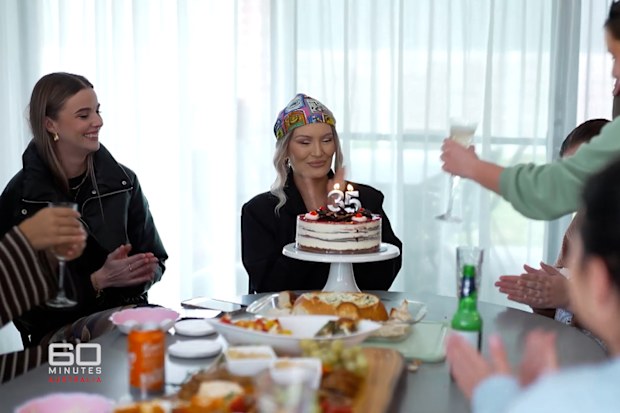
Thanks to the revolutionary immunotherapy, Kaela gets to celebrate a milestone birthday surrounded by her loved ones. 60 Minutes
“If you look at statistics for patients with synovial sarcoma whose cancer is spread to the lungs, you would expect most people to survive maximum one to two years after that time,” Bhadri said.
“I think she knew that the chances of long-term survival for her were very low.”
By late 2025, Kaela had exhausted every treatment option available in Australia and began palliative care.
Bhadri prepared his patient for the inevitable.
“Do what’s important for you in whatever time you have left,” he said.
But this former soldier had one final shot at survival.