
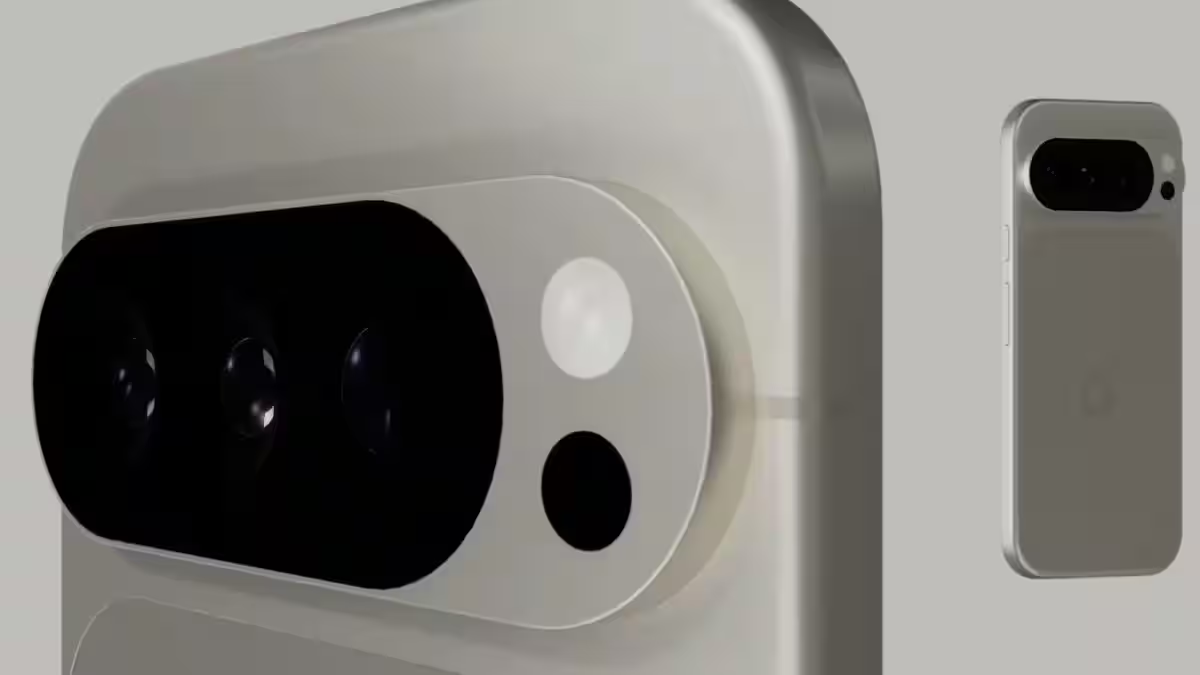
Google has effectively confirmed that its next-generation Pixel smartphones will launch with higher price tags, citing an unprecedented surge in memory costs that has reshaped the economics of building premium smartphones.
The confirmation comes just weeks before Google’s Made by Google event on 12 August, where the company is expected to unveil the Pixel 11 family. While reports of a potential price increase have circulated for months, Google has now publicly acknowledged that consumers should expect pricing changes, pointing to rising component costs that are affecting the wider technology industry.
STORY CONTINUES BELOW THIS AD
Speaking to 9to5Google, Google’s Vice President of Devices and Services, Shakil Barkat, said the company has been grappling with what he described as a “severe, supplier-driven RAM memory crisis.” He suggested that the dramatic rise in memory prices has left manufacturers with little room to continue absorbing higher production costs.
According to Barkat, “there’s never been an increase in memory prices like the world’s going through right now.” He referred to Morgan Stanley figures indicating that the cost of 1GB of RAM has climbed from roughly $2.80 in 2025 to around $12 in 2026—a more than fourfold jump that has significantly increased the cost of producing smartphones.
Google says higher costs can no longer be absorbed
For several product generations, smartphone makers have attempted to shield buyers from fluctuating component prices by absorbing much of the additional expense themselves. Google says that approach is becoming increasingly difficult as suppliers continue raising prices.
Barkat said the company had “shielded our consumers from supply fluctuations for as long as possible,” but added that “economics have fundamentally shifted and we’re not immune to that.” Instead of maintaining existing prices, Google will introduce pricing “adjustments” for the Pixel 11 lineup, with changes that will be implemented dynamically in response to supply conditions.
The executive stopped short of revealing how much each handset will cost, leaving the official figures for Google’s launch presentation next month.
Despite the expected increase, Google says it intends to keep the Pixel range competitive through trade-in programmes, promotional discounts and bundled subscriptions. Barkat described offers such as Google One as an important part of the company’s strategy to make its flagship devices more affordable, even as manufacturing costs continue to rise.
STORY CONTINUES BELOW THIS AD
The comments also reflect a broader challenge facing the consumer electronics industry. Semiconductor shortages may have eased compared with the pandemic years, but manufacturers are now contending with sharp increases in memory pricing, particularly for advanced DRAM used in flagship smartphones and AI-powered devices.
Leaked prices point to increases across the lineup
Google’s remarks closely align with an earlier report from French publication Dealabs, which claimed the entire Pixel 11 range would become more expensive than the current generation.
According to the leaked pricing, the standard Pixel 11 is expected to start at €999 for the 256GB variant, while the Pixel 11 Pro could begin at €1,199. Both models are tipped to receive a €100 increase compared with their predecessors.
The larger Pixel 11 Pro XL is reportedly set to start at €1,399, with higher-capacity versions climbing further in price. Google’s foldable flagship, the Pixel 11 Pro Fold, is expected to remain the most expensive model in the lineup, with a reported starting price of €1,999 for the 256GB version.
The leaked pricing suggests that storage upgrades will continue to command substantial premiums. The Pixel 11 Pro and Pro XL are both expected to offer configurations of up to 1TB, while the foldable model could also be available with as much as 1TB of storage, pushing its price to €2,389.
STORY CONTINUES BELOW THIS AD
Although these figures remain unofficial until Google’s launch event, the company’s own comments have largely reinforced expectations that buyers should prepare for higher prices when the Pixel 11 series is unveiled. With memory costs continuing to climb across the industry, the Pixel lineup may be among the first major smartphone releases to openly acknowledge the financial impact of the global component market on retail pricing.