
Your support helps us to tell the story
From reproductive rights to climate change to Big Tech, The Independent is on the ground when the story is developing. Whether it’s investigating the financials of Elon Musk’s pro-Trump PAC or producing our latest documentary, ‘The A Word’, which shines a light on the American women fighting for reproductive rights, we know how important it is to parse out the facts from the messaging.
At such a critical moment in US history, we need reporters on the ground. Your donation allows us to keep sending journalists to speak to both sides of the story.
The Independent is trusted by Americans across the entire political spectrum. And unlike many other quality news outlets, we choose not to lock Americans out of our reporting and analysis with paywalls. We believe quality journalism should be available to everyone, paid for by those who can afford it.
Your support makes all the difference.Read more
An investigation has been launched after 15 elephants died mysteriously in Kenya‘s Amboseli National Park region over the past month, wildlife authorities confirmed on Tuesday.
The Kenya Wildlife Service (KWS) reported that ten of the majestic animals exhibited signs of partial paralysis before succumbing within two days.
The remaining five were discovered dead, their carcasses partially consumed by scavengers. The majority of the deceased were female elephants and their calves, with only one male among the fatalities.
The deaths occurred in the Kimana Sanctuary and Kuku Ranch areas surrounding the park.
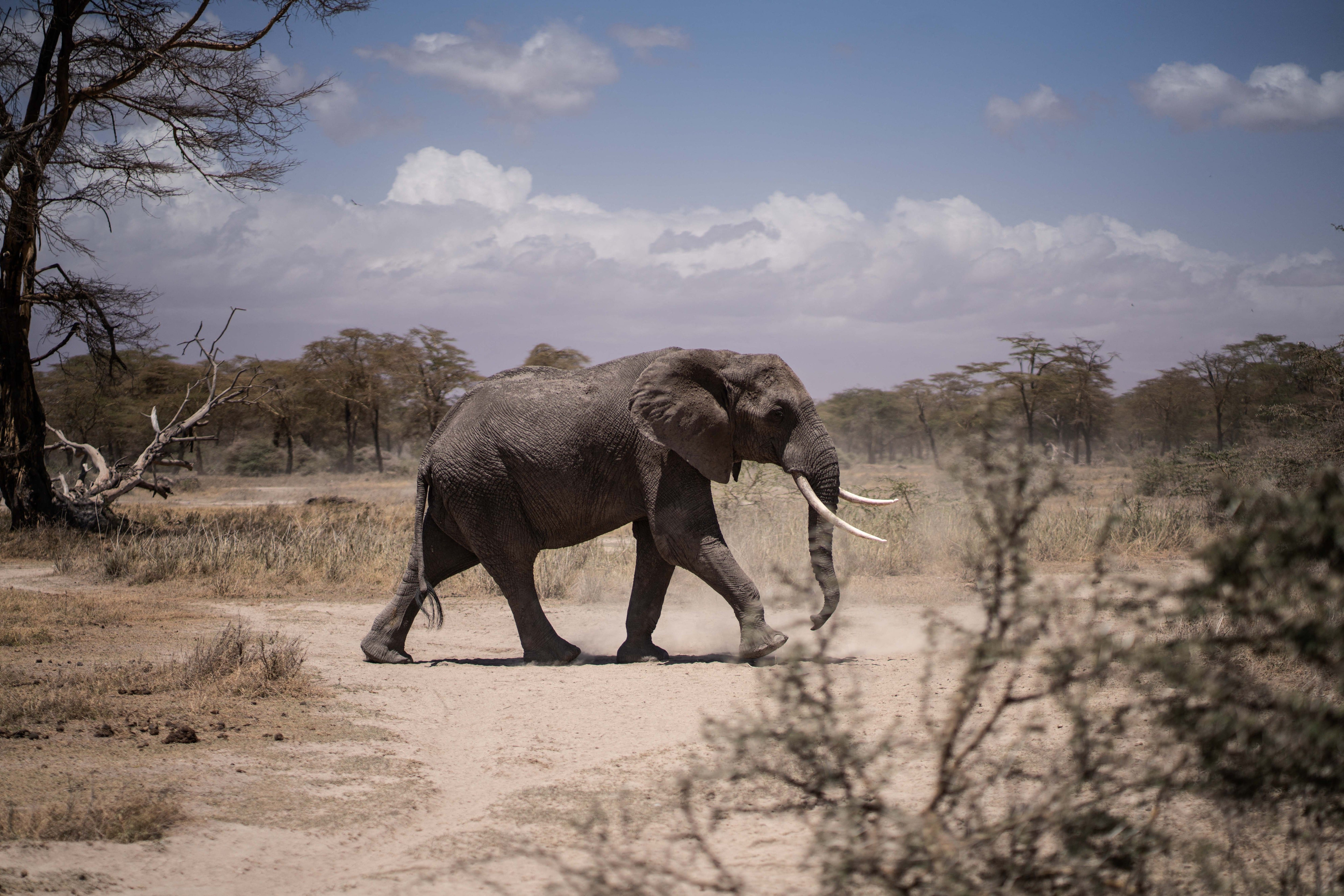 An elephant walking towards a nearby river in Kimana Sanctuary (AFP via Getty Images)
Preliminary laboratory tests conducted by the University of Nairobi detected a “potential toxic substance” in samples from the elephants.
However, separate analyses by the Government Chemist found no evidence of the specific toxins tested. Further investigations are now underway, including environmental assessments of water sources and other potential contaminants in the affected regions.
Kenya has previously documented elephant deaths linked to poisoning, often stemming from poaching or human-wildlife conflict.
Authorities have sought to reassure the public, stating there is currently no evidence to suggest the condition could be transmitted to humans.