
Make that, will be in orbit. France and his team of a dozen engineers and scientists aim to launch their first reusable satellite in mid-2028.
Size-wise, you could think of it as three Air New Zealand catering carts stacked on top of each other, France says.
Microgravity experiments are an obvious use, but “customers can do whatever they want with it”, France said.
The real novelty is that Outlier Space’s satellite will be re-usable.
Today’s satellites use fuel to course correct. When it runs out, after five to seven years, they fall out of the sky.
Several companies are trying to design a re-usable satellite. Perhaps the best known is Rocket Lab client Varda Space, which has launched several prototypes and returned them to Earth but, like its peers, has yet to re-fly any.
“Re-entry is definitely the hardest part, because you’re slowing down from 25,000km/h to zero in a few minutes,” France said.
That’s our core area of development. The rest of the satellite is an aggregation of existing technologies.”
Outlier’s capsule. Several contenders are working on a reusable satellite, and some have been landed – but, so far, none have been successfully re-flown.
So how will Outlier satellites return to Earth without burning up, or being too damaged for relaunch?
That’s under wraps. But France knows a thing or two about designing craft. Over 16 years and multiple campaigns, he was a design engineer for multiple Emirates Team NZ campaigns.
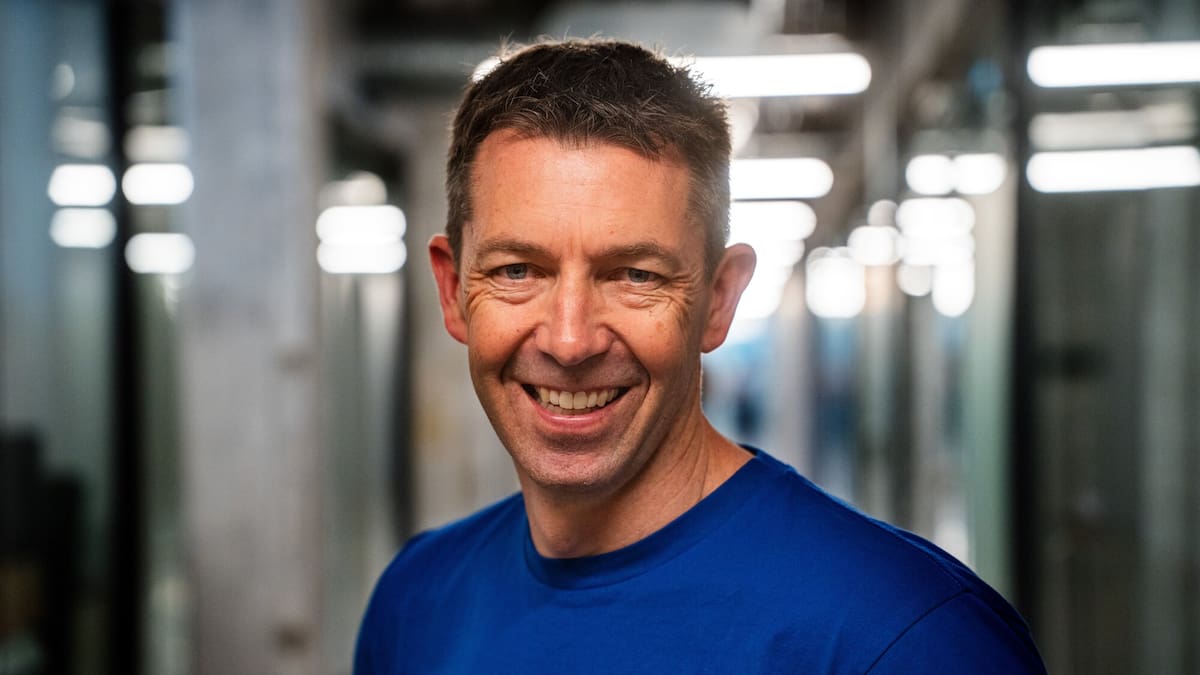
Outlier Space founder Jamie France. France worked for Peter Beck at Rocket Lab for 10 years. Photo / Corey Fleming
He later spent nearly 10 years with Rocket Lab, rising to be global director for Electron launch vehicle production, before he left in 2024 for a role with South Australian start-up Fleet Space Technologies – which, among other projects, was involved in an effort to locate subsurface water ice at the Moon’s south pole.
Until earlier this month, he was also a director of local electric motorcycle maker FTN Motion – a role he’s stepped away from to make more time for Outlier.
The pre-seed round was led by Auckland-based GD1 (Global from Day One), with participation from Nova Threshold, Airtree, Icehouse Ventures, Investible, Side Stage Ventures and Brian Cartmell – the US entrepreneur relocated to Queenstown who has recently been in the news for his $200,000 donation to the Opportunity Party, plus similar sums to parties in the coalition government.
France was an early Rocket Lab employee who became the Kiwi-American firm’s global director for launches of its Electron rocket. Photo / Supplied
The funds would be used to design Outlier’s first capsules, which would be “hardware neutral”, France said.
SpaceX is the default, but it will be compatible with any medium-launch rocket. Rocket Lab’s Electron is too small, but Sir Peter Beck has the larger Neutron on the way.
France is carving his own path, but Beck is still in his outer orbit.
“Peter’s on the investment committee at Outset Ventures, which is in the building we’re domiciled in. So I see him walking the halls now and again.”
France is one of a clutch of ex-Rocket Lab staff who have founded their own companies. The crew includes Craig Piggott (Halter), Malcolm Snowden (Argo Navis), Levi Fawcett (Partly) and Stefan Powell (Dawn Aerospace).
All were there during the early days, where there were lessons in Kiwi No 8 Wire-style engineering, but also US start-up style grind.
READ MORE
As Fawcett recently told BusinessDesk: “At Rocket Lab, sometimes we’d do 60 or 70 days straight, and I’d sleep in my car for 50 or 60 days. I’d sleep for six hours and then work the rest of the time. That was not abnormal, and I loved it.”
Like all of the Rocket Lab alumni, France has big ambitions. His 10-year plan involves an evolution from reusable satellites to a permanent factory in space: “You send materials up and bring the finished goods down.”
“I am a super-passionate Kiwi who really wants to celebrate New Zealand engineering on the world stage. That’s a core motivation for me,” France says.
“I was lucky enough to experience it in New Zealand at Fisher & Paykel [where he began his career] and Rocket Lab.
“I have witnessed how powerful that can be. I was super-inspired by Sir Paul Callaghan’s quote that if we had 100 Fisher & Paykel Healthcares, our prosperity would be assured.”
Chris Keall is an Auckland-based member of the Herald’s business team. He joined the Herald in 2018 and is the technology editor and a senior business writer.