
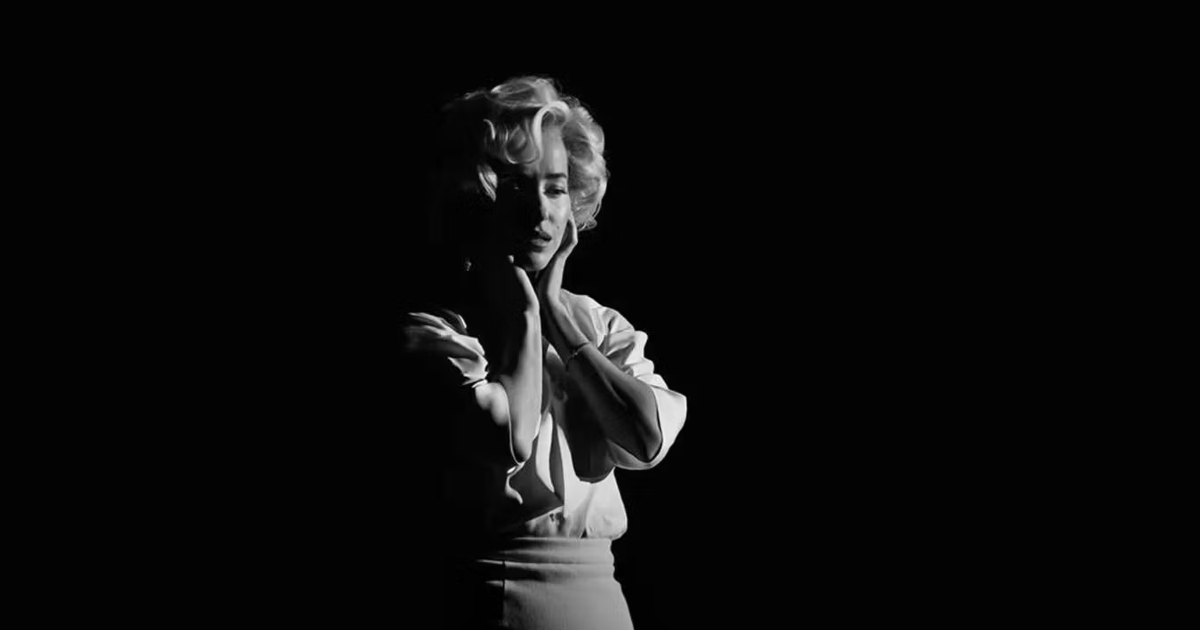
Marilyn Monroe’s image has become one of Hollywood’s most recognizable symbols, reproduced, interpreted and mythologized so many times that, at some point, the real woman disappeared behind the blonde hair and famous beauty mark. More than six decades after her death, cinema continues to return to her, trying to find something that previous versions failed to see.
In the 17-minute film Flesh Impact, Maggie Gyllenhaal chose a completely different path. Rather than reconstructing the life we already know, she imagines the one Marilyn never had the chance to live. Dakota Johnson portrays her at the height of her fame, unrecognizable in a short blonde wig and with her signature beauty mark, while 93-year-old Oscar winner Ellen Burstyn plays a fictional older version of her, the woman she might have become had she been given another six decades of life, work and freedom.
Related: 7 facts that reveal the real Marilyn Monroe

Photo: Courtesy of Genesis
The story begins when a mysterious older woman arrives for an audition at a small New York theater. As she speaks to two people about her acting experience and qualifications, secrets about her identity, her life and the ways in which the public misunderstood her slowly begin to surface. Peter Sarsgaard and Sepideh Moafi, known to wider audiences from the series The Pitt, play those conducting the audition.
Gyllenhaal wrote and directed the film to mark the centenary of Marilyn Monroe’s birth, celebrated on June 1, 2026. She describes the project as a love letter to the actress, but also as an attempt to approach her story from a more contemporary perspective. While researching her life and films, Gyllenhaal became most intrigued by the question of what Marilyn might have done with an additional 60 years of freedom and artistic development. “This film is a blend of Marilyn and my fantasy of her,” the director said of a film that also speaks to actresses more broadly and to the strange profession that places them in an extremely vulnerable yet extraordinarily powerful position.
Related: Kristen Stewart joins Hollywood’s new wave of actress-directors

Photo: Courtesy of Genesis
Dakota Johnson was already on Gyllenhaal’s mind while she was writing the screenplay. The two had previously worked together on Gyllenhaal’s directorial debut, The Lost Daughter, but she initially questioned the casting because Dakota does not particularly resemble Monroe physically. She soon dismissed that concern, concluding that we no longer even know what the real Marilyn looked like, given how thoroughly her image has been transformed into a symbol and a myth over the decades. The costume and makeup evoke the star’s familiar image, but the transformation is not based solely on flawless physical imitation. The film attempts to uncover something beyond it: an actress whose unusual and joyful performances were often overshadowed by stories about her private life.
Ellen Burstyn, who once met Marilyn and moved in similar Hollywood circles, accepted the role as soon as it was offered to her. She carries much of the film through a monologue, imagining not only what Monroe might have looked like in old age, but also how she might have spoken, thought and approached acting after an entire lifetime spent away from the image the public had imposed on her.
Related: Everything we know about the 2026 Venice Film Festival programme

Photo: Courtesy of Genesis
The title Flesh Impact comes from a phrase director Billy Wilder used to describe Marilyn Monroe’s screen presence. He believed that she appeared so real and immediate in front of the camera that audiences could almost reach through the screen and touch her. For Gyllenhaal, the phrase describes the impression left by someone whose entrance into a room is remembered long after they have left it.
The film will have its world premiere in September at the Venice Film Festival, where Gyllenhaal will preside over the main jury this year, while the festival will also honor Ellen Burstyn with the Golden Lion for Lifetime Achievement. After numerous films have attempted to explain who Marilyn Monroe was, Flesh Impact asks a different question: who else might she have become?