
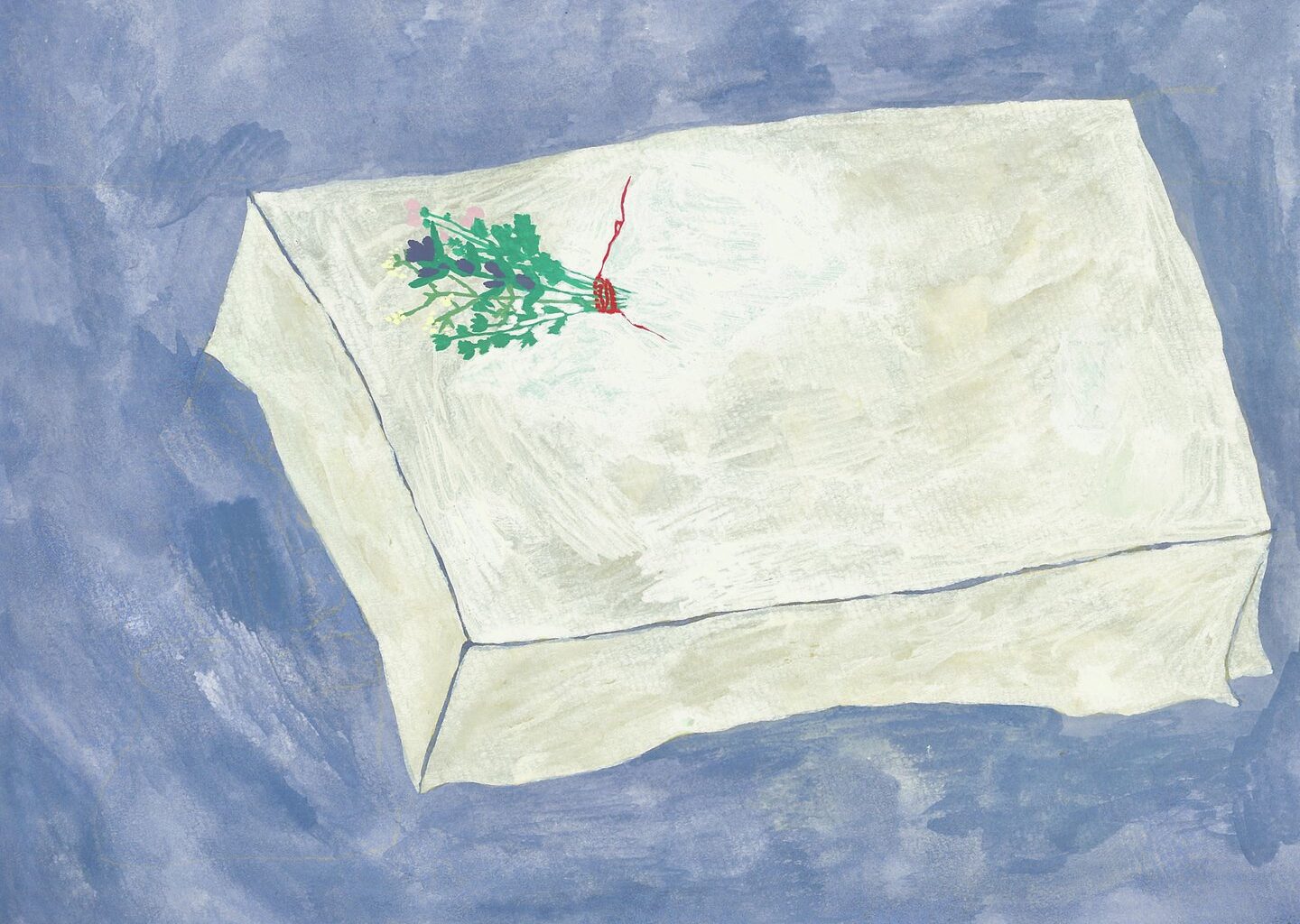
All of Tokyo-based artist Yuna Akabane’s hazy, pastel works are painted with gouache. It’s the medium that she finds the most comforting, which is a wonderful way to pick a tool if you’re painting cosy, nostalgic scenes that almost have the feel of a blanket or tapestry – things you want to reach out and wrap around you for their likeness to all that is soft and familiar. Whenever the artist paints with gouache, she is “hit with clouds of emotion”, she tells us. “I enjoy creating spaces where vibrant colours can exist amongst muted ones. Gouache has a certain way of being light when you need it to be, and that’s something I keep returning to,” she says.
Yuna’s recent series Forgetting to Remember is a collection of airy explorations of the more intangible nostalgic feelings from her childhood – moments where “emotions have been carefully preserved in memory, but the scenes themselves remain ambiguous”, she says. “I think these things are most felt when looking at mundane scenery in the day-to-day.” The series of quiet domestic moments feel quite like a visit to your grandmas on a summer’s afternoon. Colour combinations, flowers atop tables and textures of tablecloths all pull you back to something known or felt and the artists impressions leave a transparent path across each piece that reminds us of childlike watercolour brushstrokes; heavily layered and a little bit scratchy.
As someone that is deeply moved by the art of still life, and dedicates so much of her practice to it, Yuna loves finding glimmers of inspiration in retrospective exhibitions of old masters, uncovering the still life series that they are known for. “Every artist has painted a still life at some point in their lives, whether at the beginning of their practice or much later on. If no one has ever drawn a seven-winged bird before, you have nothing to compare it to, but everyone has drawn an apple. When you look at someone’s apple, you see them in it,” she ends. “Seeing how someone portrays the mundane is the closest you can get to seeing the kind of person they are.”