
Twelve of those arrested appeared in the Rotorua District Court yesterday, with the remaining set to appear today.
This week’s arrests follow a similar operation in Auckland last year, where more than 10 tonnes of cannabis was destroyed by police following raids on clandestine grow houses believed to be run by Vietnamese organised crime groups.
Over four weeks ending in August, Operation Beryl busted 120 properties converted into weed nurseries.
Police estimated last year’s haul was worth more than $50m on the black market.
This week’s raids, codenamed Operation Harvey, followed a six-month joint investigation between police and Immigration New Zealand officers from the Ministry of Business, Innovation and Employment.
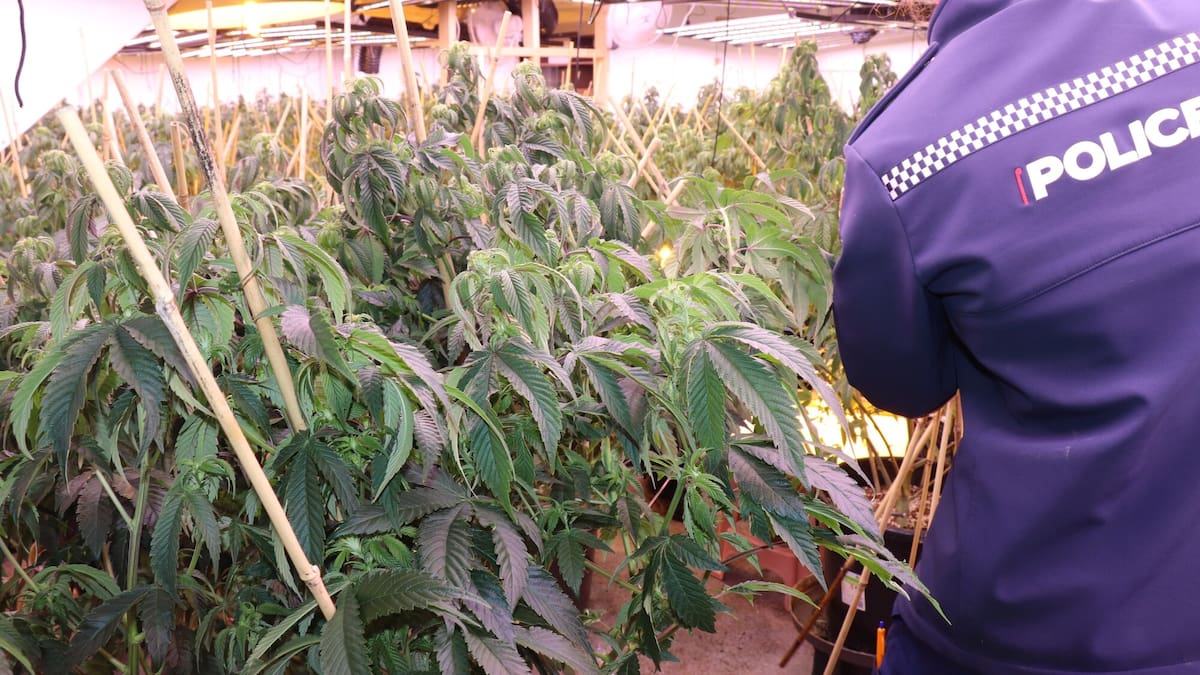
Rotorua Police have busted a large commercial scale drug operation. Photo / NZ Police
The operation targeted residential rental properties allegedly being used to house large-scale commercial cannabis-growing operations involving Vietnamese organised crime groups.
On Tuesday, 25 warrants were executed across Rotorua and Auckland.
It involved more than 220 staff from across Bay of Plenty, Waikato and Auckland districts, as well as support from Genesis Energy to make the properties safe and assist with the investigation phase, police said.
Of the 21 residential properties searched in Rotorua, 14 had active and significant cannabis grow houses operating in them and 10 were rental properties located in residential areas.
Police allege all the houses had been using stolen power illegally diverted from nearby power boxes – with conservative estimates noting they had been illegally diverting about $30,000 worth of power a week to run the grow houses.
“This was a well-organised, significant and well-resourced grow operation with all the properties linked to the same criminal network,” Pilbrow alleged.
Police believed the drugs were destined for sale to other organised criminal groups to on-sell.
“Over 3500 high-value plants were seized along with 97 pounds of dried cannabis head packaged and ready for the wholesale market,” Pilbrow said.
He said the cannabis seized had a bulk sale value of $1.8m, but has a potential street market value “well in excess of $6.5m depending on how it is sold”.
Alongside cannabis, tens of thousands of dollars of cash were seized, along with cannabis-growing equipment.
“The scale of this operation is one I’ve not seen before. It is a multimillion-dollar business used to fund other organised criminal activities. We believe the equipment located and seized at the grow houses is worth more than $1m alone,” Pilbrow said.
One of the sophisticated grow houses busted in Auckland last year run by Vietnamese organised criminal gangs. Photo / Supplied
“Many of these houses were packed to the brim with cannabis plants at various stages of growth. Houses had been altered to allow maximum use of space, with specialised timing and ventilation systems fitted to assist in the growing and to also avoid detection.
“This will deal a significant blow to those involved. These organised criminal groups have embedded themselves within communities simply to cause harm. Not only does the drug use put people at harm, but the associated offending such as the theft of electricity is a significant risk to households and members of the public,” he said.
The operation remains ongoing, with further search activity planned in Auckland and the Bay of Plenty. Further arrests and charges have not been ruled out.
Pilbrow said illegal drugs harmed people and communities, and tackling the issue required a collective effort.
Police encouraged people with information about drug-related offending to come forward.
“Unfortunately, Police continue to see an increase in rental properties in suburban areas being converted into large-scale cannabis growing operations funded and controlled by organised criminal groups.”
A house on Hamon Pl was one of the places raided by police on Tuesday. Photo / Kelly Makiha
A property on Hamon Place in Rotorua was among those raided this week. A team of police spent most of Tuesday afternoon at the property.
Police staff carried large lamps and steel grates on to the front lawn of the property.
A neighbour, who did not want to be identified, said there was a strong smell of cannabis as soon as police arrived and opened the doors and windows.
12 appear in court
Twelve people arrested as part of the raids appeared one-by-one before Judge Joanne Wickliffe at the Rotorua District Court yesterday.
They were represented by Auckland barrister Callum Fredric and assisted by an interpreter. Crown Solicitor Amanda Gordon appeared for the prosecution.
Most of the accused indicated they wanted to be deported. Judge Wickliffe said they would need to leave the country by August 31 or enter pleas in court via a video link from prison.
The charges the accused faced included cultivating cannabis, possession of cannabis for supply and possession of equipment used to cultivate cannabis. Cultivating cannabis carries a maximum prison sentence of seven years.
Eight Vietnamese people, who said they were friends of those appearing, sat in the public gallery during the appearances.
Some of the women among them cried when one of the accused appeared in the dock.
Judge Wickliffe acknowledged the public gallery, saying it was a difficult day for them.
Advice for landlords
Police encourage landlords and property managers to look out for signs that a property may be being used for illegal drug cultivation.
This activity can cause significant damage, pose a fire risk and may jeopardise insurance payouts.
Landlords had obligations to carry out due diligence on prospective tenants. Police recommended reference checks, meeting tenants face-to-face and checking IDs and income verifications.
“If tenants have a preference to pay rent in cash or offer to pay more to avoid inspections, that should be a red flag.”
Other warning signs could include blacked-out or permanently covered windows, extractor fans, ventilation systems or unauthorised structural changes to the exterior of the property or signs that an electricity meter has been tampered with or bypassed.
Kelly Makiha is a senior journalist who has reported for the Rotorua Daily Post for more than 27 years, covering mainly police, court, human interest and social issues.