
India’s wealth management industry is expanding faster than its supply of experienced advisers, increasing the pressure on financial institutions to improve productivity without compromising service quality. At the same time, portfolios are becoming more complex as investors gain access to private markets, international assets and a wider range of investment structures.
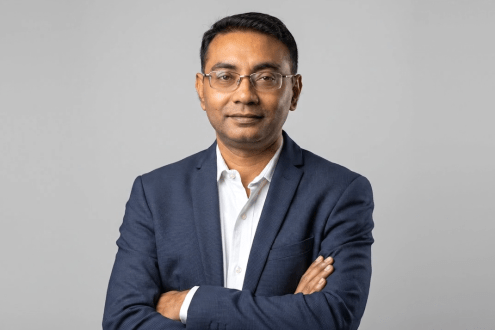
For Srutaban Mukhopadhyay, Chief Executive Officer of Valuefy, addressing these challenges requires more than an improved client interface. Wealth firms need reliable data, sophisticated analytics and integrated infrastructure extending from transaction processing and portfolio reporting to advisory and relationship management.
Founded in 2010, Valuefy is a Mumbai-headquartered wealth technology company providing business-to-business (B2B) software to banks, asset management companies (AMCs), family offices and other financial institutions. Its Indian clients include three of the country’s five largest banks and several leading AMCs. Internationally, it serves independent asset managers (IAMs) and external asset managers (EAMs), supported by offices in Singapore, Dubai and the United Kingdom (UK).
The privately owned, bootstrapped and profitable company is now operating the fourth generation of its technology. Its current focus is on artificial intelligence (AI), conversational user experience, private-market analytics and the multi-currency capabilities required by increasingly global investors.
Key Takeaways
Analytics sits at the centre of Valuefy’s proposition: Its technology supports portfolio reporting, performance attribution, advisory and transaction processing, underpinned by enterprise-grade data and audit controls.
The delivery model differs by market: Valuefy generally undertakes large enterprise implementations in India, while serving IAMs and EAMs overseas through a software-as-a-service (SaaS) model.
A single institution may require several distinct platforms: One major banking client uses Valuefy across digital retail wealth management, private banking analytics and offshore multi-currency reporting.
AI should be used selectively: Valuefy applies AI to software development, information synthesis and relationship-manager support, while retaining deterministic tools for calculations requiring consistency and auditability.
Technology can help close the industry’s capacity gap: As the high net worth (HNW) and ultra-high net worth (UHNW) markets grow faster than the adviser population, firms must enable each relationship manager to serve more clients effectively.
Future development is centred on three areas: Valuefy is prioritising conversational user experience, private-market infrastructure and support for multi-currency global investing.
Analytics Built on Reliable Data
Valuefy describes itself as an analytics company operating within wealth management. Its core capabilities include portfolio reporting, performance measurement, fund attribution and advisory, supported by transaction and back-office infrastructure.
The platform is used across a range of client segments. Banks may deploy it to support retail investors, private banking clients or offshore portfolios, while family offices use it for consolidated reporting and investment analysis. Valuefy also provides automated or robo-advisory tools for retail wealth management and more sophisticated advisory capabilities for private clients.
Mukhopadhyay argues that none of these functions can be separated from the quality of the underlying information.
“The principle is straightforward: if the data is poor, the analytics and the advice will also be poor,” he says. “The back office is therefore part of the analytical proposition, not simply an operational system sitting behind it.”
Valuefy’s back-office technology provides the reconciliation, data-control and audit capabilities expected from an enterprise wealth platform. This establishes a consistent information layer across reporting, advisory and transaction functions, rather than allowing each system to operate from a separate version of the client’s portfolio.
The company also provides mutual fund research through a publicly available platform and holds regulatory licences supporting parts of its Indian business. Its principal commercial focus, however, remains institutional wealth management technology.
Enterprise Scale in India, SaaS Delivery Overseas
Valuefy’s operating model reflects the different requirements of domestic and international clients.
In India, the company primarily works with large banks, wealth managers, AMCs, family offices and multi-family offices. These engagements frequently require substantial integration with an institution’s existing systems and may extend across several business divisions.
Outside India, Valuefy’s clients are more commonly IAMs and EAMs using its technology through SaaS arrangements. These firms require institutional-quality analytics and reporting but may not need the scale or customisation of a large bank implementation.
“Our largest enterprise relationships are in India,” Mukhopadhyay says. “Internationally, the requirement is often for a more standardised platform that gives independent firms access to sophisticated capabilities without having to build the infrastructure themselves.”
The offshore proposition must also accommodate a wider range of currencies, custodians and investment structures. This includes structured notes, leveraged products and portfolios containing data from several banks or back-office systems.
One Bank, Three Different Requirements
Mukhopadhyay uses one of India’s largest private-sector banks to illustrate the range of problems Valuefy can address within a single institution.
The first is an end-to-end digital retail wealth platform. Valuefy developed the mobile application, robo-advisory logic, transaction infrastructure and back-office settlement capabilities.
The engagement followed a build-operate-transfer model. Valuefy initially developed and operated the platform before transferring the same to the bank.
“It was not simply an analytical layer added to an existing application,” Mukhopadhyay says. “The engagement extended from the customer interface and advisory engine through to processing and settlement.”
The same bank uses Valuefy differently within its private banking division. Here, relationship managers require detailed portfolio intelligence for HNW and UHNW clients rather than a largely automated retail journey.
The technology combines performance analysis, investment research, market information and private-market data. It allows relationship managers to explain the sources of portfolio return and risk across conventional and alternative investments.
A third deployment supports the bank’s offshore branches. Valuefy aggregates information from several operational and market-data sources before producing consolidated reporting across currencies and product types.
This includes money-weighted and time-weighted performance calculations and support for instruments such as swaps, structured notes and leveraged investments. The bank can therefore retain separate transaction-processing systems while using Valuefy as its reporting and analytical layer.
“One bank can have three entirely different use cases,” he says. “Retail requires an efficient digital journey, private banking requires depth, and offshore wealth requires consolidated analysis across more complex products and currencies.”
Applying AI Where It Improves the Outcome
Mukhopadhyay is sceptical of the tendency to attach the AI label to every new technology capability.
“There is a great deal of snake oil in the market around AI,” he says. “The important question is not whether AI can be used, but whether it is the most reliable tool for the problem.”
Valuefy is currently operating the fourth generation of its platform, and AI has become a significant part of its software development life cycle over the past nine to 12 months.
The company considers its development process AI-native. AI may accelerate coding, testing and documentation, but experienced professionals remain accountable for architecture, review and production quality.
Because Valuefy operates within a regulated industry and processes sensitive institutional information, much of this work takes place in controlled internal environments rather than through unrestricted public tools.
“We are strong proponents of keeping a human in the loop,” Mukhopadhyay says. “Anything that can affect a production system or the client experience must be reviewed by somebody capable of taking responsibility for the result.”
Valuefy also distinguishes between problems with deterministic solutions and those requiring interpretation or synthesis.
Portfolio optimisation, for example, relies on mathematical assumptions and should produce a consistent result when those assumptions remain unchanged. Although a generative model may be able to attempt the calculation, variability between outputs would weaken auditability and reliability.
“If a problem has a deterministic answer, we use a deterministic tool,” he says. “The fact that AI can generate an answer does not mean it should replace an established method that is consistent and explainable.”
AI becomes more valuable where a professional needs to combine several information sources and communicate the result clearly.
Before a client meeting, a relationship manager may need to review portfolio performance, recent market movements, internal research, call reports and their knowledge of the relationship. Valuefy’s dashboard can synthesise this information into a concise narrative that supports preparation and discussion.
The company has also introduced chatbot capabilities. These can remain internal to relationship managers or, depending on the institution’s requirements, be extended to end-clients.
Mukhopadhyay expects this technology to change the way users interact with wealth platforms. Rather than relying entirely on fixed menus and tabs, advisers and clients will increasingly be able to request information, comparisons and explanations conversationally.
“The experience will become more fluid and responsive to what the user is trying to achieve,” he says. “It will feel less like navigating software and more like interacting with the information.”
Technology as a Force Multiplier
The commercial importance of these capabilities is reinforced by the shortage of experienced wealth management professionals.
Mukhopadhyay cites industry estimates indicating that India’s HNW and UHNW market is expanding far faster than the pool of relationship managers and investment advisers available to serve it. Whatever the precise growth rates, he believes the imbalance is structural.
Experienced advisers cannot be produced quickly. They require technical knowledge, sound judgement, regulatory awareness and the ability to develop trusted relationships over time.
Technology must therefore enable each professional to cover more clients without lowering service standards. Automated meeting preparation, integrated portfolio analysis and more efficient communication can reduce administrative work and allow advisers to focus on judgement and client engagement.
Mukhopadhyay does not expect these tools to equalise performance across the industry. Instead, he believes they will amplify the capabilities of the strongest advisers.
“AI will make the great relationship managers even better,” he says. “Those who already understand their clients and use the technology well will become more effective. Those who fail to adapt risk being left behind.”
Box
Key Priorities
Valuefy’s priorities for the next 12 to 18 months reflect changes in both client expectations and the Indian investment landscape.
A More Conversational User Experience
The first priority is a broad redesign of the platform’s user experience (UX) for the AI age.
Valuefy is reviewing how relationship managers, operations teams and clients access and interpret information. The intention is to create a more fluid interface and introduce conversational functionality where it improves usability.
Mukhopadhyay believes client experience will become a more significant differentiator as competing institutions gain access to similar products and analytical capabilities.
“We are looking at the platform from the user’s perspective rather than only at the functions beneath it,” he says. “The experience has to become more intuitive, and conversational interaction will be an important part of that.”
Building for Private Markets
The second priority is private-market infrastructure.
Public-market investing in India has become substantially more accessible, supported by digital distribution, improving infrastructure and greater availability of information. Private markets remain less transparent and more difficult to analyse.
These assets can involve irregular cash flows, infrequent valuations, capital calls, distributions and commitments. They cannot always be processed or reported in the same way as listed securities.
Valuefy is expanding its private-market reporting and analytical capabilities to reflect these differences and support the growing range of alternative investments available to sophisticated clients.
“The opportunity is substantial, but the information environment is still opaque,” Mukhopadhyay says. “These products can be highly complicated, and the technology has to reflect their real structure rather than forcing them into a public-market framework.”
Supporting Global Portfolios
The third priority is multi-currency and cross-border investing.
Indian investors have historically maintained relatively limited international allocations, partly because of capital controls and the practical complexity of investing overseas. Mukhopadhyay expects this to evolve as Gujarat International Finance Tec-City (GIFT City) develops and financial institutions expand their global offerings.
Valuefy is strengthening its ability to support Indian clients investing abroad and overseas clients allocating into India. This includes consolidated reporting, analytics and transaction capabilities across currencies, custodians and asset classes.
“International investing will become relevant to a much broader part of the market,” he says. “The experience must be seamless rather than treating offshore assets as a disconnected portfolio.”
Box
Into the Future
Over the next five years, Mukhopadhyay expects India’s wealth management industry to be shaped by technology-enabled productivity, broader participation in private markets and the continued internationalisation of the Indian investor.
The first challenge will be maintaining service quality as client numbers and assets grow faster than the pool of experienced advisers. Generative technology will become increasingly embedded in meeting preparation, portfolio interpretation and relationship management, allowing professionals to spend less time assembling information and more time applying judgement.
The second development will be a broader and more sophisticated private-market ecosystem. These assets have traditionally been concentrated among UHNW families and institutions, but product providers are beginning to reduce investment thresholds within existing regulations.
Mukhopadhyay expects a wider range of private credit, hedge fund and alternative strategies to enter the market. Greater access will need to be accompanied by stronger suitability controls, research, valuation practices and portfolio-level reporting.
“Democratisation does not mean pretending that private assets are simple,” he says. “It means making appropriate opportunities available more efficiently while retaining the controls that sophisticated investments require.”
The third development will be the globalisation of Indian portfolios. The Liberalised Remittance Scheme (LRS) already allows resident individuals to invest overseas within regulatory limits, while GIFT City is creating additional channels for international products and services.
As these options expand, advisers will need to assess domestic and international assets within one portfolio framework. Currency exposure, liquidity, tax, product structure and jurisdictional risk will become more prominent parts of the advisory process.
“The Indian investor is becoming more global, more sophisticated and more demanding of service quality,” Mukhopadhyay says. “Relationship managers will need to combine local understanding with international products, information and technology.”
Box
Getting Personal with Srutaban Mukhopadhyay
Mukhopadhyay was born in India and educated in several locations, including Delhi and Kolkata. His father’s work also took the family overseas, giving him periods of schooling in Lagos, Nigeria, and London in the UK.
He qualified as a chartered accountant and later completed management studies at the Indian Institute of Management Lucknow (IIM Lucknow).
His career has been concentrated in banking, financial services and capital markets. Beginning with financial services work during his accountancy articleship, he subsequently held roles across retail broking, private banking, portfolio management and investment advisory.
The institutions he worked with included UTI Bank, now Axis Bank, ABN AMRO, the Royal Bank of Scotland (RBS) and Barclays Private Bank.
Over time, Mukhopadhyay became convinced that private banking technology had not developed in line with the needs of its clients and professionals. That view ultimately led him towards Valuefy and its effort to improve the sector’s B2B infrastructure.
“I felt the industry had given me a great deal, and I wanted to contribute something in return,” he says. “One route was through academics. The other was to address the technology gap I had seen throughout my career.”
Mukhopadhyay lives in Mumbai with his wife and their 13-year-old son. The family generally takes at least two holidays each year and has a particular interest in historical destinations.
A recent journey took them to the Netherlands and Belgium, although his most memorable destination remains Angkor Wat in Cambodia. He was particularly struck by the Indian cultural influence visible in the complex and by seeing Cambodian guides explain representations of the Ramayana through its carvings.
“It felt like travelling several centuries into the past,” he recalls. “Being taught the Ramayana through those wall carvings by somebody outside India made the experience especially memorable.”
Driving is another longstanding interest. Mukhopadhyay travels to work by car through Mumbai’s traffic and regards the journey as useful thinking time.
“My car is effectively a mobile office,” he says. “I enjoy driving enough that even Mumbai traffic does not discourage me.”
Family road trips to Goa remain a favourite, with the route changing according to the journey and the preferences of his passengers. He has not yet driven outside India but hopes eventually to complete the drive down the Great Ocean Road, and a journey through Spain.
**
Srutaban is speaking at our upcoming Hubbis India Wealth Management Forum, which is taking place on Wednesday 12th August, 2026 from 9.00am – 4.00pm at the Four Seasons Hotel, Mumbai, an event also being kindly partnered by Valuefy.
Find out more about the event HERE.