
Local Government Minister Simon Watts says policy on amalgamation has not changed, after one mayor indicated a softening of the government’s position.
Watts, alongside RMA Reform Minister Chris Bishop, announced in May that councils would have three months to come up with plans for reorganising council boundaries, with a focus on abolishing regional councils and creating larger unitary authorities.
“Our message to councils is simple: lead your own reform or we will do it for you. Either way, change is coming,” Bishop said at the time.
Tararua wary of amalgamation plans
Morning Report
That 9 August deadline – pitched as giving councils a “head start” on amalgamation discussions – is fast approaching.
Councils have been consulting and discussing their options but few have come up with firm plans.
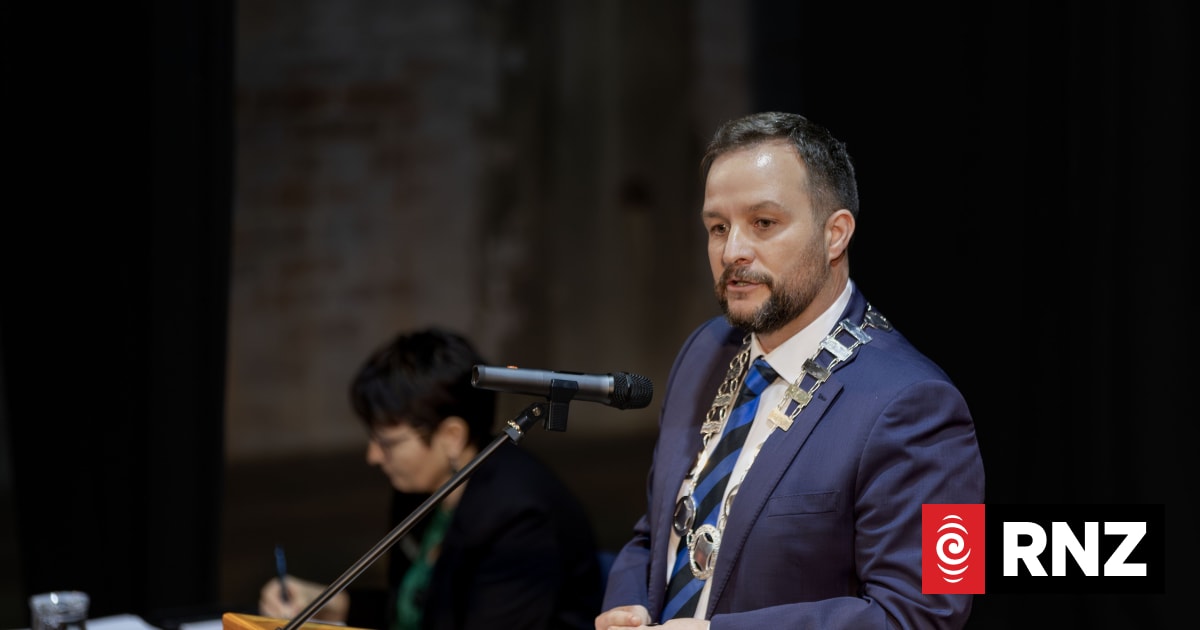
Tararua mayor Scott Gilmore spoke to Morning Report on Thursday about how those discussions were going, saying they had great relationships with all their neighbours but “definitely not to a point where there’d be any meaningful proposal being ready to be put forward”.
“It’s not just amalgamation, and I think that’s the problem with the government’s head-start proposal is amalgamation is the only option within that process.
“We think that there’s other options, like the government first signalled late last year – shared services, other collaboration, other efficiencies.”
Discussions had started with Horizons Regional Council, covering Manawatū-Whanganui, but Tararua covered a “massive, massive” area already and regional council areas were based on water catchments, Gilmore said.
As a result, the council was not planning to submit a proposal.
“People are really conscious of their local voice, and I actually think not that we should lose it.
“Our council sees much more risk for us taking part in the head start … we wouldn’t have time to have a good proposal but we might get locked into something that would be really undesirable for our communities, and we’re just not willing to do that. And our community told us they don’t want us to.
“The way that local government works best is when the people that are close to the action are participating in the decision-making. And you know, when you look at having a huge geographical area, a mass amalgamation, it’s going to be really difficult to put that in there.”
However, the rhetoric from the government on amalgamation “has changed and has softened”, he said.
“I’m really grateful to the minister. I’ve spoken to him directly a couple of times.
“We’ve had clarified that the back-stop process will be a collaborative process and it’ll be run in a similar way to what they consulted on late last year before all of this head-start bombshell dropped.
“That will give us an opportunity to help us lead our own reforms.”
However, Gilmore told RNZ his comments were not based on private conversations “although I have appreciated the opportunity to talk to the minister directly”, but based on a letter the minister had sent him.
The letter from Watts, which RNZ has seen, says the backstop “will be broadly based on the original Simplifying Local Government proposal and will be informed by lessons from the Head Start as well as feedback from consultation”.
“We are open to innovative approaches from councils as well as current Local Government Act 2002 models. Local voice will continue to be important through design of the backstop.”
It also states the final decisions would be made by the government in 2027.
Scott said he did not dispute that the policy had not changed, “rather the language that surrounds it”.
He said the government’s clarification that it would be based on the original proposal and it expected to work collaboratively with councils and communities was encouraging.
Gilmore criticised the approach taken, saying the “language of ‘do it or we’ll do it to you’ … was really unhelpful”.
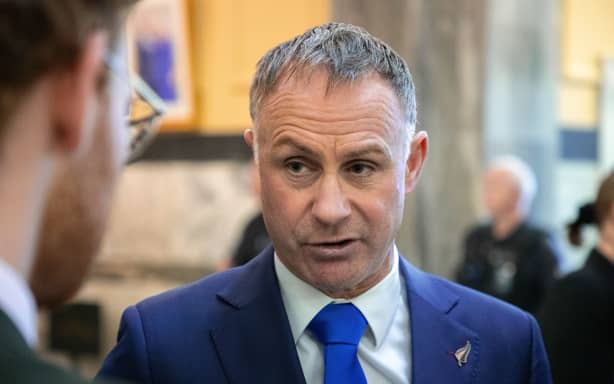
Local Government Minister Simon Watts.
RNZ / Baz Macdonald
Watts rejected the suggestion of a softening.
“There’s been no change in government policy,” the minister said in a statement.
He indicated that what would happen to councils afterwards – the “back-stop” option – would take council feedback into account but that ultimately the government would decide the way forward.
“Our position is and has always been that we will work with councils – head start was specifically designed to give councils control over their plans.
“Change is coming and the government will progress with the back stop for councils not in the head start. But we’ve also been clear from the beginning that we want to learn from the councils going through the process before making final decisions on what that back stop looks like.”
When asked about mayor Gilmore’s comments, RMA Reform Minister Chris Bishop said mayors should refrain from making private conversations public.
“The fastest way to make sure that ministers don’t pick up the phone is the knowledge that something that you say to a mayor might end up on the front page of a newspaper – that would be regrettable,” he said.
Bishop said he was trying to “stay out of it” because he wanted to see what the regions would come up with.
“There’s incessant lobbying going on in Wellington, everyone trying to drag me into the debate in Wellington – obviously because I’m a local MP in Wellington.
“There’s incessant efforts to get me to engage. I’m trying to stay out of it because I want the region to come up with a solution,” he said.
Councils have until 9 August to submit proposals.