
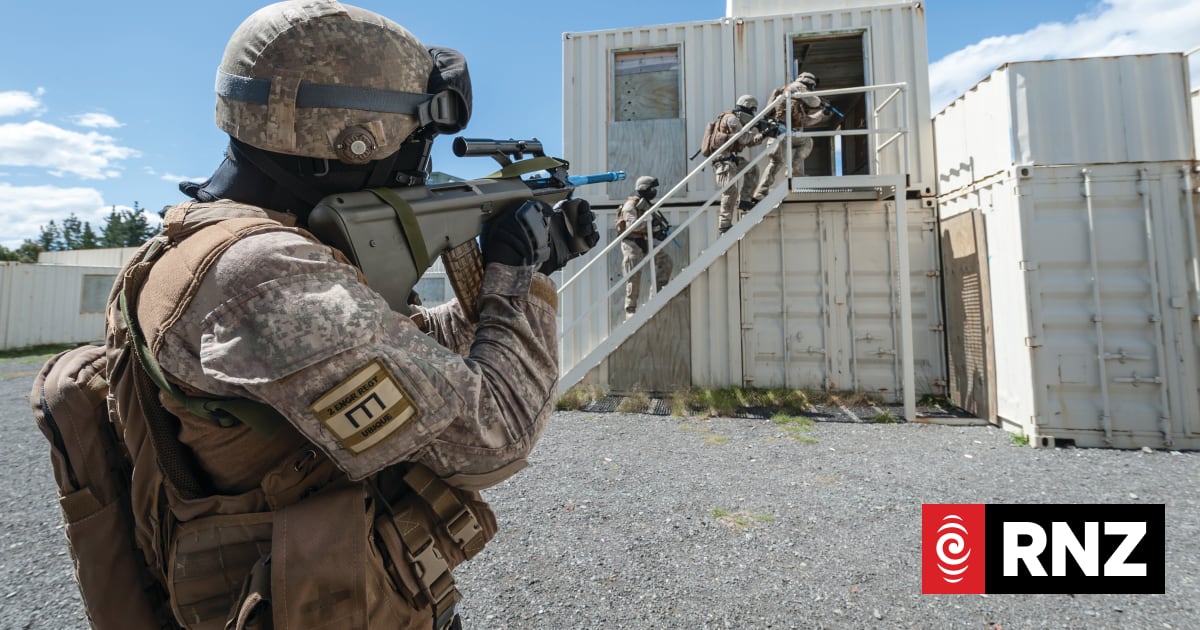
The Defence Force is on its biggest push ever to get more combat ready and lethal at the same time its training infrastructure is in “World War II era”, according to newly released documents.
Proactively released Cabinet papers from April and May outline the big deficit.
“The infrastructure to support training of recruits, in particular, is not in a position to meet existing … demand in an effective way,” said one 12-page paper that asked for, and got, a start to planning for an upgrade to how recruits are trained.
“Much of the infrastructure required to train NZDF personnel, like classrooms or rifle ranges, is World War II era, and is increasingly ineffective, and creating a potential for unsafe training environments.
“Investment is needed to avoid future failure.”
The paper asked Cabinet to back a business case for fixing this, and Budget 2026 put in $23m.
However, this only funds a design phase out to 2029-30.
That means an actual fix of systems and infrastructure together appears at least three years away.
Defence Minister Chris Penk said there have been many years of under-investment into the Defence Force and this government is working to fix the consequences.
“We’ve begun the process of doing so to ensure training can be delivered safely, effectively and at the scale required into the future.”
The Defence Capability Plan suggested investments over the next 15 years including into recruitment, retention and training, he said in a statement.
The paper said one upgraded rifle range would be added meantime, but one or two other short-term moves “to add resilience to a significantly degraded capability” were blanked out.
‘Failing condition makes it difficult to train’
The deficiencies are a big hurdle to Defence’s must-have in its new workforce strategy “to grow more soldiers, sailors and aviators, with urgency” and more tech-savvy ones as drone, cyber and electronic warfare take over.
Instead, “poor infrastructure in failing condition makes it difficult to train and retain people.”
An example is old manual target practice ranges not suitable for modern weapons. Two other examples were blanked out.
The wider context is grim:
The state of bases and facilities was a key reason given at scrutiny week in June for the land combat readiness falling to 45 percent at the end of 2025.Defence has admitted its training systems are degraded too much to rapidly boost battlefield adaptability and agility.NZDF’s ways of managing its existing assets do not meet Treasury standards, and it is slow to get contracts for projects signed up.
Eroded by old gear and slow take-up of new tech, 60 percent of the army’s land training system had got to the end of its life, said the May Cabinet paper.
Recruits ‘most pressing’
The whole system relied in the first place on recruit training but this was significantly degraded and the “most pressing” thing needing fixing.
That fix would focus on Waiouru camp and line up with Australia, which was putting almost a billion dollars into recruit training, as well as looking to the US, UK and Singapore.
The paper that Penk lodged with Cabinet showed the ministers – Judith Collins was Defence Minister at the time – walking a line between “capability and affordability”, even after Defence got a $9 billion fillip in new spending over four years from 2025.
So they narrowed in on a new recruit training system and curriculum which was the “minimum viable capability needed in the short term”, and would need to integrate with Australia, other partners and other government services.
“Australian designs will be used where possible” in the detailed business case that is now being worked on.
‘Future growth’ option not chosen
A third more ambitious option that catered for “future growth and the introduction of new and emerging … capabilities” did not make the cut.
Budget 2026 also had funding for an undisclosed amount for a new ‘virtual training’ facility at Linton camp near Palmerston North.
Defence has a huge estate, huge budgets and a chequered track record running it all.
The latest available Treasury report on how NZDF was doing with its big capital investments said it was no longer reporting a significant underspend (which can indicate projects hitting delays). Its actual spend on projects at $406m, and its spending on repairs and maintenance at $193m, at that stage were only a bit behind forecast.
However, Defence spending on specialist equipment and on data/digital was running well behind forecast.
The report for the September-December 2025 quarter showed it took about a year for procurement processes to get to the point of signing contracts, among the slower on the major public agencies covered by the Treasury investment reports.
Its asset registers and asset management plans were not up to scratch according to the latest gauge in June 2025. An update for 2026 won’t be publicly available for months.
Labour’s defence spokesperson Damien O’Connor said it supported the direction of the Defence Capability Plan.
“Personnel is the most acute issue facing NZDF. Labour sees this as a priority and will get advice on ensuring training capacity is built when in government,” he said.
On wider policy, he said they support cooperation and interoperability including with Australia but have made it clear Labour does not support joining AUKUS Pillar Two, a military tech-sharing agreement between Australia, the US and UK.