
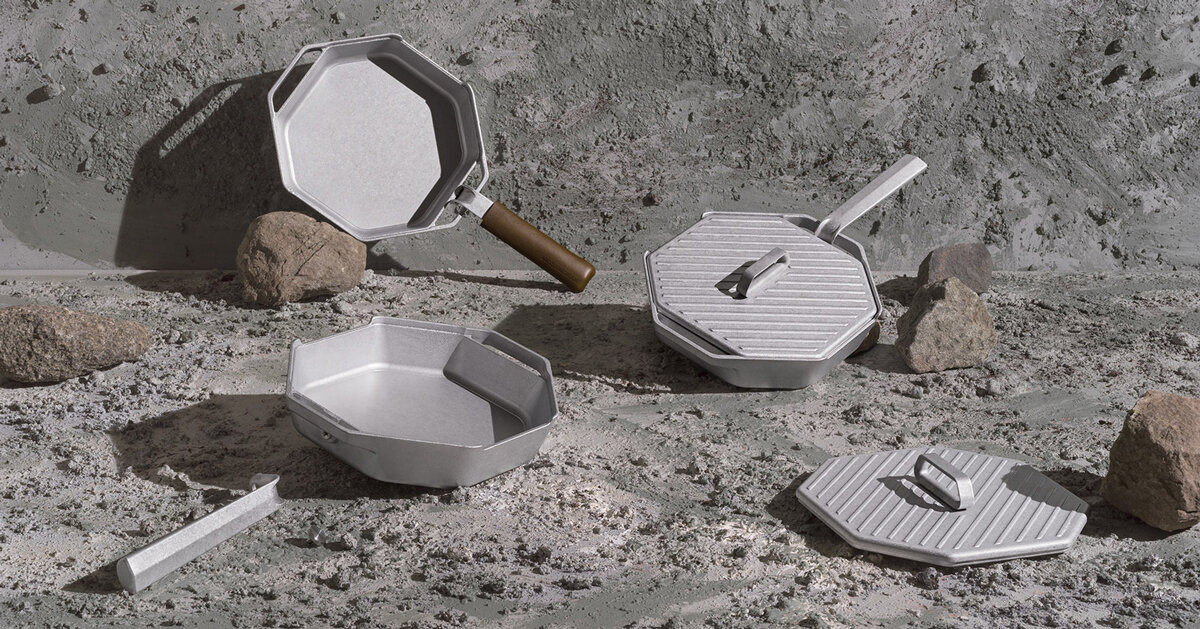
STEKA replaces conventional round pan with an octagonal body
ADDI Designstudio developed the STEKA sauté pan for Japanese cookware brand Mozambique as a long-term cooking tool that combines a distinctive octagonal form with repairable construction and an uncoated aluminum surface. Designed for use on both kitchen stoves and open fires, the pan moves between domestic and outdoor cooking while focusing on durability, maintenance, and continued use.
The project began with a reconsideration of the conventional round pan. Rather than following the geometry typically used for cookware because of its efficient casting and mass-production properties, ADDI developed an octagonal body. The eight-sided form does not introduce a specific functional advantage over a round pan, but instead establishes a visual identity intended to make the object suitable for remaining visible in the kitchen rather than being stored away. The design emerged from a shared brief between ADDI and Mozambique, combining Scandinavian reduction with the Japanese brand’s material-focused approach and local manufacturing expertise. Development involved repeated testing and adjustments between Sweden and Japan.
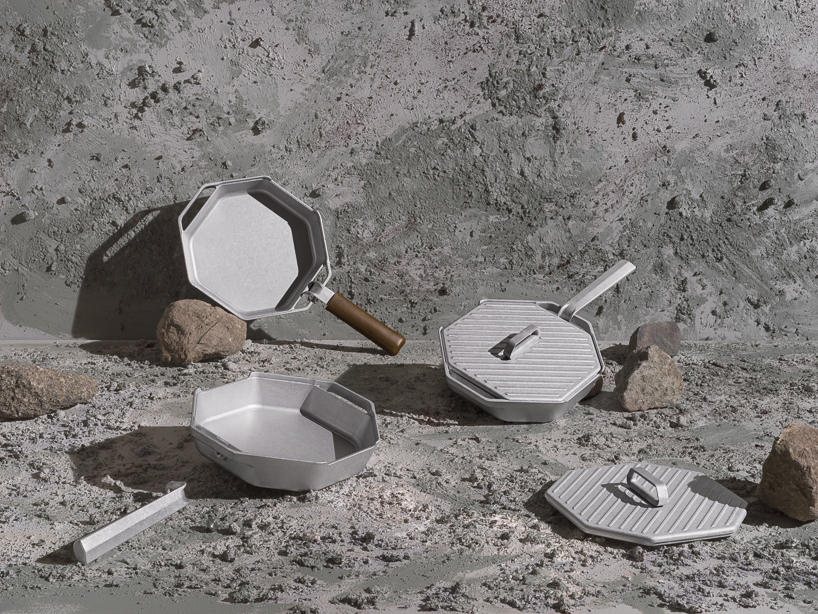
all images courtesy of ADDI Designstudio
Solid aluminum and replaceable components define the STEKA pan
The pan and handle by Swedish design studio ADDI Designstudio are cast from 5 mm solid aluminum. This thickness provides heat retention comparable to cast iron while keeping the pan lighter. The cooking surface is left uncoated, allowing direct contact between the aluminum and ingredients and enabling the surface to develop with use. The straight, high sides expand the pan’s applications from searing to simmering, frying, and preparing sauces. The construction is designed to facilitate maintenance and replacement. The cast-aluminum handle is attached with a single stainless-steel screw instead of a permanent rivet, allowing it to be removed for oven use, compact storage, or replacement. The approach extends the functional lifespan of the pan by making individual components accessible rather than treating the object as a fixed assembly.
A matching cast-aluminum lid takes inspiration from the Japanese otoshibuta drop-lid. Raised points on its underside help circulate moisture during simmering and braising, supporting a self-basting cooking process. Each STEKA pan is produced by hand at a Japanese aluminum foundry with more than a century of casting experience. Production combines gravity die casting, CNC machining, hand finishing, and specialist polishing, with current output limited to ten pans per day. Mozambique offers a five-year warranty with the STEKA, reinforcing the product’s focus on long-term use. The uncoated aluminum surface is intended to change through cooking, with marks, softened edges, and other signs of use becoming part of the object’s ongoing material character rather than treated as defects.
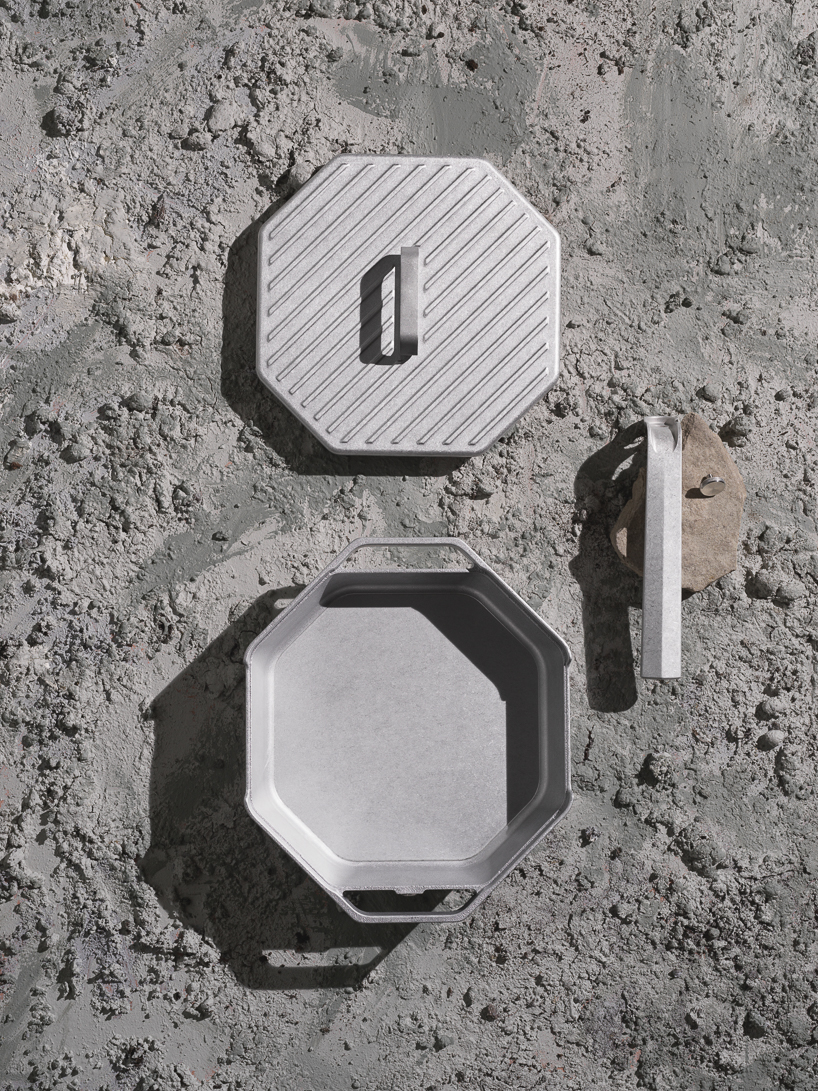
the cast aluminum handle attaches with a single stainless-steel screw rather than a rivet