
Police were watching when, in August that year, an associate pulled up to Kluger’s Johnsonville home, in the middle of Covid lockdown, and took a battery pack from the boot.
Its contents had been removed and replaced with a kilo of methamphetamine.
Kluger kept 700g of methamphetamine, giving 300g back to his associate, with $130,000 in cash and 20 containers of high-grade motor oil, and writing an IOU for the remaining $2500 he owed the associate.
Two months later, police stopped Kluger as he drove to meet an associate in Oriental Bay.
When police searched his car, they found drugs including methamphetamine, liquid ecstasy and MDMA, a loaded pistol and $190,000 in cash vacuum-packed in three packages and concealed inside a large bag of dog food.
But Kluger also invested money in a catamaran, a house in Marlborough and a Ford ute.
Guns and ammunition
That same day police swooped on Kluger’s properties in Horowhenua and Marlborough, finding guns and ammunition.
In December that year, police returned to the address in Crail Bay Rd, Marlborough. Inside his locked bedroom, they found a locked safe.
Inside the safe, police found a significant amount of firepower and ammunition. Among the 15 guns were an NHM-90 AK-47, a Stag Arms AR15, a Saiga Verpa, a Ruger AR556 and a Bushmaster AR15.
There were also 10 prohibited magazines, including two AR15 20-round magazines and three Steyr Aug magazines, and at least 16,000 rounds of ammunition, including 660 9mm calibre rounds.
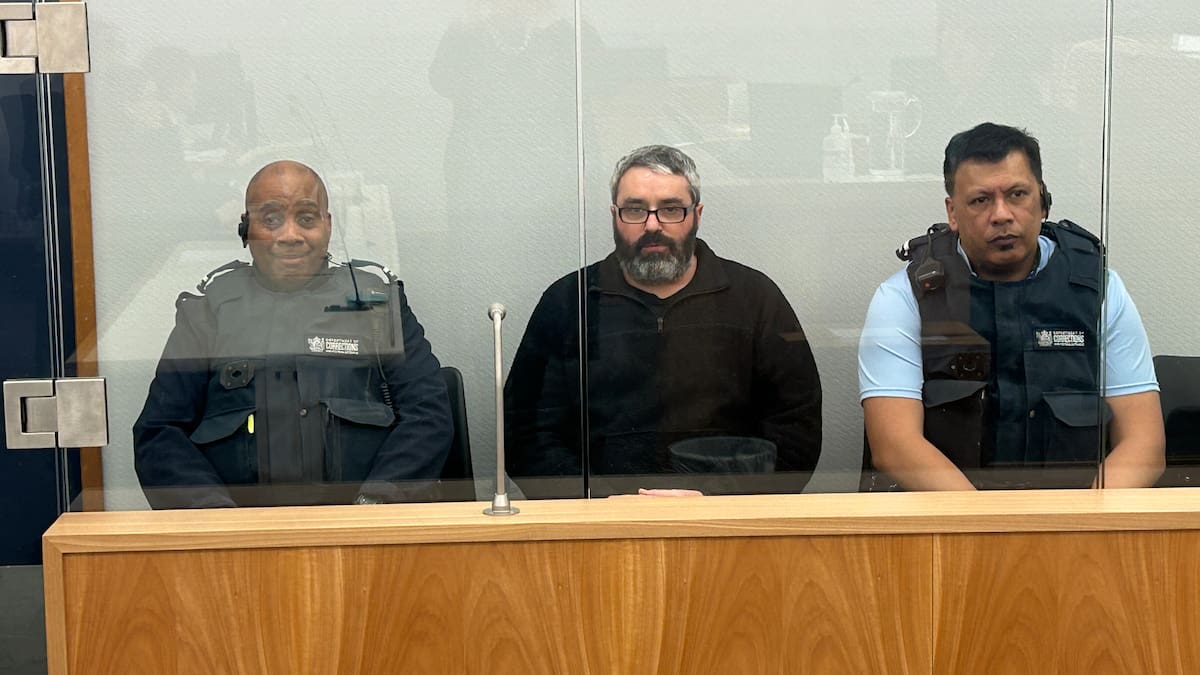
Today, in the Wellington District Court, the 49-year-old was sentenced.
Crown prosecutor George Fitzgerald told the court the crux of its case was that Kluger was running a sophisticated and commercial drug operation, which facilitated the money laundering and elevated the offending.
He told the court that Kluger was a linchpin of the operation.
Fitzgerald submitted Kluger had made a reasoned choice to enter the world of commercial drug offending over a sustained period of time.
He took issue with the submission from Kluger’s lawyer Ron Mansfield, KC, that the money had been spent on “some toys and a roof over his head”.
But Mansfield took issue with the Crown’s description that this was a sophisticated operation.
“I’m not suggesting that it wasn’t commercial, but I don’t accept that it was sophisticated.
“This was getting drugs, supplying drugs and making money, laundering the money,” he said.
Mansfield said his client, who has spent four years and 10 months in jail while on remand for the current charges, had dried out in prison and now enjoyed the best health he’d had for a long time.
The case had faced significant delays because of Covid, difficulties finalising charges and delays with disclosure.
Mansfield also acknowledged a loaded pistol had been found with Kluger when he was arrested, which he submitted his client carried for his protection.
The lawyer said the firearms were part of a collection.
“There are a lot of firearms here. This was really a collection of firearms that was of interest to him, because he had the money.”
Several were for hunting, which he did on his rural property.
He also referred to a traumatic event in his client’s life that had a profound impact on Kluger.
Mansfield didn’t outline the event in open court but said as a result, Kluger’s grades slipped, he started to take drugs and alcohol, and gravitated towards others who also took drugs and alcohol.
The Crown sought a starting point of 14-16 years for the representative drugs and money laundering charges with an uplift for the firearms charges of between two and three years.
They accepted a discount for the guilty plea should apply.
Meanwhile, the defence sought a starting point between 10-and-a-half and 11 years with a two-year uplift for the firearms charges, with a 70% discount for factors including an early guilty plea, issues of trauma and deprivation, previous good character and remorse.
Kluger selling drugs on commercial scale
In sentencing Kluger, Judge Noel Sainsbury told Kluger the fact he was buying and selling the drugs on a commercial scale was obvious with the purchase of the 700g of methamphetamine.
And the expectation of financial gain was apparent in the money laundering, telling Kluger he had a leading role.
The judge set the starting point for the methamphetamine offending at 14-and-a-half years. He said the size and scale of the amount of firearms and ammunition that was found was a concern, and justified an uplift of two-and-a-half years.
That left a final starting point of 17 years.
In mitigation, he noted Kluger had no previous convictions and had pleaded guilty.
The judge also noted there was clearly trauma, which brought him into the world of drugs and commercial drug dealing.
“Notwithstanding the advantages of his upbringing … at some point Mr Kluger you’ve decided to make money by selling methamphetamine in our community, in other words selling misery into the lives of people and families in our community. You made that decision.”
On charges of possession of methamphetamine, unlawful possession of a firearm, unlawful possession of ammunition and four charges of engaging in money laundering, the judge imposed a final sentence of 11 years and 11 months.
Catherine Hutton is an Open Justice reporter, based in Wellington. She has worked as a journalist at the Waikato Times and RNZ. Most recently she was working as a media adviser at the Ministry of Justice.
Join NZ Herald’s Open Justice team for Case by Case, a video and podcast series examining the disputes and decisions making headlines across New Zealand.