
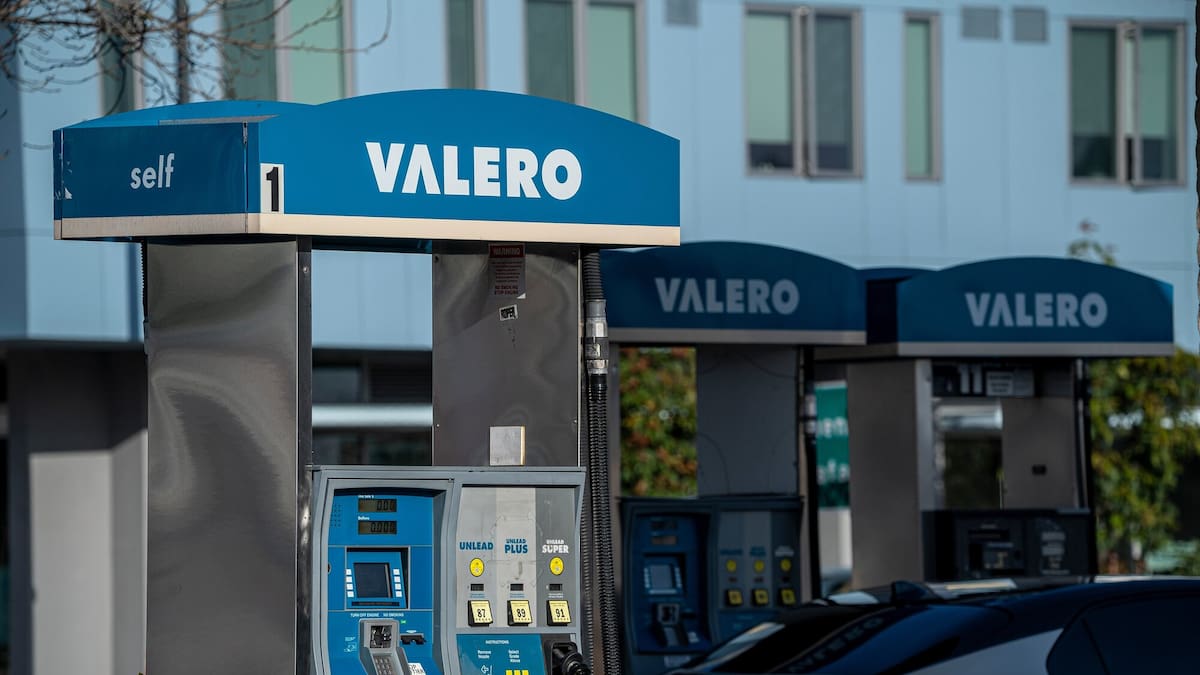
War and refinery attacks keep global fuel supplies under pressure. Photo / Getty Images
Valero’s second-quarter net income increased more than five-fold year-over-year, up to $3.7 billion from $714 million the previous year. HF Sinclair’s net income roughly quadrupled to $892m, while PBF’s rose over $1b from a loss in the same period of 2025.
Heading into the next quarter, Valero and HF Sinclair both projected minimal declines in the average amount of crude oil they process into fuel on a daily basis. PBF, which ran nearly 890,000 barrels a day of crude in the second quarter, expects a higher run rate of as much as 960,000 barrels a day next quarter. And the profits may look even better as the fuel crunch continues.
“The margin environment thus far is stronger than what we saw in the second quarter,” Valero chief operating officer Gary Simmons said on a call with equity analysts on Wednesday, citing cheaper crude oil costs.
And there’s little indication that fuel prices will ease soon, Simmons said.
Jet fuel prices, which eased some this summer from record highs, appear set to rise again, he said.
Diesel prices remain elevated as disruptions to Russian supplies have increased demand for US exports. Prices are likely to stay supported as buyers begin restocking ahead of the winter heating season, even at the higher costs.
Meanwhile, importing gasoline to the US from Europe doesn’t make economic sense, Simmons said, given that prices are elevated there as well. But exporting it to Latin America does, because an arbitrage opportunity exists. That’s keeping gasoline prices in the US elevated as well, Simmons said.
Sign up to Herald Premium Editor’s Picks, delivered straight to your inbox every Friday. Editor-in-Chief Murray Kirkness picks the week’s best features, interviews and investigations. Sign up for Herald Premium here.