
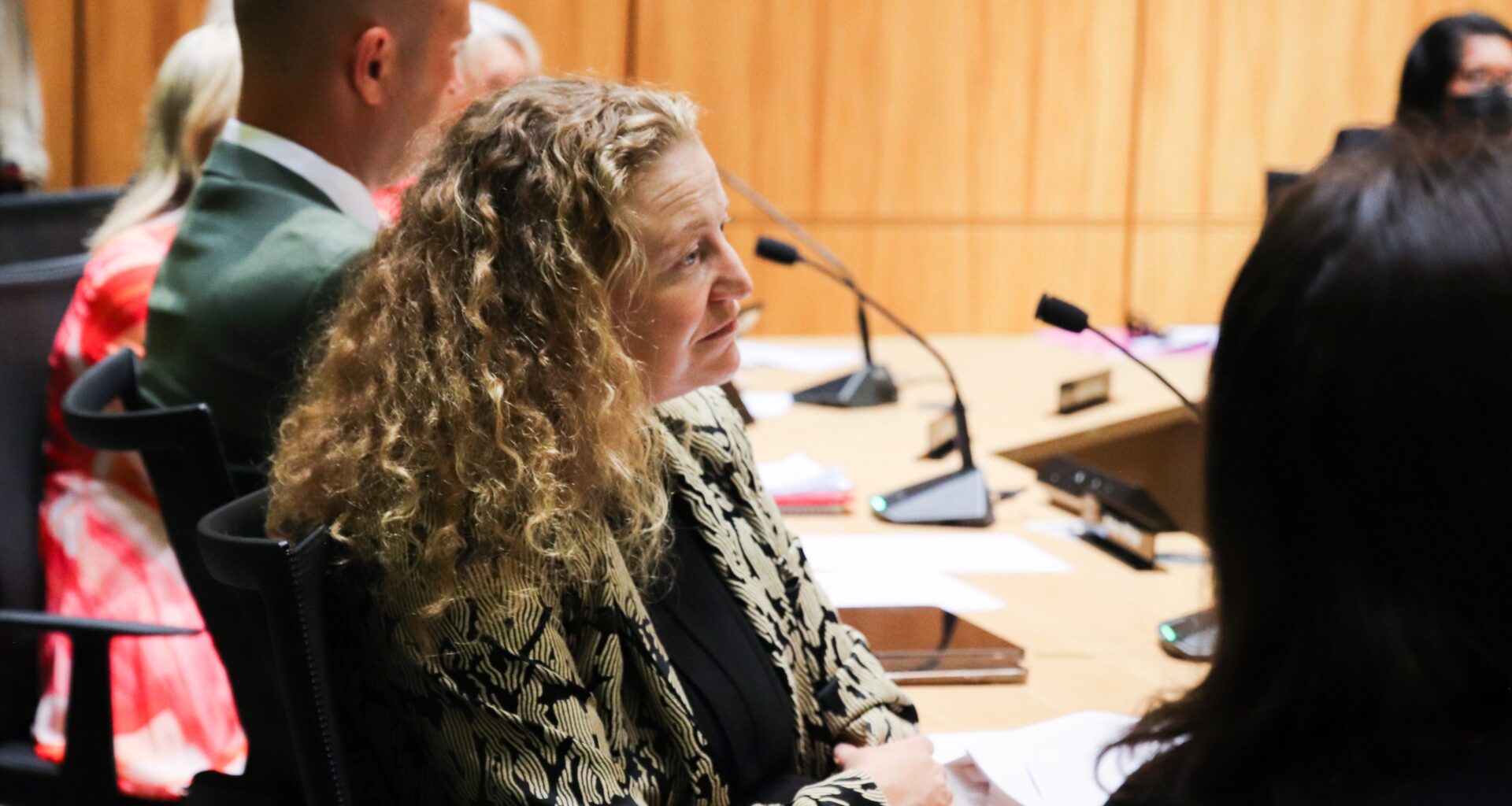
Labour says it will “100 percent” repeal one of the most contentious parts of the Government’s Planning and Natural Environment Bills if it wins power.
Environment spokesperson Rachel Brooking says the regulatory relief provisions will force councils to choose between maintaining current standards, or increasing the cost to ratepayers.
The replacement’s architect, Minister for RMA Reform Chris Bishop, agrees it will increase costs, but thinks it is fair these costs are borne by the council enforcing the rules, rather than the landowner experiencing a restriction.
Brooking says her party will “100 percent” repeal the regulatory relief provisions if elected.
She says the design – which would see councils pay to offset environmental protections enforced on private property – means “either it’s going to cost ratepayers, or there’s not going to be environmental protections”. The top-down nature of the design was “deeply ironic,” says Brooking, given the National Party’s campaign promise to stand up for localism.
Labour has promised to work collaboratively on replacing our resource management laws, but is not satisfied with the current proposed legislation, a stance it made clear in its opposing view section of the bill’s select committee report.
Among a handful of other primary issues, regulatory relief is consistently one of the top concerns among the critics of the new Planning and Natural Environment Bills, including Labour.
Another concern is the bills’ “funnel” design: the Minister for the Environment of the day will be able to weigh up priorities – including environmental protections and development initiatives – and judge when a certain priority outweighs another.
This design means minimum requirements can be breached if the minister judges the activity to be more important than the environmental consequences.
But unlike the funnel design (which critics say hands too much power to the minister at the top) and concerns over how the dual-bill structure could create complications, the regulatory relief problem offers Labour a relatively simple solution: just get rid of it.
Greg Severinsen, reform director at the Environmental Defence Society, thinks the provisions will shift billions of dollars’ worth of environmental protection costs onto councils.
Severinsen says there is “no way” councils will be able to afford existing rules, let alone set new ones. “The new laws may well come crashing down if the government changes,” he says.
RMA Reform Minister Chris Bishop hasn’t given a firm figure on how much the move will cost councils, but doesn’t deny it will be an increase. This is by design; the idea being that councils will have to foot the bill for environmental protections above the minimum requirement on private land, lest they interfere with a landowner’s right to enjoy private property.
Bishop says he doesn’t think the issue is as binary as Brooking makes it sound, and says the current scenario still includes a cost to protect the environment: one borne by private landowners.
He says the design deliberately introduces “tension” into the system, but accepts that people “have got different views around it, including councils”.
This adds costs at a time when councils are also under pressure to upgrade infrastructure and pay for services, while also facing a rates cap implemented by the coalition Government.
Matt Smith, regulation and policy manager for West Coast Regional Council, says the expectation of extra spending in tandem with a cap on rates “just doesn’t work”.
He gets the feeling that “the implications haven’t been thought through”, even though he notes the regulatory relief demanded under the new scheme can come in other forms, like discounted consent fees.
It’s still too early for Smith to make a call on how much this would impact his region, but with over 80 percent of its land belonging to the Department of Conservation, he says it’s likely the council will experience a higher burden when it comes to paying for conservation.
Smith says district and regional councils have always had the power to control land use, and can understand why a shift away from that has alarmed so many of the bill’s critics. “We’ve got public money being used for compensation; I think that’s how people are interpreting this.”
He says he’ll need to wait and see what directions are given under the new regime, but if the regulatory relief provisions remain, “it’s a major change in approach”.