
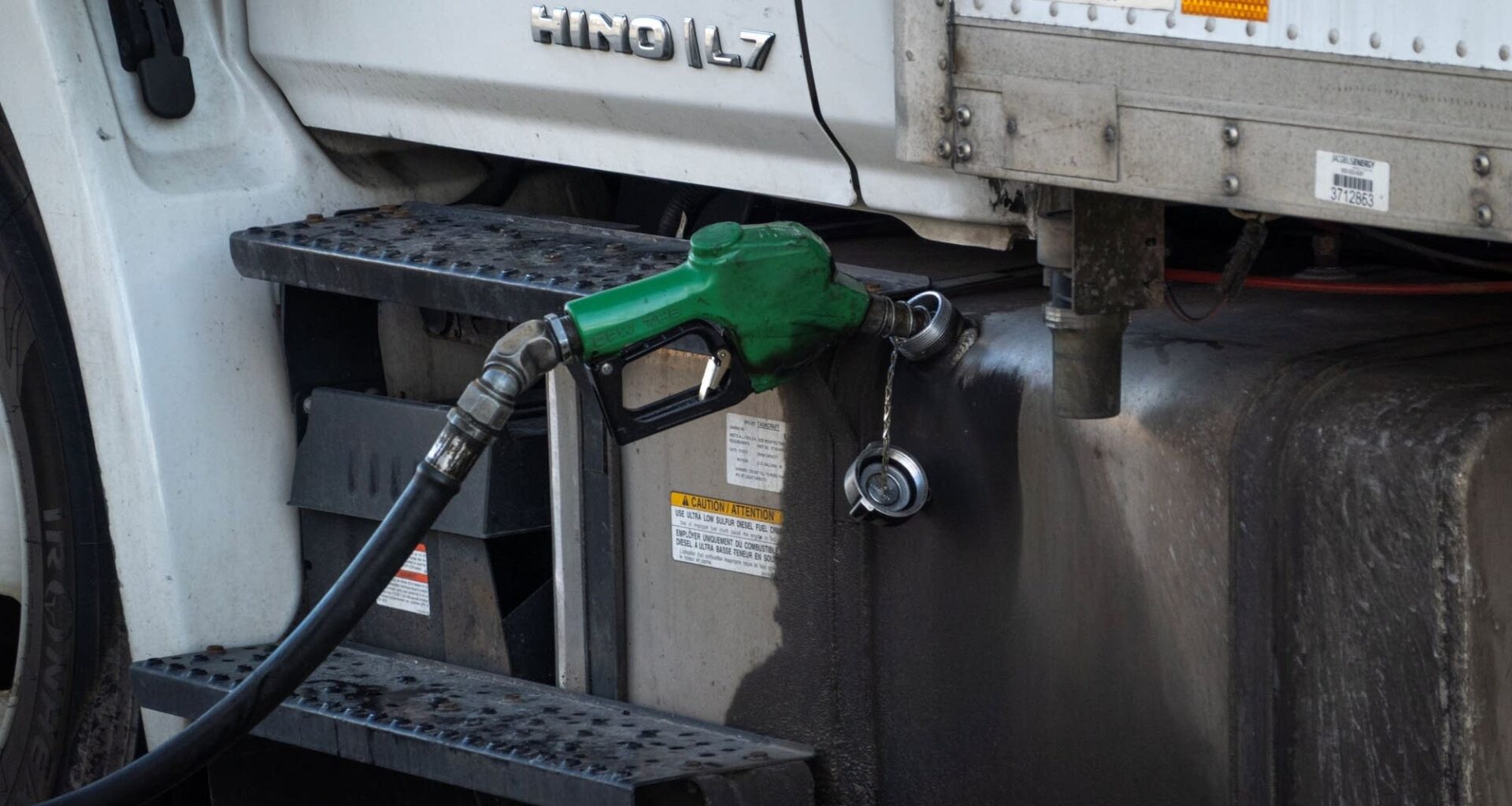
Diesel fuel is in especially short supply right now — for factors geopolitical and otherwise — driving prices to $5.34 a gallon, which is just about 50 cents shy of AAA’s all-time record.
While diesel prices may not be as visible to the American consumer as gasoline, high diesel prices certainly take their toll on the economy.
There are a lot of layers to peel back when it comes to why exactly diesel fuel is in such a crunch right now. Of course, there’s the underlying Iran conflict that is limiting diesel exports out of the Middle East.
“Diesel was disproportionately affected, because diesel is one of the major refined products that is most exported out of the Middle East Gulf,” said Will O’Neil, principal analyst at S&P Global Energy.
That tightened diesel markets. More recently, Ukraine struck Russian refiners, and Russia is restricting exports.
“We have lost — with Russia alone — 10% of globally traded diesel supply,” O’Neil said.
And there’s more:
“Saudi Aramco had to shut a pretty large refinery because of some damage caused by Houthi strikes,” said Abhi Rajendran, director of oil intelligence research with Energy Intelligence.
It’s a big confluence of things.
“I would argue, in the refined product markets, it’s almost gotten a little bit panicky,” Rajendran said.
And the market could get tighter, pushing prices even higher.
“Diesel prices could approach the all-time high of about $5.85,” said Tom Kloza, chief energy advisor at Gulf Oil.
Kloza said Americans are more gasoline-obsessed and care less about high diesel prices. But maybe they should care.
“Of everything that’s on the energy side that can be insidious to inflation, diesel is the biggest, because not only do you move all sorts of goods across the country by virtue of trucking, you have all the marine vessels that use a form of diesel to move things from port to port,” Kloza said.
Ed Hirs, an energy fellow with the University of Houston, said the economy runs on diesel.
“The grocery stores, the construction site out my window,” Hirs said.
So, those higher diesel prices get passed through quickly.
“[They get] passed through to the farmer, to the trucker … to the restaurant,” he said. “It’s there, and it’s always there.”
And Hirs said those higher prices aren’t going away anytime soon.
Related Topics