
“The lean mix concrete layer acts as a strong structural platform beneath the asphalt surfacing.
“Its higher stiffness and consistency allow traffic loads to be distributed more evenly through the pavement structure, reducing stress on underlying materials.
“This enables a thinner overall pavement solution than may otherwise be required and improves durability, particularly in areas where moisture or weaker ground conditions could compromise a conventional granular pavement.”
He said LMC was chosen as part of the overall pavement design solution to respond to the project’s variable ground conditions, while providing the pavement strength needed for the corridor’s high traffic and freight demands through its stiffer and more durable foundations.
“The increased stiffness helps spread vehicle loads more effectively through the pavement structure, reducing deformation and improving long-term performance.”
A specialised slipform paver machine, one of the more visible aspects of the project, had been used to construct the LMC pavement.
“Operating continuously, it can place around one metre of the new northbound lanes every minute and deliver in a single day what would traditionally take around a week using more conventional construction methods,” Laird said.
He said more than 80% of the LMC was completed across the section currently under construction, and crews had commenced asphalt surfacing with more than 11,000 tonnes already placed.
Installation of street lighting, landscaping and other finishing work was also being completed along the alignment.
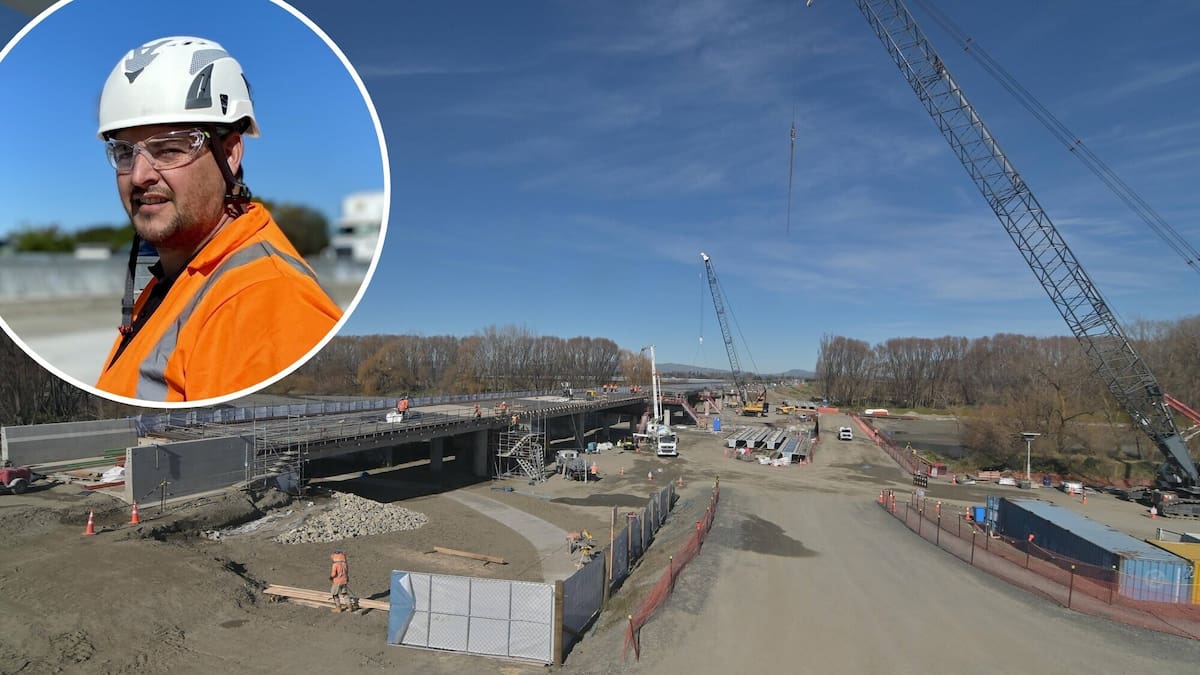
At the Tutaekuri River Bridge, four spans of super-T bridge beams had been installed and contractors had poured the concrete deck for the first section this week.
Further north, piling and columns had been completed at Meeanee Rd and the piling at Kennedy Rd was due to be completed on Friday.
Catherine Wedd in front of the specialised slipform paver machine on the Hawke’s Bay Expressway expansion.
Tukituki MP Catherine Wedd said the $600 million project was expected to deliver $1.5 billion in transport benefits to the region through improved safety, reduced congestion, better freight efficiency and increased network resilience.
She said the project was progressing on time and on budget, with the project expected to be completed by 2029.
Jack Riddell is a multimedia journalist with Hawke’s Bay Today and has worked in radio and media in the UK, Germany, and New Zealand.