
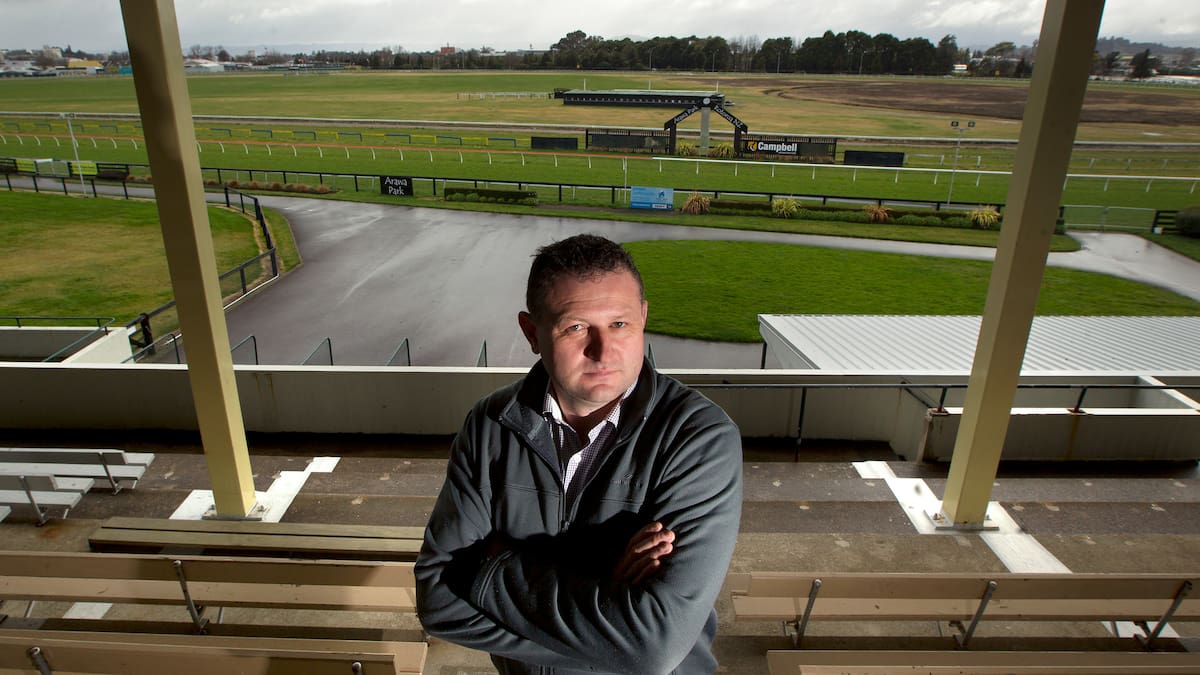
“It did come as a shock,” Radesic said, though the conversation was a familiar one.
A 2018 report recommended that Arawa Park should close after the 2023-24 season.
New Zealand Thoroughbred Racing (NZTR) also encouraged the Rotorua and Tauranga racing clubs to work towards a shared regional venue in 2022.
“We’re still here,” Radesic said.
“We’re gonna do everything possible that we can in our power to stay racing … for as long as we can.”
The past year had been “great” for Arawa Park.
The racing industry was in a state of flux, but the Rotorua grounds had been busy with people “coming in and out every day”, he said.
Its biggest meetings – the Campbell Infrastructure Rotorua Cup Day, October Plate Day and Holiday Raceday – draw crowds of up to 5000.
Closing Arawa Park would deal “quite a substantial” blow to Rotorua, Radesic said.
He estimated the club contributed about $1 million to the local economy each year through wages, maintenance and day-to-day spending. An associated trust also supported schoolchildren with sporting needs.
The club employs six permanent staff and relies on another 50 to 100 people on big race days, including security staff, St John, farriers and other contractors.
The Bay of Plenty Hunt Club races at Arawa Park each year and would need to find another venue, while several tenants based on the property would have to relocate if the course closed, Radesic said.
The next closest racecourses would be in Tauranga and Taupō.
The Project Stamina report also tied Arawa Park’s future to the proposed Waikato Greenfields project.
The development would create a new regional racing venue to replace the Te Rapa and Cambridge tracks.
“We’ve been kept around until some decisions are made on that, by the looks of it,” Radesic said.
He believed some reports were produced “for the sake of it”.
The club was seeking advice before preparing a response.
“It’s still early days … I think people are still getting their head around [it].”
He believed it would be a shame to lose the racecourse and he would “hate to think that housing would go up in the green space”.
Aerial view of Arawa Park in 2014. Photo / Ben Fraser
The Rotorua Racing Club owns about one-third of the Arawa Park site, while Rotorua Lakes Council administers the remaining gifted reserve land on behalf of the Crown under the Ngāti Whakaue Gifted Reserves Protocol Agreement.
Radesic said he could not answer what would happen to the club’s share if the racecourse were to close, and decisions were “still up in the air”.
Destination development group manager Jean-Paul Gaston said the council’s role was limited to administering the lease with the Rotorua Racing Club.
If the lease were to end, the council would engage with Pukeroa Oruawhata Trust on behalf of Ngāti Whakaue about the future use of the land.
Any proposal would then go through the appropriate statutory and decision-making processes.
Pukeroa Oruawhata Trust chairman David Tapsell said the trust was watching the racecourse’s next steps “with interest”.
The land was originally gifted to the city by Ngāti Whakaue specifically for racing.
A formal legal process would be triggered to return the gifted land to Ngāti Whakaue through the trust if the racecourse closed.
Tapsell said the trust had not yet considered potential future uses for the whenua. It would do so once there was more certainty around the process and its timing.
Annabel Reid is a multimedia journalist for the Bay of Plenty Times and the Rotorua Daily Post, based in Rotorua. Originally from Hawke’s Bay, she has a Bachelor of Communications from the University of Canterbury.