
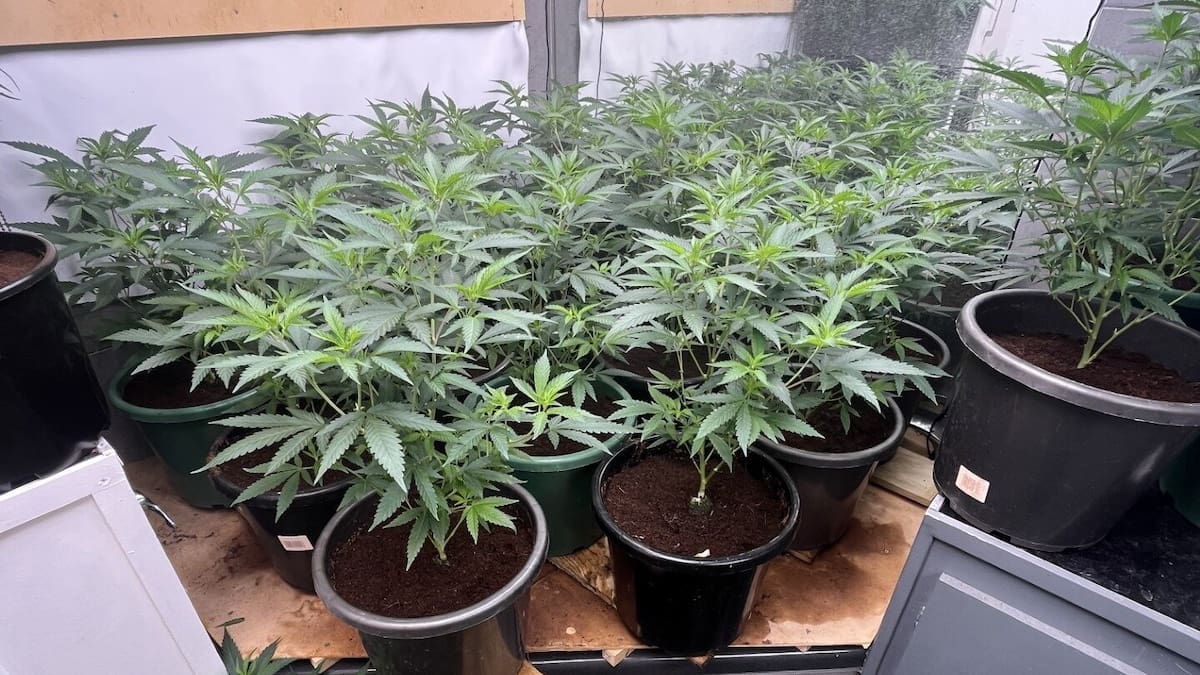
Organised crime groups buy or rent houses or buildings that are gutted and rebuilt inside to create commercial-scale cannabis-growing operations.
Electricity supply is tampered with, bypassing meters to hide the large amounts of power being used in the grow houses.
Windows are covered to stop people looking in and light escaping.
Cannabis is cultivated in pots, with water and nutrients being delivered through tubes.
Growing is done under artificial lights and filters, while fans and ducts are used to ventilate the rooms and reduce the tell-tale odour of cannabis escaping.
“Cultivation on this scale requires the involvement of a number of people,” Judge Gerard Winter told Ngo when he appeared in the Pukekohe District Court in April and was sent to prison for cultivating cannabis.
“On this occasion, that included you and your co-accused, your partner.
“Like many apprehended as a result of the termination of such cannabis cultivation operations, you and she were recent immigrants who appear to have been brought to New Zealand to work in the cannabis plantation for organised criminal groups.”
A police photo from inside the cannabis grow house that was run by Quang Thang Ngo and his wife in Pukekohe, Auckland. Photo / NZ Police
The grow house being run by Ngo and Vu was one of dozens, if not hundreds, of such sites in Auckland and elsewhere.
Last year, police destroyed more than 10 tonnes of cannabis after raids on 120 clandestine grow houses being run by Vietnamese crime groups in Auckland.
This week, police shut down 14 grow houses in Rotorua and arrested 16 Vietnamese nationals, 14 of them for alleged cannabis cultivation and two for Immigration Act matters.
Cannabis plants were ‘healthy and well-tended’
Police raided the Pukekohe house being tended by Ngo and Vu on February 5 this year.
Judge Winter said they found 123 plants in five grow rooms, and 36 seedlings in a cupboard in the hallway.
The plants were “healthy and well-tended” and Ngo and Vu were at the property when police arrived.
Police estimated the potential yield of the crop was 1908 ounces (54kg), which would be worth about $196,000 on the street.
Judge Winter said the phrase “a picture tells a thousand words” was evident in the photos taken in the house by police.
“The photographs show more than words can express; the extent and sophistication of the cannabis-growing operation,” Judge Winter said.
However, the judge said that, despite the sophistication of the operation he didn’t attribute any role to Ngo beyond that of “a farmer”.
He sentenced Ngo to two years in prison on one charge of cultivating cannabis.
Ngo did not enter New Zealand illegally
Judge Winter said Ngo had no offending history in New Zealand and there was no suggestion that he entered the country illegally or was not entitled to work here.
Ngo appealed against his sentence to the High Court, arguing that it was excessive.
He said his jail term was unfair because his wife had been convicted and discharged – a more lenient outcome – by another district court judge for the same charge.
She has since been served with a deportation order and has left the country.
Ngo also appealed against the judge declining him leave to apply for home detention rather than prison, an option available to offenders who are sentenced to two years or less behind bars.
In the High Court, Justice Tracey Walker said that a conviction and discharge for Ngo, giving him the same outcome for Vu, would “not adequately serve the purposes of denunciation and deterrence”.
Although the sentencing judge had considered Vu’s discharge as “lenient”, Justice Walker said there had been a “difference in culpability” between the husband and wife.
The courts were told earlier that Vu had other, regular horticultural work outside the grow house and was the mother of three children.
Justice Walker, however, allowed Ngo’s appeal to the extent that she gave him leave to apply back to the district court to commute his prison sentence to one of home detention.
This is dependent in part on whether he has a suitable place to serve it. No such address was available at his original sentencing.
Once Ngo has finished his sentence, either in jail or with an ankle bracelet, he will be deported.
Ric Stevens spent many years working for the former New Zealand Press Association news agency, including as a political reporter at Parliament, before holding senior positions at various daily newspapers. He joined NZME’s Open Justice team in 2022 and is based in Hawke’s Bay. His writing in the crime and justice sphere is informed by four years of frontline experience as a probation officer.
Join NZ Herald’s Open Justice team for Case by Case, a video and podcast series examining the disputes and decisions making headlines across New Zealand.