
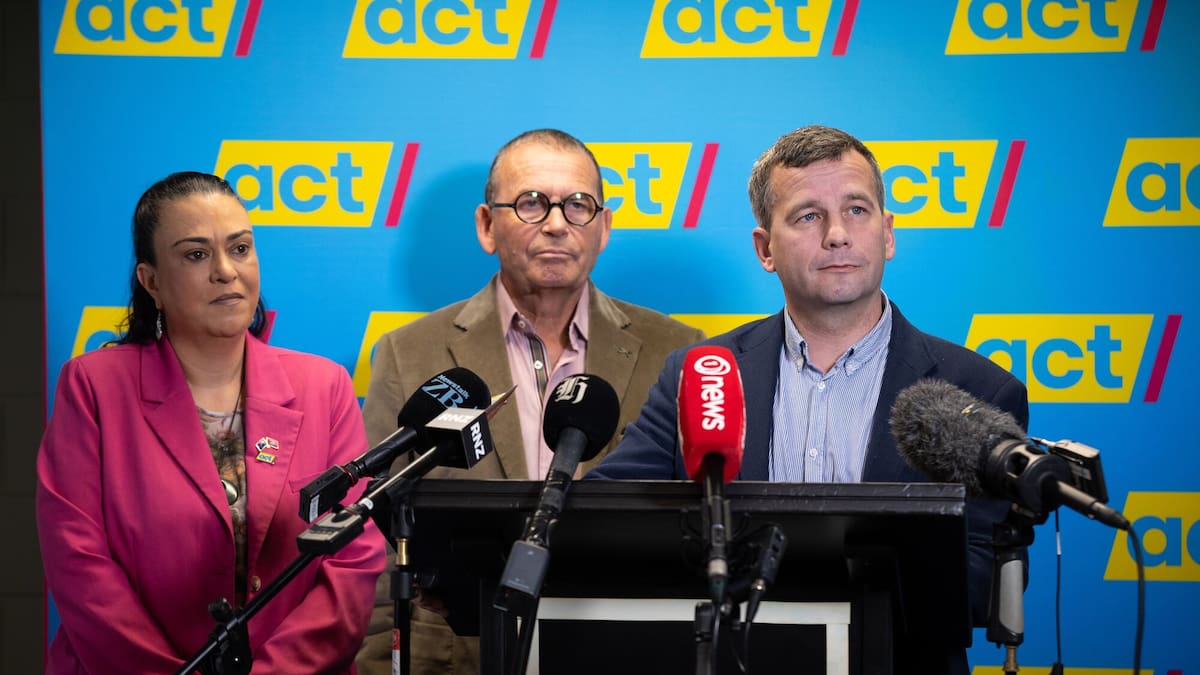
Under the proposal, staff could use “reasonable force” to remove a student who repeatedly refused directions to leave a classroom, including after the matter had been escalated to a dean or senior leader.
Act also proposed legal protection for staff who used “reasonable and proportionate” physical restraint to prevent harm or the destruction of property.
Abercrombie told NZME the policy was “odd” and physical restraint was only used as a last resort.
“No teacher is asking for more physical restraint power. This feels like a corporal punishment sort of vibe,” he said.
“Disruption is occurring, but what we need is more learning support, guidance counsellors, mental health support in the community.
“Dragging a child out of a class is not going to solve the problem.”
Henry acknowledged some children had genuine reasons for poor behaviour, but argued those reasons were being applied too broadly.
“I mean, let’s be honest, there are a lot of little s***s in classrooms, and we need to address that if we’re going to lift education standards.”
The Act policy included mandatory stand-down or suspension for any students who assaulted another student, teachers and staff member.
Should the assault cross “a criminal threshold”, it would be referred to police.
Abercrombie warned the proposal was a “slippery slope”, saying it risked putting teachers and students at risk, particularly if physical force was used on neurodiverse students.
He pointed to the use of school isolation rooms, which were banned in 2017, saying: “We already had issues with isolation about a decade ago, and that was horrible.”
Under the policy, removed students would go to a “supervised, staffed space” like an “existing pastoral office, deans’ room or learning support room”. The policy did not detail which staff would be supervising the students.
Parents or guardians would also be required to attend a meeting if their child was responsible for violence, threats, intimidation or destruction of property.
Those who failed to engage could be referred to the Ministry of Education, Oranga Tamariki or police.
Parents who did not attend the meeting could face fines of up to $300 for a first offence, rising to $3000 for repeat offences.
Amos said a more proactive, preventive approach that invested in schools and young people would help reduce challenging behaviour.
“The best way to respond to these situations is by having really good relationships with our young people and taking a restorative approach, because every situation is different.
“Our job as school leaders is to keep our young people in school, not push them out.
“I want them there to feel connected and I want them there to be learning.”