
Gilgandra is a rural town six hours inland from Sydney. A centre for surrounding farmlands, it provides services and community to people spread across the land. Rural towns like Gilgandra often don’t provide diverse public spaces; instead, small businesses and local councils generate activities and foster culture. And so public buildings – like libraries – become providers of entertainment, education and support for startups.
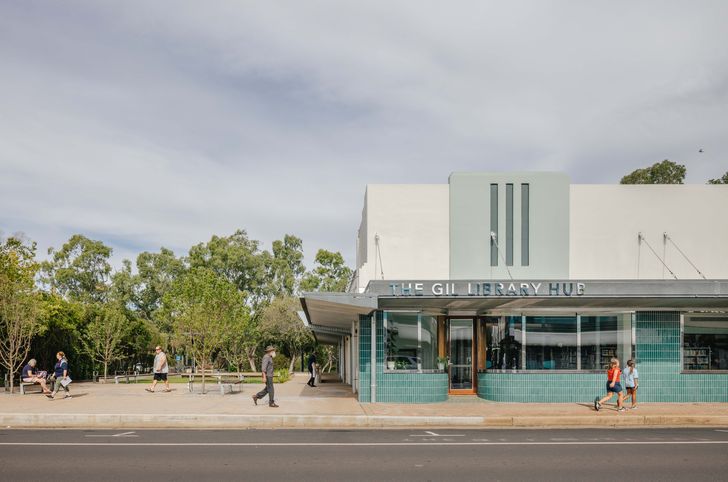
“The Gil,” as it is known locally, is Gilgandra’s new library and community hub designed by Dunn Hillam Architecture and Urban Design. A renovation of a brick store, it faces the historic main street and opens to the Castlereagh River behind. Contrary to the client’s original intent, Dunn Hillam proposed a renovation to maintain the cultural continuity of the building, capture embodied carbon within the existing structure, and retain a floor that had survived several floods (all books and furniture are removable). Similarly, the architect prompted the conversion of the adjacent carpark into a new public plaza, which they developed alongside Somewhere Landscape Architects. This tree-lined space acts as a new shaded entry forecourt to the library, providing additional flood mitigation through careful drainage, reservoirs and low walls.
View gallery
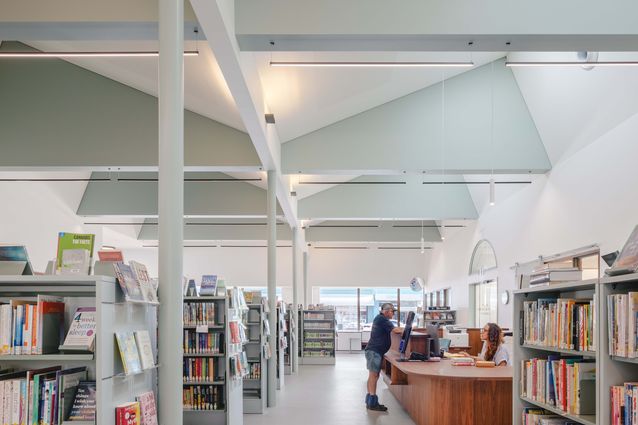
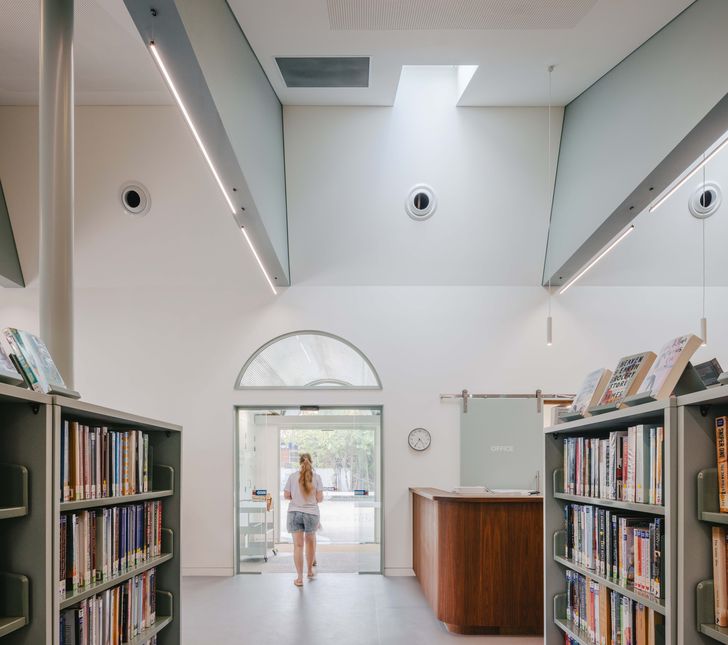
Made of old hardwood trusses, the building’s original roof is now a key feature inside the library space. Half the existing trusses were removed and the remaining ones boxed-in to meet modern building codes. The new coffered ceiling creates spaciousness above the library shelves, and allows for innovative acoustic control, low-velocity air conditioning and night-time hot-air purging.
Below, shelves of books are interspersed with quiet corners for reading and a central help desk visible to all. Around the main space, several rooms provide for the community in new ways, such as a shopfront designated for local startups to use at a reduced rate. Kitted out for a variety of enterprises and managed by the council, this space supports a stream of new businesses that move on to shops on the high street once established. This simple addition is helping to grow the local economy and bring vibrancy to the town.
View gallery
At the rear of the library, facing the river, a rentable multipurpose includes a small kitchenette with a servery, allowing locals to host events ranging from classes to parties. This and other bookable rooms can open to the library or be separated from it, encouraging dialogue with reading spaces or preserving the sense of peace. Rentable technology rooms cater to hobby groups, with a sound-isolated space available for podcasting and another room accessible externally 24 hours a day via keycode, allowing flexibility for those balancing study and work.
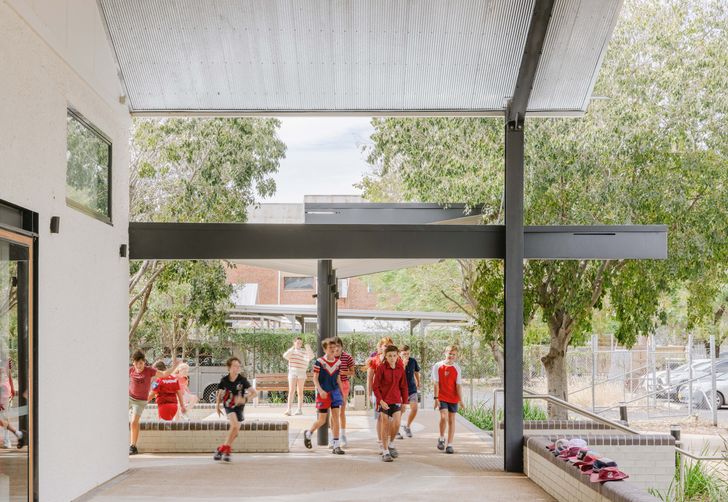
The sides of The Gil are wrapped in a new verandah with a galvanised steel roof, which unifies the outdoor spaces and provides critical shading. Mimicking neighbouring street awnings, it turns to face seating and grassed areas in the new public plaza, jumping joyfully over the arched entry door. At the rear of the library, the building’s gabled roof form continues the covered outdoor areas, soaring above a generous terrace.
View gallery
Across the envelope, new windows have been crafted from hardwood reclaimed from the removed trusses, and trimmed in mirror-finish stainless steel for durability. These materials are easily found in the area and have been worked by local tradespeople familiar with steel structures and hardwood joinery in a farming context. The tiled and brick facade is a colourful reference to surrounding shopfronts.
“Cultural continuity” was a term that Dunn Hillam’s founding principal Ashley Dunn continued to use when speaking about this project, referring to an idea of transmitting cultural practices, knowledge and relationships across generations. Beyond taking inspiration from the local streetscape and choosing renovation over rebuilding, cultural continuity is evidenced in the building’s spaces for local groups and businesses, as well as in the way it has been designed for the capabilities of local trades and to encourage local contracts – all so that the effort invested sustains and strengthens the existing community. It means The Gil will be both an anchor and a catalyst for local culture to develop into the future.