
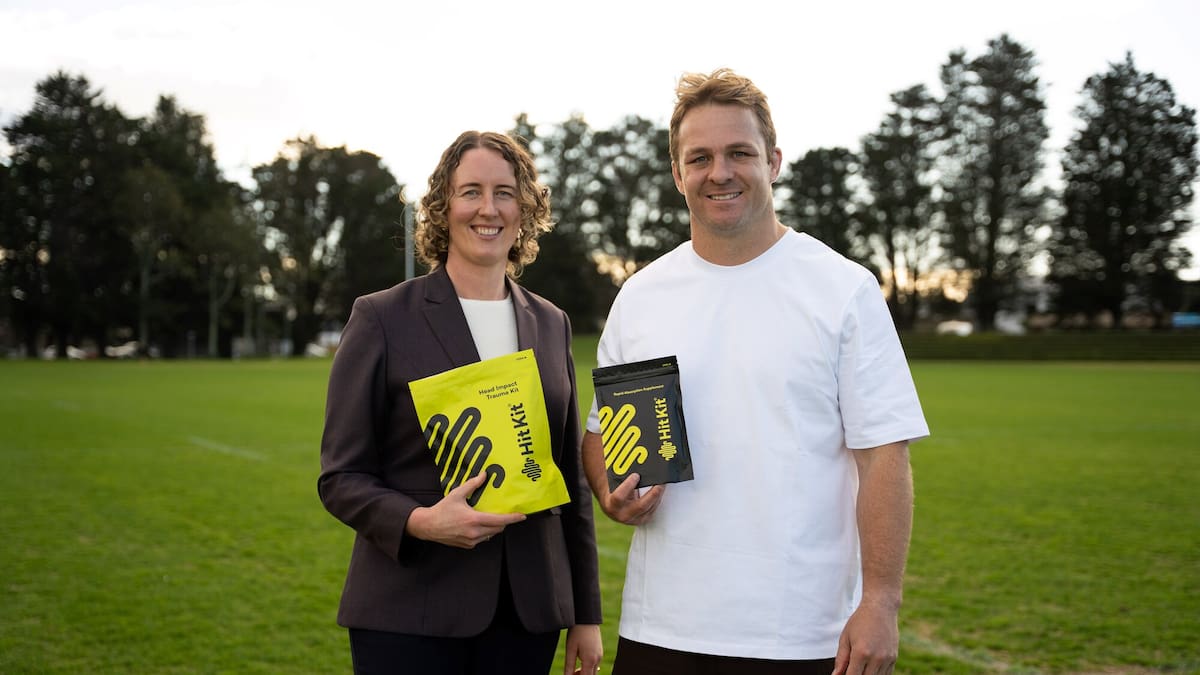
The kit is an all-in-one concussion response solution created to help athletes, parents, coaches, schools, workplaces and community organisations respond quickly and confidently after a knock to the head.
What inspired you to start the business?
My background is in physiotherapy. I sustained a concussion injury myself and had persistent headaches for nine months. I found the source of my symptoms and I knew that I needed to share that with others, and that’s how the Headache Clinic came about.
We’ve been running for 12 years now, and I saw time and time again patients coming into the clinic not having known what the right thing to do was in the hours that followed a concussion injury.
Everyone wants to do the right thing; it’s just about knowing what the right thing is to do. I just kept thinking, if only I could be there to provide the right advice at the time of injury, and that’s how the concept was created. I’ve also had some great support from my co-founder, Kirsten Taylor, who founded SleepDrops.
New Zealand physiotherapist and concussion expert Helen Tufui has taken on a new venture, co-founding a concussion rapid response kit called Hit Kit.
What is in the kits, and how should they be used?
There are three aspects to the kits. We have a few laminated cards that give a breadth of information on what to do when someone is concussed. The key one is the red flags to look out for. If someone has been in an accident, you can work through the list of symptoms, and if they do have them, then get them straight to the emergency department.
Head injuries can also be accompanied by cuts and bruises, so the kits come with a miniature wound kit for supporting recovery, with an instant ice pack to reduce inflammation.
The bit I am the most excited about is our rapid absorption supplement. The evidence around supplementation and concussion is still emerging, but we know that magnesium levels often decrease in the days following a concussion injury, so our kits include six sachets to get those nutrients into a patient’s system early.
Customers also get access to our knowledge centre, where there is more information and detail to support recovery, including returning to work plans and returning to driving plans.
What’s your target market for your product?
I’ve designed it as a preparedness tool, so something that you’re going to have with your first aid kit. The majority of concussions don’t actually happen on the sports field. The biggest group of concussion injuries actually happen from slips, trips and falls.
You’d have this in the glovebox of the car, in the sports bag, or in the first aid kit at home, so that if something was to happen, you are prepared.
Each Hit Kit includes several information cards, including the red flags to look out for, a small first aid and ice pack, and a rapid absorption supplement designed specifically for the package.
You’ve recruited former All Blacks captain Sam Cane as an ambassador. How did that come about?
I’ve known Sam for years through my work with the clinic. His values align very closely with my own and he genuinely cares about people’s wellbeing. He’s gone through his own concussion journey and knows how important it is to get the right advice early. He’s pretty excited to be on board.
What are your plans for the business?
In five years I want to be global. This year’s all about refining the product that we’ve got in New Zealand and making sure our systems and processes are slick and clean. We’ve got the international trademark and so Australia’s next, followed by the United States.
We’re also collecting information on the outcome from our kits for a clinical trial through a research survey we developed, so that we can capture that data and have that evidence base behind us.
What would be your advice to other budding entrepreneurs wanting to start a business?
You need to have resilience and guts to keep going when it gets hard, because it will get hard. There will be barriers and obstacles that you can’t foresee that you’re going to need to be able to push through and work around.
Not every day is going to be easy, but if you’re really passionate and clear about where you want to go, you will find a workaround and push through those barriers.
Tom Raynel is a multimedia business journalist for the Herald, covering small business, retail and tourism.
Stay ahead with the latest market moves, corporate updates, and economic insights by subscribing to our Business newsletter – your essential weekly round-up of all the business news you need.