
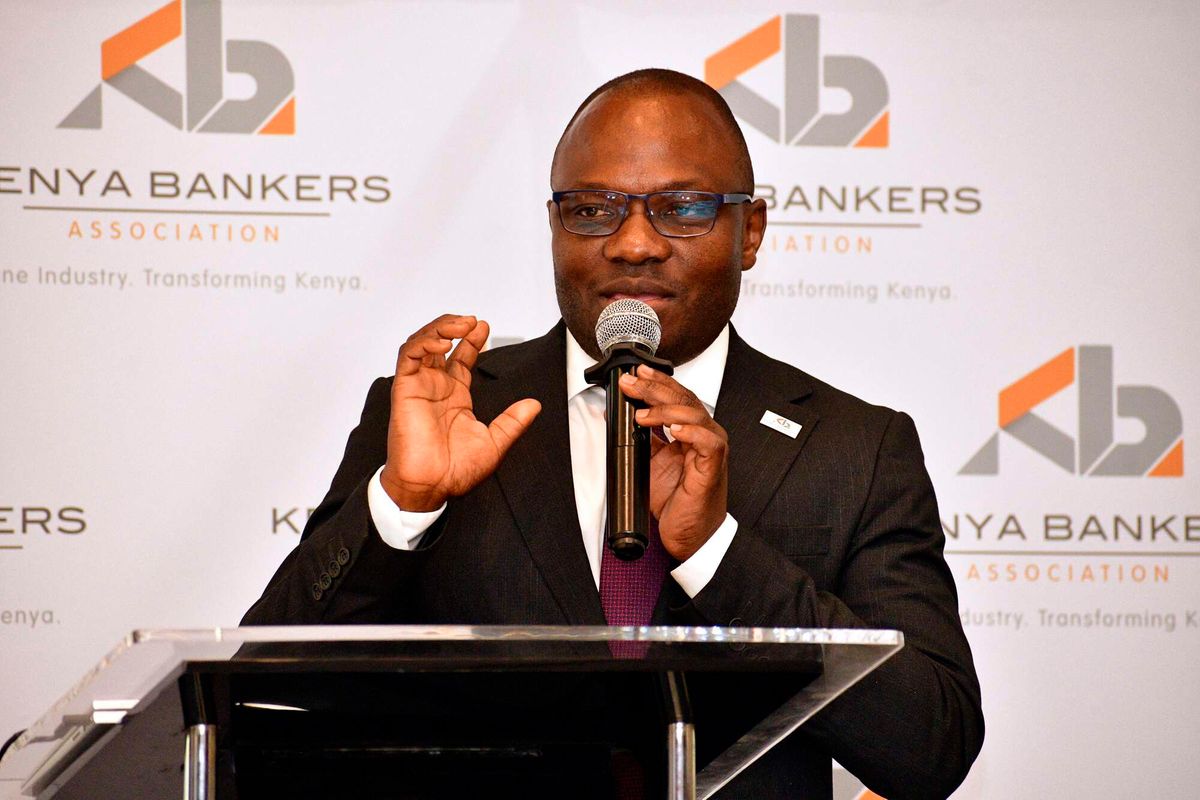
Commercial banks expect the Central Bank of Kenya (CBK) to keep its benchmark rate unchanged at 8.75 percent at its policy meeting next week amid ongoing uncertainty in the Middle East, which has kept the apex bank on edge over inflation expectations.
The projection by the banking sector lobby-the Kenya Bankers Association (KBA)-is anchored on continued private sector credit growth even as inflation continues to run above CBK’s sweet spot of 5 percent.
July inflation rate rose to 6.5 percent from 6.4 percent, representing the second consecutive month where the change in consumer prices has run above the 5 percent midpoint from elevated transport costs.
Private sector credit growth neared double digits in May 2026 to stand at 9.3 percent from two percent a year earlier, even as the ongoing Middle East conflict raised inflation concerns, including risks of tapered consumer demand and higher loan impairment.
CBK held its benchmark unchanged at 8.75 percent in June for a second consecutive time, maintaining a wait-and-see stance on the inflationary trend.
“As the situation stands, we don’t see any reason for either a hike or adjustment. For the foreseeable future, maybe the next two cycles of the MPC, we expect the committee to hold as we monitor the geopolitics,”Raimond Molenje, the KBA chief executive said.
“We see this as the most reasonable option given that inflation has not moved past the upper limit of 7.5 percent.”
CBK has deemed the resurgence of inflation from the US-Israel war on Iran as transitory, observing the nature of the conflict, which has so far been characterised by flare-ups and ceasefire talks.
The apex bank, however, has observed that it’s keeping a watchful eye on the second-round effects on inflation alongside other domestic developments, which may warrant changing its stance.
The CBK will hold its next MPC meeting on August 11, 2026, against the background of the relatively higher inflation reading in July.
Headline inflation rose to the second-highest level in 30 months to 6.5 percent, with transport costs being the biggest driver, where prices in the sector rose by 15.6 percent on a year-on-year basis.
The acceleration in inflation has coincided with the jump in international crude prices following the Middle East conflict, with the effects reaching Kenya in April through higher pump prices.
Maximum pump prices were, however, unchanged in the latest July 14 review. Credit growth has remained sheltered from the conflict to near double-digit levels for the first time in over two years, with key beneficiary sectors being trade, building and construction and agriculture.
The CBK has used its benchmark rate to signal the direction of interest rates, trimming the reference from 13 percent in August 2024 to the current 8.75 percent on stable inflation, before the Middle East conflict and stability in the exchange rate.
The Kenya shilling has been largely unchanged against the US dollar, trading within an already established narrow bound range between 129 and 130 units. KBA has credited further interventions, including the halving of value added tax on petroleum products and the deployment of the stabilisation fund as a source of macroeconomic stability, supporting continued credit disbursement.
The privatisation process, including the sale of the government’s 15 percent stake in Safaricom, has also been noted as a highlight, yielding additional foreign exchange reserves which topped Sh1.99 trillion ($15.4 billion) last week.
“The major step the government made was to ensure the supply of fuel even if prices have gone up so productivity in the economy can continue. The sale of State shareholdings in firms like Safaricom has also allowed us to have more reserves coming in,” added Mr Molenje.