
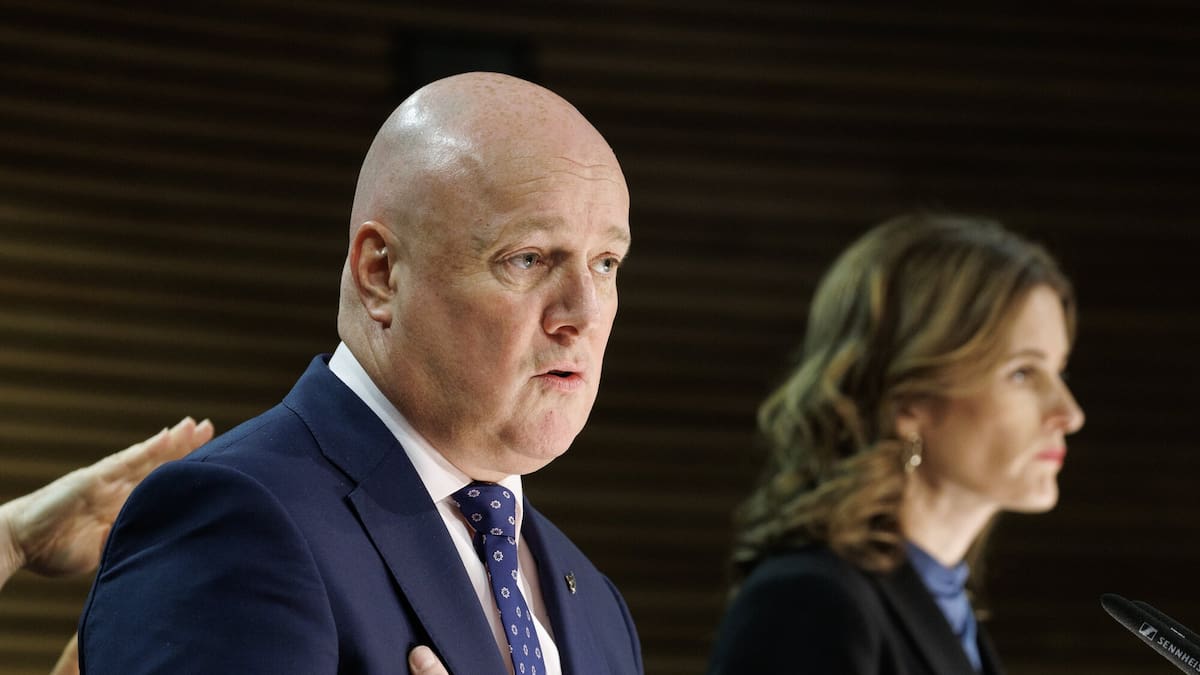
He later added: “That is the official advice we’ve got.”
The Green Party filed a request under the Official Information Act (OIA) for the advice to which Luxon was referring – such advice is squarely within the remit of the OIA.
Luxon’s office responded to the Greens’ request, saying the advice captured by the request was “a set of media talking points relating to data centres and electricity supply”.
“These talking points were provided to the Prime Minister by staff in this office on 27 July 2026 as part of a wider briefing prepared ahead of his morning media engagements,” the response said.
The release of those specific talking points was declined in order to protect the “free and frank” expression of opinion. While official advice is regularly released under the OIA, media talking points are not.
Green Party co-leader Chlöe Swarbrick accused Luxon of “shooting from the hip” for referring to advice that his own office could not find.
Asked why he had spoken about “official advice” when his office said that none existed beyond talking points, Luxon responded by talking about advice the Government had commissioned, but not yet received. He did not mention advice he had received.
Willis then said she could confirm she had received “advice in July from … MBIE [Ministry of Business, Innovation and Employment] officials on the subject of data centres”.
“They advised me they did not expect the data centres that are currently coming on in the next 12 months to put upwards pressure on electricity prices, given the arrangements they had in place,” she said.
“Following receipt of that advice, I directed further work to be done on measures we might like to introduce to ensure that going forward, no future data centres would put upwards pressure on electricity prices.
“That includes the steps that have been taken in Australia and other jurisdictions around the world and ensuring that where data centres are coming, we are getting that additional electricity generation.”
Luxon confirmed this advice was what he was referring to on RNZ, but did not answer why it had not been released to the Greens.
“I’m just saying, that’s the advice that I’d had,” he said.
Ordinarily, advice of this kind would be captured by a request made under the OIA. Asked whether Luxon’s office had not complied with the rules of the OIA, Willis said she believed Luxon’s office had passed the request on.
Green Party co-leader Chlöe Swarbrick. Photo / Sylvie Whinray
However, the Green Party confirmed it had received no acknowledgement of the request being passed on. The controversy comes in the wake of the Prime Minister’s Office being given a dressing-down for its poor handling of OIA requests by the Ombudsman.
Swarbrick said that Luxon’s remarks were “contradictory”.
She noted Luxon’s own comments were that he supported “sensible, common-sense rules”, but that these rules would only apply after the current crop of data centres opened.
“The reality is that prices go up when you add demand to a system without adding supply, but the Prime Minister doesn’t either appear to understand this basic fact or is hoping New Zealanders don’t notice his lack of care or responsibility,” Swarbrick said.
She said she was concerned about the data centre set to be built in Southland, which is estimated to demand the equivalent of 6% of the country’s electricity.
Swarbrick said other publicly available advice had not envisaged demand of this extent.
“Neither Transpower’s 2025 Transmission Planning Report nor the Government’s own Electricity Demand and Generation Scenarios account for anything like the projected 1000MW at full build,” she said in a statement.
“A load of that scale would have an unprecedented impact on our electricity market. Meanwhile, the Prime Minister is trying to bring in an extra $35 billion investment in these AI [artificial intelligence] data centres without any plan to protect our resources or communities.”
Swarbrick said her proposal for a pause would allow New Zealand to get the “settings right before we let this genie out of the bottle, which has had devastating impacts on communities overseas”.