
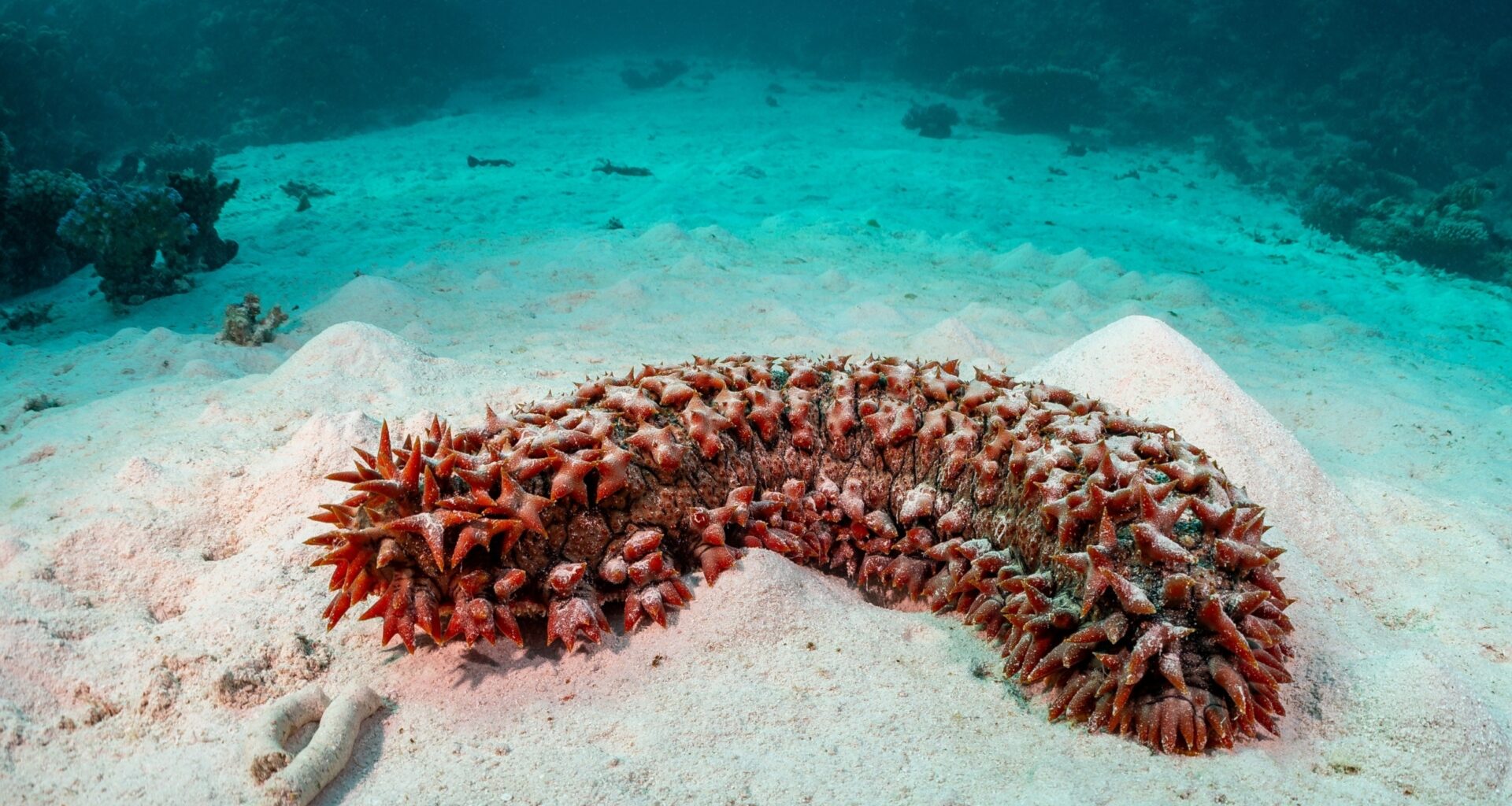
Cut a small piece off an animal and it should rot within days. Instead, bits of tissue snipped from a cold-water sea cucumber healed their own wounds and kept dividing their cells.
Some of those pieces stayed alive for more than three years in tanks of plain seawater.

The pieces were not kept in some sterile, carefully fed chamber. They stayed in ordinary running seawater, full of bacteria, and that turned out to matter.
Lost body parts usually rot
Plenty of animals can regrow what they lose. A lizard drops its tail and grows a new one, and some starfish rebuild a whole arm.
The lost part itself, though, was always thought to be finished, doomed to decay in a matter of days or weeks.
Sara Jobson and her colleagues at Memorial University of Newfoundland set out to test that.
They worked with Psolus fabricii, a sea cucumber from the cold Atlantic and Arctic that loses feet and tentacles often enough that healing is part of daily life.
The team cut off small pieces and watched what happened.
Feet cut into seawater tanks
The animals came from the seafloor off Newfoundland, gathered by divers at depths of 26 to 43 feet across several years, from 2014 to 2022.
Back in the lab, the researchers snipped off tube feet, tentacles, and slabs of body wall and dropped them into five-gallon tanks of flowing, unfiltered seawater.
Each tube foot started out about as thick as a nickel. Within the first week the wounds sealed over, and the pieces shrank by nearly a quarter as they cleaned up the damaged edges.
Then, instead of dying, they held on.
Wounds closed and cells divided
Under the microscope, the pieces were busy. Cells divided and died in rough daily waves, the same rhythm a body uses when it heals a wound.
Immune cells swarmed the cut, cleared away the wreckage, and eased off once the site was clean.
Within a month or two, the wound faded until the cut could not be picked out from the rest of the tissue.
Some pieces did more than mend. By about six months, many had grown larger than they were at the moment they were sliced off.
Over the same stretch, the muscle inside each piece vanished, apparently digested for parts. Tough connective tissue spread out and kept the whole piece in an almost perfect little ball.
“We haven’t grown a new, complete sea cucumber yet, but we are seeing pretty stunning growth and diversification of cells literally years after this tissue was removed,” said Rachel Sipler, a senior research scientist at Bigelow Laboratory for Ocean Sciences.
“It’s like a lizard that loses its tail. We know some lizards can grow new tails; we’re talking about whether the tail can grow a new lizard.”
Feeding without a mouth
A severed foot has no mouth and no gut, so how does it eat? The pieces pulled dissolved amino acids, the building blocks of protein, straight out of the seawater around them.
After the first week, that uptake jumped sharply, which fits an animal fragment working hard to close and rebuild a wound. The messy water was doing the feeding.
“Natural seawater is just about the most microbially diverse, least clean approach we could take experimentally,” Sipler said.
“Yet, that rich environment full of bacteria and all this organic matter was actually feeding them and allowing this tissue to heal and grow.”
Tentacles that still move
The tube feet lost their muscle and turned into plain little balls. The tentacle pieces did not.
Cut-off tentacles kept their red color and, stranger still, kept moving. Years after they were separated from the animal, their fine branches still reached out and drew back when something touched them.
The nerves inside were still firing, in a scrap of tissue with no brain and no body.
But not every part lasted. Thick slabs of body wall never healed at all and rotted within about eight weeks, the shortest life of any piece the team cut.
Only one sea cucumber species
The same thing did not happen in other animals. The team ran the test on a starfish, a sea urchin, a brittle star, and other sea cucumbers.
Every one of those pieces healed at first, then died within about three and a half months.
The starfish tissue lasted around 104 days, the sea urchin around 74. Only Psolus fabricii kept going past a year, then past two, and then past three.
The species makes its own batch of toxic compounds, and the researchers think these may hold off the bacteria and fouling that finish off everything else.
Why any of it happens
Nobody knows what the ability is for. It might be a piece the animal gives up to a predator on purpose, or just a leftover of how its body is built, with no purpose at all.
No one knows yet whether these pieces truly never age, either. The next step is to track their telomeres, the caps on the ends of chromosomes that usually fray as cells get old.
Watching those caps will show whether the clock is running at all.
For now the pieces are still there in their tanks. One of them is under half an inch (10 mm) of mud, still healed and whole, years after the animal it came from let it go.
The study is published in the journal Science Advances.
—–
Like what you read? Subscribe to our newsletter for engaging articles, exclusive content, and the latest updates.
Check us out on EarthSnap, a free app brought to you by Eric Ralls and Earth.com.
—–