
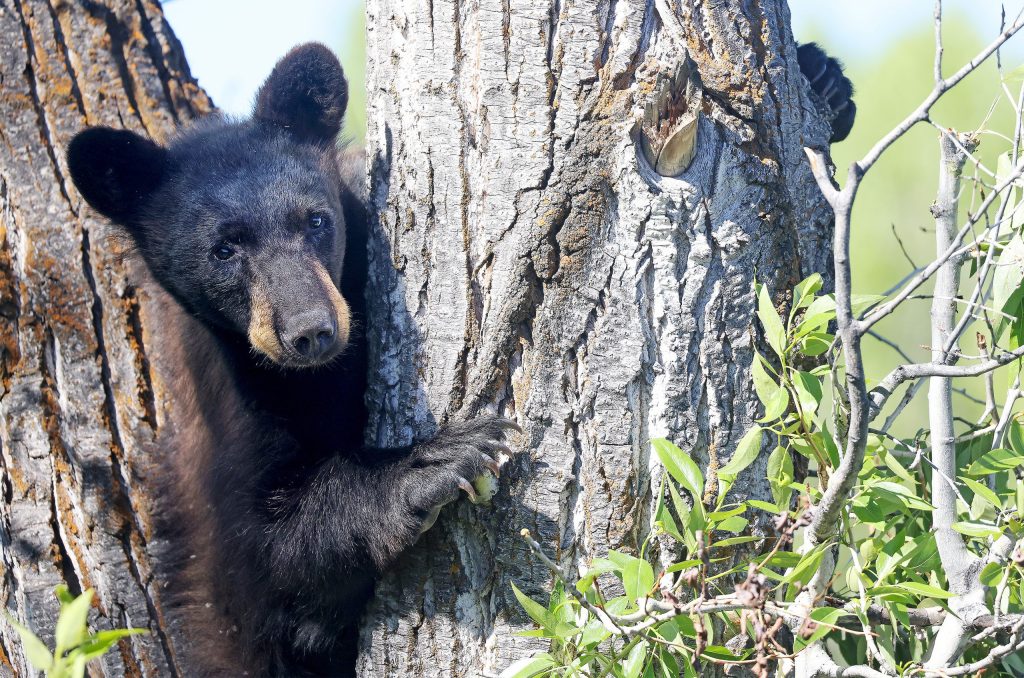
Across Colorado, dire drought conditions are giving rise to reports of bear activity and conflict.
Colorado Parks and Wildlife reported a 68% increase in bear reports over last year for the first seven months of 2026.
“Bears are tough this year,” said Brad Banulis, the agency’s senior terrestrial biologist, at a July 28 northwest region sportspersons’ meeting in Grand Junction.
While conflicts slowly increased in early summer, Banulis said things had not been “too bad” until recently.
“Now we’re definitely seeing conflicts go up a lot across the region, really across the Western Slope at least, maybe even statewide, with this drought,” he said.
Kris Middledorf, Parks and Wildlife’s area wildlife manager, said the situation has been escalating in Routt County as it experiences an “unprecedented surge in human-bear interactions.”
Reports to Parks and Wildlife from Jan. 1 to July 31 were up 219% over 2025 in the county.
Christy Bubenheim, who leads educational programming through Keep Bears Wild Steamboat, said bear activity has increased not only within the city of Steamboat Springs, but also the surrounding communities that aren’t used to having bear activity, including Yampa, Oak Creek, Clark and Stagecoach.
“I am seeing and hearing from all over the country that most communities are seeing a spike in bears in human-occupied areas, more human-bear interaction, and more negative bear behavior as far as bears getting into vehicles and homes more regularly,” Bubenheim said.
Activity has also risen in Pitkin and Garfield counties — by nearly 32% and 15%, respectively — while counties like Grand and Summit counties have experienced an average number of reports.
While the overall reports have risen less than in Routt County, Pitkin has seen a large spike, 56%, in reports involving property damage, according to Parks and Wildlife.
“The rise in property damage shows that bears are growing bolder in their search for food,” said Matt Yamashita, the state wildlife agency’s area wildlife manager for the two counties. “This is not just a wildlife issue; it is a community safety issue. Every unsecured trash can or open garage door invites a conflict that could end poorly for both the homeowner and the bear.”
The wildlife biologists say one factor is likely to blame for bears coming closer to towns this year.
“Extreme drought conditions have limited natural forage in the High Country, forcing wildlife into residential areas in search of food,” Middledorf said.
Once in town, the responsibility, however, falls onto humans to prevent conflict with the bears.
“It’s up to us humans to create the change that we need to keep bears wild and people safe,” said Lara Xaiz, the city of Aspen’s wildlife coordinator. “If we can keep framing it as a people problem, instead of a bear problem — or as a problem or nuisance bear — or a problem there, then we know we can fix it by educating and working with people, because you just can’t retrain bears.”
Bears are opportunistic eaters — humans have to prepare
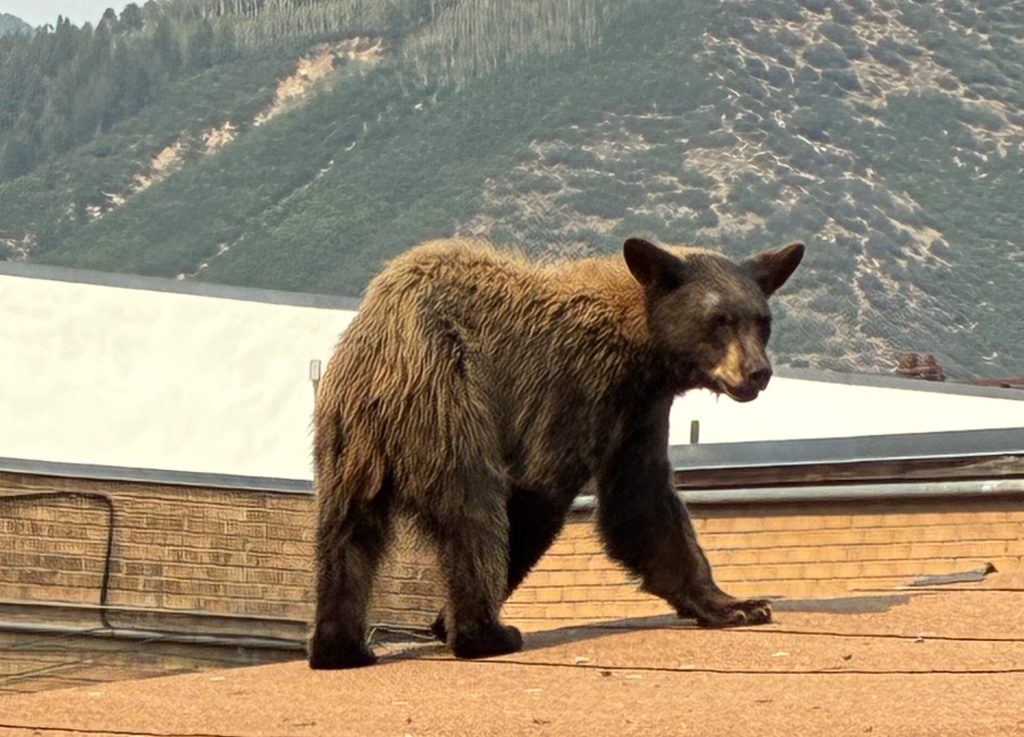 A bear roams a rooftop in the Roaring Fork Valley. Between Jan. 1 and July 31, 2026, Pitkin County has experienced an uptick in bear reports, particularly those relating to proptery damage.Lara Xaiz/Courtesy Photo
Colorado is home to an estimated 17,000 to 20,000 black bears, the vast majority of which live on the Western Slope. In recent years, population growth, increased tourism and fluctuations in food availability have been driving up conflict with bears, especially in mountain towns.
Bears are opportunistic eaters with a strong sense of smell, which drives their diet throughout the year.
“In the spring they are looking for things like grass, flowers and other new vegetation that’s easier for them to digest as they are getting their stomachs used to digesting food after hibernation,” said Rachael Gonzales, Colorado Parks and Wildlife’s northwest public information officer. “During the summer months, bears tend to focus more on fruits and berries. In the fall, when they are preparing for hibernation, they add things like acorns into their diets.”
In years like this one, when drought or environmental changes impact these foods, necessity will drive bears toward human-related food sources. Trash consistently ranks as the No. 1 human attractant for bears and reason for conflict between humans and bears.
As the drought impacts bears’ natural food sources this July, it also comes at a critical time for them.
“Midsummer is a critical time when black bears naturally look for highly nutritious food sources to maintain their energy reserves,” Gonzales said.
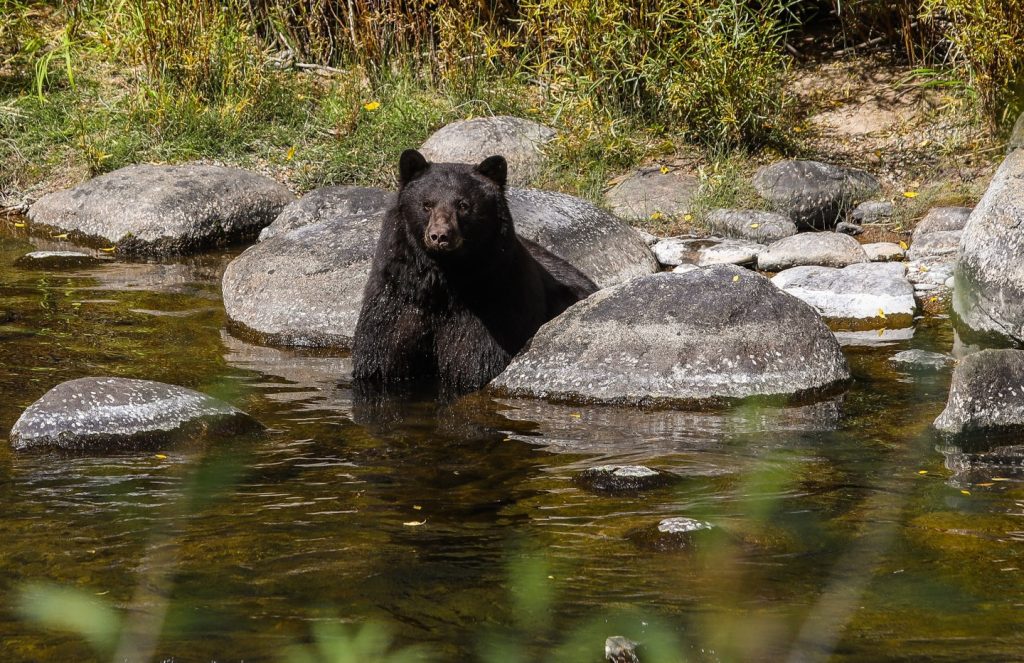 For bears, the end of summer means finding ways to cool off — lounging in the shade or taking a dip in the river — and fueling up with berries. However, on years like 2026, where Colorado is experiencing extreme drought and berries are limited, bears will search closer to towns and communities for food.Chris Dillmann/Vail Daily archive
Officials are worried about how conflict will continue this fall as the drought persists throughout the region. Acorns “can be heavily affected by drought,” Xaiz said.
Removing human attractants before bears enter hyperphagia — an insatiable biological state bears enter to build fat for winter hibernation — is important, Parks and Wildlife said, as a bear’s caloric needs spike to 20,000 calories a day starting late summer into fall.
“I’m honestly very worried about what the next few months are going to look like,” Bubenheim said of Steamboat Springs. “With the amount of bears that are around, we, as the humans, really, really need to step up our game this year and be super diligent about locking up trash, locking our vehicles with the windows up, closing and locking our garages.”
Early action and prevention are critical
Xaiz said she’s heard increasingly from residents near Aspen that they’re afraid to report bears getting into homes, cars and trash.
“Just calling in a bear in a house or a car or even in the trash is not gonna necessarily put that bear at risk,” she said. “The earlier people let us know that they’re seeing problems, then the earlier we can work on hopefully changing people’s behavior so that that bear moves on.”
Bubenheim said that “trash and bird feeders are kind of like the ‘gateway drug’ for bears,” adding that once bears get a “huge food calorie score” from a human source with no consequences, they will repeatedly return. Then, even if the homeowner eventually removes the food source, the bear will look close by for other potential calories — trash, homes, cars, etc.
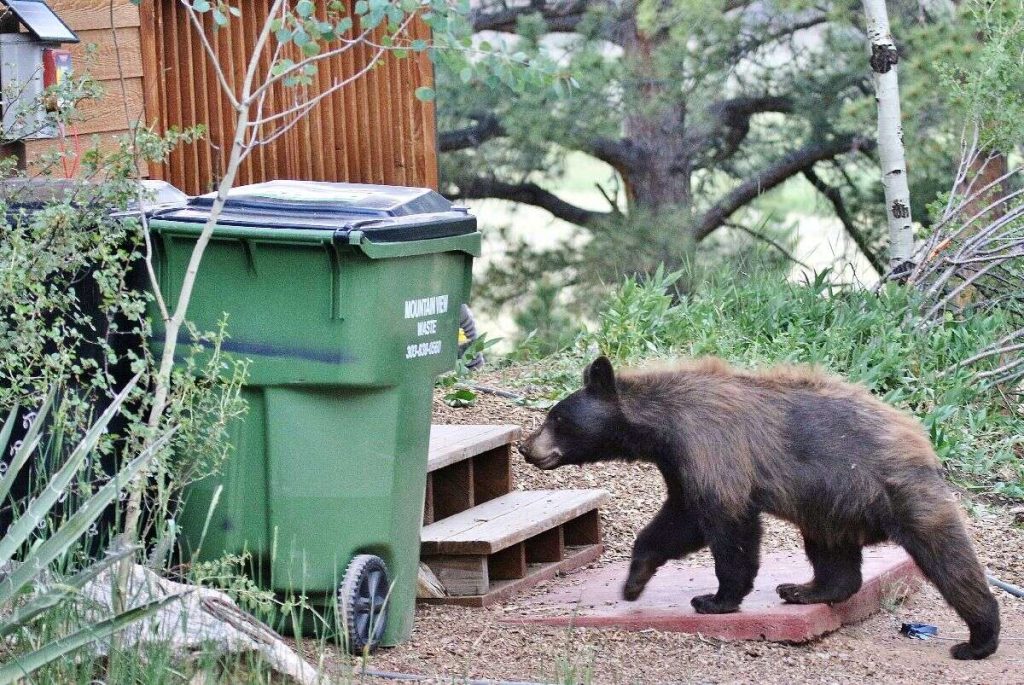 Trash is the No. 1 reported cause of human-bear conflict in Colorado.Colorado Parks and Wildlife/Courtesy photo
“It’s just a big ladder of progression,” Bubenheim said. “If we can nip it in the bud right at the start and not give them a food reward on our property to begin with, it’s better for everybody.”
This can be passed down, with Middledorf warning of “a dangerous generational pattern” solidifying in the Yampa Valley.
“Female bears are actively teaching their cubs that it is acceptable to get into household trash, unlocked homes and parked vehicles,” Middledorf said. “This learned behavior ensures that a new generation of wildlife will grow up dependent on human garbage rather than foraging for natural food sources.”
With this, officials encourage individuals to report bear activity earlier rather than later.
“The sooner you call, the sooner we can work with you to identify what attractants might be bringing them in and ultimately protect the bears,” Middledorf said. “We can then help you remove those attractants to prevent further issues before they escalate.”
Part of the challenge is that Parks and Wildlife’s options when it comes to habituated bears are limited. They typically have two options: relocation or euthanization. In 2025, the agency relocated 52 bears and killed 78 due to human-wildlife conflicts statewide.
“Many residents are operating under a false sense of security and assume that wildlife officials can simply relocate any problem bear, but relocation is far more complex than just picking a remote spot on a map,” Gonzales said. “We must first look for an area that has adequate food, shelter, water and little risk for additional potential human-bear conflict. With the residential population in our mountain communities continuing to grow, that is becoming harder to find.”
Bears can also be territorial and have “incredible homing instincts,” so relocation can increase conflict between bears or not be effective, Gonzales added.
“The importance of prevention is crucial, regardless of the natural food sources available or not available,” she said. “They will move around in search of food, which may lead them into neighborhoods or the downtown area. If they don’t find any food, they will move on to continue their search, hopefully leaving the populated area and back into the wilderness area.”
Starting Aug. 12, Parks and Wildlife and other law enforcement officers will also see the benefits of a new law passed by legislators this year to address human-bear conflict.
“This bill strengthens our ability to address these conflicts by updating the culpable mental state tied to this offense and increasing enforcement measures for individuals who knowingly leave out attractants and trash,” Gonzales said.
Consistency, collaboration and education
In the Roaring Fork Valley, Parks and Wildlife, Pitkin County and Aspen, Basalt and Snowmass Village are launching a new coordinated campaign to reduce human-bear conflicts. Education and consistency are critical to this goal, Xaiz said.
“We all share the same workforce. We likely share all the same bears. So instead of each of us working in our own little silos, we can share resources and tools that have helped … and have the same messaging,” she said.
The benefit of this is seen in the state signing onto BearWise, a national program sponsored by the Association of Fish and Wildlife Agencies, in 2025, Xaiz said. This way, whether individuals live in the area or are visiting, the message is “concise, consistent” and looks the same, she added.
Education is important because it’s up to humans to do better, Bubenheim said.
“Since humans, in theory, know how to do what’s right, and bears don’t necessarily know right from wrong, we’ve got to be the ones to do better and try and make bears less comfortable being around us and being in our community, both for their safety and for our safety,” Bubenheim said.