
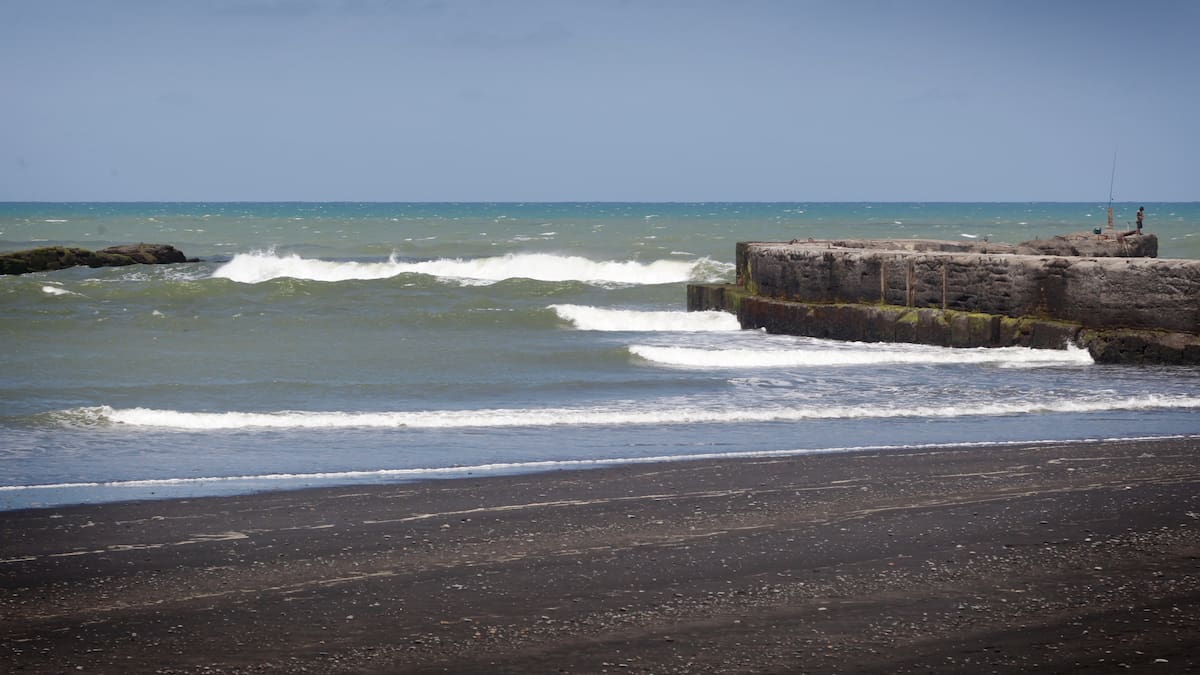
A rescue effort involving Coastguard volunteers, nearby boaties and emergency services followed, but neither survived.
More than a year on, coroner’s findings released today reveal how the tragedy on one of New Zealand’s most notorious river bar crossings unfolded and whether anything could have prevented it.
Zane was described by his mother, Carolynn Maraki, in the findings as affectionate, “easily entertained and impressed”, and a child who was “always talking to people”. He was the youngest of 11 children and loved going fishing with his dad.
The findings noted that Wiltshire, also known as Patricia Tolley, was very close to her mother and also enjoyed fishing with Milham.
A deadly crossing
The family had set out aboard the Miss Molly, a small fibreglass fishing boat, on the morning of June 15 last year after Wiltshire, 50, stopped at her mother’s to collect bait from the freezer.
According to the findings, Milham assessed conditions before attempting the crossing and waited for about seven minutes for a set of waves to pass.
CCTV footage showed the boat waiting near the bar while a jetski successfully crossed ahead of it.
Other boaties later described conditions as relatively calm with light winds. Maritime New Zealand said forecasts were for moderate seas with swells of up to 2m, and several other vessels had crossed safely that morning.
But shortly after 10.15am, as the Miss Molly attempted to leave the river mouth and over the bar, a large wave appeared.
“The boat’s momentum appears to take the boat into the wave, with the boat becoming vertical and landing on its stern,” the findings said.
“Miss Molly then capsized, with Zane and Ms Wiltshire becoming trapped underneath.”
The South Taranaki Coastguard first received a faint radio call referencing “Miss Molly” and “over the bar”. It was later advised by radio that a member of the public had seen the boat overturn.
Emergency services were dispatched while nearby boats rushed to assist.
Wiltshire was later seen surfacing from beneath the boat about 50m from the jetty. She was pulled from the water but had died.
Zane was found beneath the vessel by a rescue diver after the boat had been brought closer to shore.
Coastguard volunteers, emergency services and nearby boaties responded after the Miss Molly capsized on the Pātea River Bar. Photo / Coastguard South Taranaki
Coroner Rachael Schmidt-McCleave found that both died from drowning, with inhalation of toluene, a compound found in petrol, contributing to their deaths.
The coroner heard that the Pātea River Bar was regarded as one of the country’s most dangerous crossings.
Scott Williams, vice-president of Coast Guard South Taranaki, said it was viewed as New Zealand’s second most notorious bar crossing after Greymouth. He said one of the dangers was that large waves could appear with little warning.
Questions over boat and lifejacket
Investigators considered whether the condition of Milham’s boat, its engine size, weight distribution or, in Zane’s case, his lifejacket, played a role in the deaths.
A marine accident inspector described the Miss Molly as being in poor overall condition, but said it maintained structural integrity, propulsive power and steerage at the time of the capsize.
The inspector noted it carried a 115-horsepower engine, despite guidance suggesting boats of a similar size would typically have an engine between 40hp and 70hp.
He found the capsize was caused by a combination of factors, including weight distribution at the stern, the engine’s weight, the nature of the waves, and how the boat was being operated. However, he did not conclude the vessel’s condition contributed to the capsize.
Zane’s lifejacket also came under scrutiny.
Maritime New Zealand found it was the wrong size and had not been properly fitted.
Although it complied with an approved Australian standard, it was designed for a person weighing between 40kg and 60kg, making it unsuitable for a 6-year-old.
Investigators found the lifejacket would have reduced Zane’s ability to float and keep his head above water but could not determine whether it directly contributed to his death.
The coroner heard that Milham was an experienced boatie who had crossed the bar many times.
Maritime New Zealand found he had broadly followed the agency’s code of practice for bar crossings by assessing conditions, notifying Coastguard of his intentions and waiting for another vessel to clear the crossing before proceeding.
No recommendations made
Police investigated the incident but did not lay charges. Maritime New Zealand also did not pursue enforcement action.
While Coroner Schmidt-McCleave identified several potential areas of risk, including the boat’s condition, engine size, weight distribution and Zane’s ill-fitting lifejacket, she found there was insufficient evidence to conclude any directly contributed to the deaths.
She made no formal recommendations, instead drawing attention to Maritime New Zealand guidance on lifejacket use and river bar crossings.
In her closing remarks, the coroner extended condolences to both families and described Zane as a “much loved and loveable little boy” whose death had caused deep grief.
Pātea Area School principal James Davidson previously told the Herald that Zane’s death had “deeply affected” the school and community.
“Everyone who met Zane instantly fell in love with his cheeky grin and zest for life. We already miss him immensely,” he said.
Tara Shaskey is an assistant editor and reporter for the Open Justice team. She joined NZME in 2022 and has worked as a journalist since 2014.
Join the NZ Herald’s Open Justice team for Case by Case, a video and podcast series examining the disputes and decisions making headlines across New Zealand.