
The APL’s updated position proposes a 41% increase to the women’s maximum salary cap, to A$900,000 ($1,078,000), as well as enhancements to maternity and paternity entitlements.
The proposal also includes significant exclusions from the salary cap, comprising pro-rata amounts associated with A-League Women contracts beyond 38 weeks; and the allocation of a marquee player fund for up to three players for the upcoming season.
The Wellington Phoenix welcomed the updated proposal and the APL’s commitment to setting a pathway to fulltime professionalism for women players.
The club said in a statement that player contract regulations will be issued for the upcoming season in line with the updated proposal, which provides certainty for the Phoenix staff and players, while the APL can hopefully continue working with PFA towards a new collective.
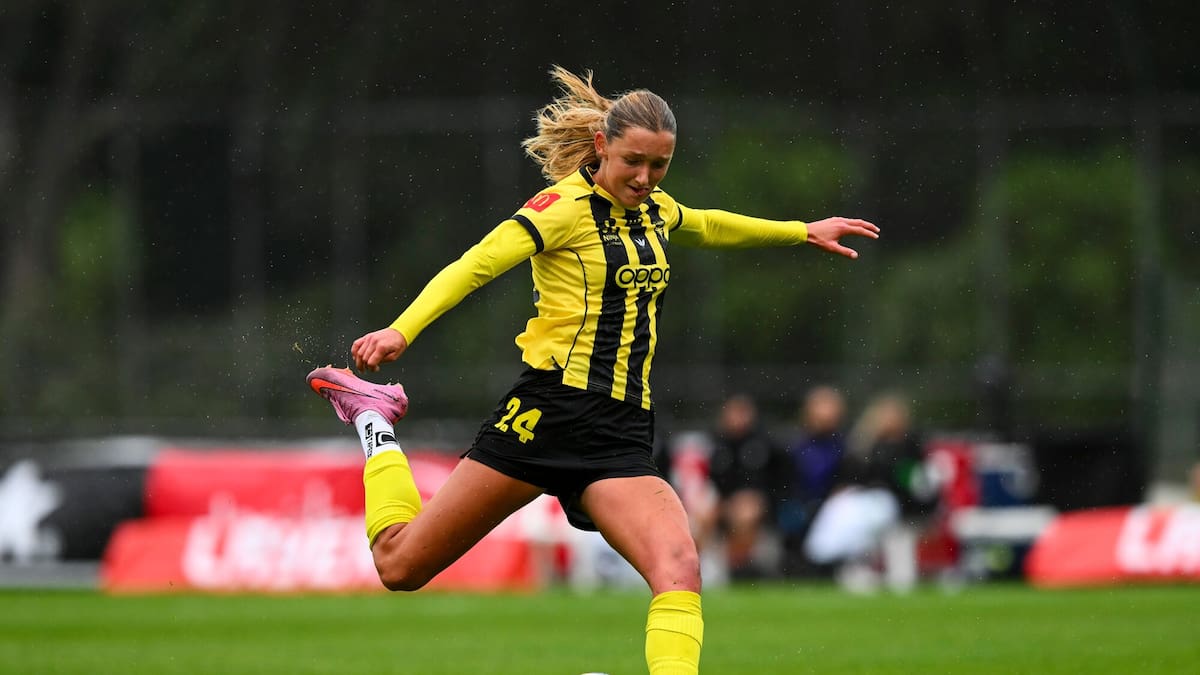
The A-League women’s sides’ salary cap would rise 41% to $900,000 under the proposal. Photo / Photosport
Auckland FC said they backed the proposal and “want to work together with the players to grow the game”.
The formation of a player advisory committee, comprising an equal number of men’s and women’s player representatives from across the clubs and spanning the key age demographics among the player cohort that would meet with the APL on a quarterly basis for feedback and insights on APL strategy, has also been proposed.
APL chief executive Steve Rosich said the updated proposal provides the players and clubs, and the game overall, with an appropriate platform for meaningful and sustainable growth over the coming years.
“We’ve been committed to this process in good faith since discussions with the PFA commenced around eight months ago. Indeed, at the outset, we sought to pursue a multi-year framework and subsequently agreed to the PFA’s request for a one-year collective agreement.
“Our updated proposal underlines a real and genuine intent on the APL’s part to arrive at an outcome that both meets the near-term priorities in a responsible and viable way, and to turn our focus with the PFA on building meaningful and sustainable growth that will be good for everyone involved in the professional game.
“We understand that negotiations call for give and take from all parties. We don’t shy away from it when it is done with the right intentions and with a shared outcome in mind. In that context, we recognise the important role of the PFA in representing the interests of its members.
“We recognise that players are fundamental to our leagues, its performance and our growth. Equally, our clubs understand their responsibility as employers of players across the ALW [A-League Women] and ALM [A-League Men], as well as coaching staff and other on- and off-field resources who contribute to the success of our A-Leagues competitions.”
PFA chief executive Beau Busch was not impressed with the process the APL used to deliver their updated proposal.
“Rather than allowing the players a reasonable opportunity to fully consider it, the APL has instead immediately announced it in the media, revealing a fundamental misunderstanding of how good-faith bargaining works,” he said.
“The players deserve the respect of hearing directly about proposals that affect their careers through a genuine process, rather than reading about them in the media.
“The players overwhelmingly rejected the APL’s previous final offer, due to a fundamental lack of trust that it would have secured the leagues’ futures after years of mismanagement. The APL’s conduct continues to erode that trust. It is disappointing that the APL has attempted to wedge the players with media tactics instead of engaging appropriately.”
Busch said the player representative body will carefully review the APL’s letter and consider its content over the coming days.
The players’ association is wary of the proposed A-League pay deal. Pictured is now-former Wellington Phoenix forward Luke Brooke-Smith, who’s moved to English Championship side Portsmouth. Photo / Photosport
“Five years of underperformance by the APL has left the game in an incredibly precarious position. Any new proposal will only be accepted by the players if it promises genuine transformation.”
The APL’s updated proposal also rejected a proposition put forward by PFA to shift to an enterprise agreement and industry agreement structure for the A-Leagues competitions, a premise that, according to Rosich, “is fundamentally unfit for purpose and not in the best interests of players, and by extension, the professional game in Australia”.
Under the Fair Work Act, an enterprise agreement is made between an employer and its employees. The APL said it does not employ players and cannot make an enterprise agreement covering them.
The Fair Work Act would exclude the New Zealand-based players, given that it operates under Australian law, meaning any enterprise agreement could not on its own deliver a single, competition-wide standard that PFA seeks, according to the APL.
The A-Leagues must operate in accordance with Fifa and Football Australia’s regulatory framework, including in relation to player employment-related disputes.
As the Fifa member association, Football Australia has approval rights over A-Leagues regulations.