
“That does come with trade-offs along the way,” he said.
The first review is underway and being led by the CRL team itself. It’s an independent review looking at lessons learned, with findings due by the end of the year.
While conceding mistakes had been made during the project’s delivery, Bishop said the end result justified the challenges.
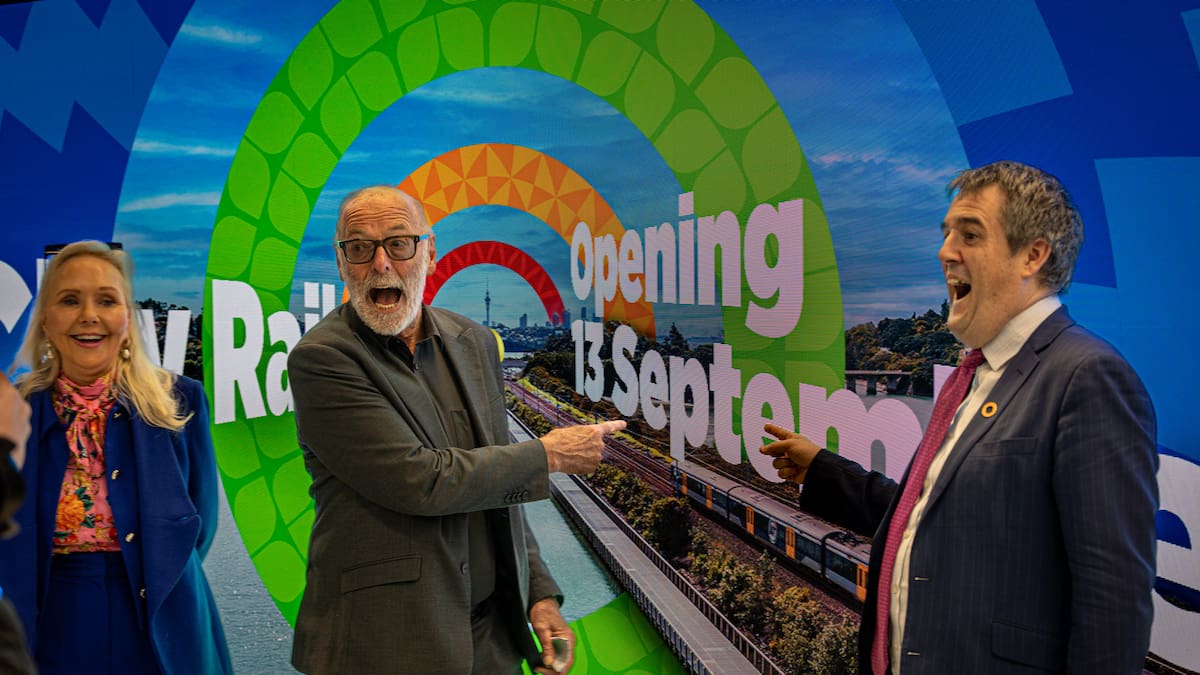
Auckland’s City Rail Link will open to the public on September 13.
“It’s been worth it. Have there been mistakes along the way? Absolutely. Are there lessons we must learn for the future? Of course, and we will.”
He said once Aucklanders began relying on the rail link, they would not be thinking about “the consenting challenges, the funding agreements, the arguments that have been had along the way”.
“That’s the point. Good infrastructure sits quietly, making our lives a little bit better than they otherwise would have been.”
Business disruption was one of the big headaches for the project.
Former mayor Len Brown and former Transport Minister Simon Bridges both said their biggest regret was not doing more to help businesses out earlier.
Bridges is contributing to the “lessons learnt” review and admitted the “human toll” was huge.
Len Brown said he should’ve done more earlier to help move businesses or compensate them.
The second report will look at the benefits of the project.
Auckland Mayor Wayne Brown and Transport Minister Chris Bishop announce the CRL opening date at Karang-a-Hape station. Photo / Michael Craig
Auckland Council said it will review the extent to which the new rail infrastructure is expected to give a return on investment over time through increased productivity and economic activity, as well as reduced transport emissions.
Billions of dollars have been promised in economic benefits, but Bishop said it would take time for that to be realised.
“We never go back and look at what we did and work out if it’s actually working well and what the benefits are,” Bishop said.
“Once it’s open and up and running, we will do a benefits realisation report.”
The third report is a wider look at bang for buck when it comes to infrastructure.
In April, Bishop introduced a new process called investment decision assurance (IDA), delivered by the Infrastructure Commission.
“New Zealand spends a lot on infrastructure, but we’re not always getting value from this investment. Our process for evaluating infrastructure proposals, so that ministers have the information they need to make informed investment decisions, isn’t working as well as it should,” the IDA announcement said.
The soon to be opened Karanga-a-Hape CRL station. Photo / Sylvie Whinray
The aim is to enable the public sector to effectively plan, deliver and manage infrastructure, with earlier involvement from independent experts, clearer and more consistent advice to ministers, and stronger oversight of major projects from planning through to delivery.
Part of that will ensure costs are appropriate.
Wayne Brown repeated his view that the CRL was too expensive.
“It cost too much, it took too long, but it will be appreciated for generations,” Brown said.
“We’ll shift Auckland up a gear and along with the transport reform we’ll get Auckland moving. Quicker to get across town, quicker to get into town, quicker, quicker to get across Auckland.
“These things do work, look at the Northern Busway. It’s so successful now there’s no more cars going over the [harbour] bridge than there were 10 years ago,” Brown said.
“It’s no secret I’ve had strong feelings about the cost of city railing, but there’s no doubt it’s an investment that will help Auckland keep moving and support our growth for decades.
“I’m determined we’re going to get people to catch this bloody train.”
The CRL was funded by a 50/50 split between Auckland Council and the Government.
Asked where the plan was for the next big infrastructure project for Auckland, Bishop and Brown agreed the focus was on completing the North-West Busway.
The CRL opening date announcement was bungled, with a billboard provider accidentally revealing the September 13 date early on Thursday morning.
Auckland Transport interim CEO Stacey van der Putten joins Auckland Mayor Wayne Brown and Transport Minister Chris Bishop at today’s announcement. Photo / Michael Craig
Auckland Transport chief executive Stacey van der Putten called the mistake a “bummer”.
“Yeah, it’s really disappointing,” van der Putten said.
“I mean, we wanted the opportunity to share that with our stakeholders and our people.”
She said AT had been in contact with the billboard company, which blamed a “content loading issue”.
She confirmed the date had only been decided this week.
Officials were confident there would be no issues on opening day – or the following days.
Brown said the focus now shifted to ensuring the network was well used, with Auckland Council working to increase housing around rail stations through Plan Change 120.
“We want people to use the City Rail Link. That’s our next step. That’s our next challenge,” Brown said.
Encouraging developers to build multistorey homes near stations would place more people within easy reach of public transport.
Once the link is running, trains will run every five minutes through the city centre and, on average, about 10 minutes elsewhere on the network during peak times.
Starting this weekend, AT is running three Saturday sessions to showcase the project to the public.
Those with free tickets can visit the stations.
Katie Bradford is a Senior Correspondent at the Herald. She has been a broadcast journalist for over 20 years and was based in the press gallery for 10 years. She specialises in politics, business and Auckland issues.