
Venkat Raman
August 7, 2026
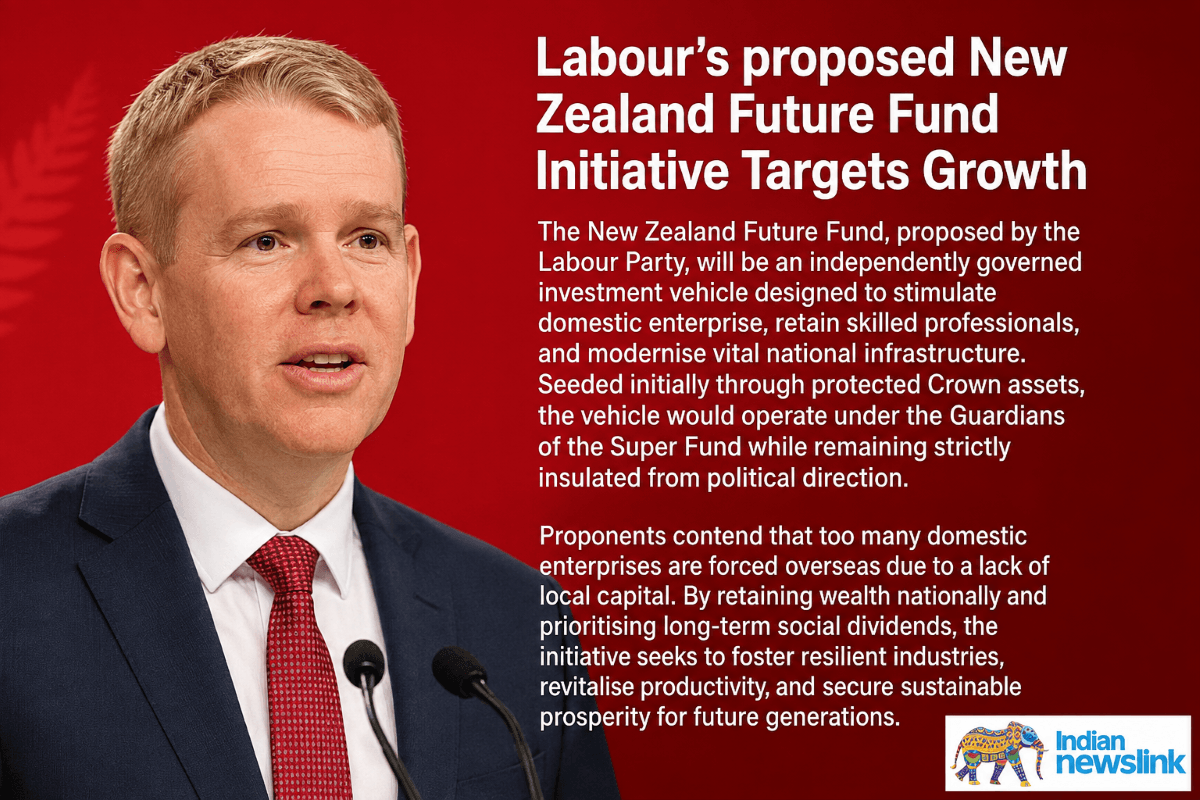
Labour has unveiled a proposal for a New Zealand Future Fund, an independently governed investment vehicle intended to strengthen national wealth, support innovative domestic enterprises, and accelerate long-term infrastructure development.
Party Leader Chris Hipkins said that the country stands at a critical juncture, facing economic contraction, declining job numbers, and an exodus of skilled New Zealanders seeking opportunities abroad.
“The Future Fund is designed to reverse these trends by mobilising domestic capital for domestic benefit,” he said.
The proposed Fund would sit alongside, but remain distinct from, the existing New Zealand Super Fund. It would be governed by the Guardians of the Super Fund, with the Minister of Finance acting as the sole shareholder.
Crucially, the Minister would have no authority to direct individual investments, ensuring operational independence and insulating the Fund from political interference.
Developing New Zealand’s Potential
Labour’s central argument is that New Zealand has long failed to invest sufficiently in its own ideas, industries, and talent.
Mr Hipkins said that too many promising Kiwi firms are forced offshore or acquired by foreign investors, resulting in the loss of jobs, intellectual property, and future economic returns.
“New Zealand has the talent and ideas. What is missing is the backing. Too often, Kiwi businesses are forced overseas or bought out by foreign investors – taking jobs, opportunities, and wealth away with them,” he said.
The Party highlights several concerning indicators: 40,000 fewer jobs since Christopher Luxon became Prime Minister, daily departures of more than 200 New Zealanders, and a nearly 1% contraction in GDP in the previous quarter. Labour argues that the Future Fund is a structural response to these trends, intended to build long-term resilience rather than rely on short-term fixes.
The Future Fund would be seeded with a selection of Crown-owned assets that serve both commercial and public good purposes. These assets would provide a stable revenue stream through dividends and form a base for further investment. Labour emphasises that these seeded assets would be protected in law from sale, ensuring they remain in public ownership for generations.
Additional assets could be added to the Fund, but any sale of those assets would require explicit approval from the Minister of Finance.
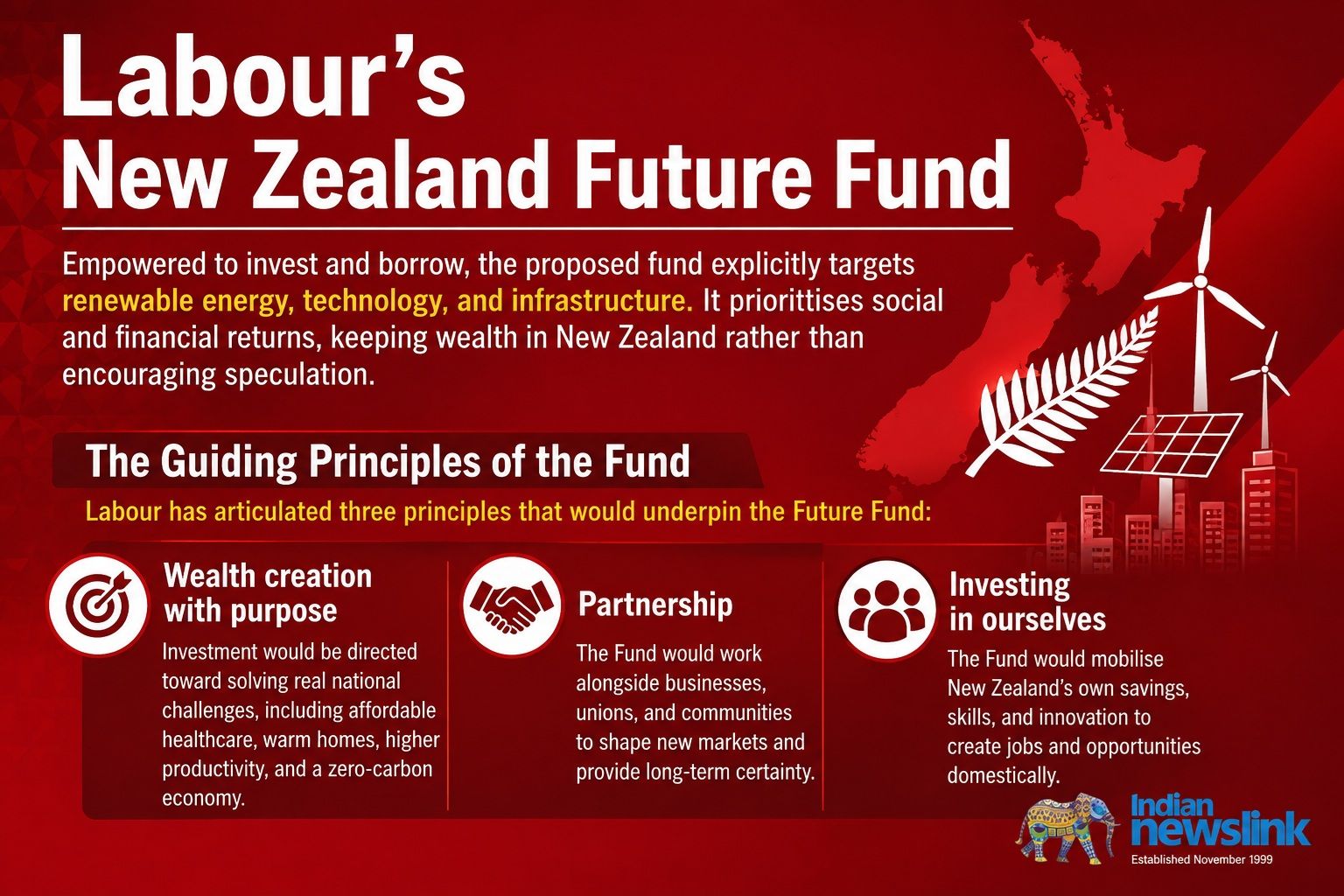
The Fund would have the authority to invest and borrow, guided by legislation and a public policy statement. Returns would be measured not only in financial terms but also in social outcomes, such as stronger communities, lower household costs, and more resilient industries.
Labour envisions investments in areas such as community renewable energy, high-technology start-ups, and productivity-enhancing infrastructure.
The Party frames the Fund as a mechanism to “make and keep more wealth in New Zealand” by directing capital toward productive industries rather than speculative activity.
The Guiding Principles of the Fund
Labour has articulated three principles that would underpin the Future Fund:
Wealth creation with purpose: Investment would be directed toward solving real national challenges, including affordable healthcare, warm homes, higher productivity, and a zero-carbon economy.
Partnership: The Fund would work alongside businesses, unions, and communities to shape new markets and provide long-term certainty.
Investing in ourselves: The Fund would mobilise New Zealand’s own savings, skills, and innovation to create jobs and opportunities domestically.
These principles reflect Labour’s services and economic strategy, which includes accelerating clean energy development, expanding apprenticeships and mid-career training, improving technological capacity in public services, and building modern infrastructure to connect regions and unlock growth.
Opposition Parties not enthusiastic
Opposition Parties and several economists have questioned the proposal, arguing that Labour has not fully explained how the Fund would be capitalised or how its investments would be insulated from political agendas.
National’s Finance Spokesperson Nicola Willis said that Labour is proposing yet another government-run Fund without explaining how it will avoid the pitfalls of political influence.
“New Zealand needs private-sector dynamism, not more state-controlled investment vehicles,” she said.
ACT Leader David Seymour criticised the plan as ‘a return to old-fashioned state intervention.’
“The Government should not be picking winners or using public assets as collateral for speculative ventures,” he said.
Some analysts have also warned that seeding the Fund with Crown assets could limit future fiscal flexibility.
Economist Dr Sarah Thompson said that “locking assets into a legally protected structure may constrain future governments, particularly in times of economic stress.”
Others, however, have welcomed the proposal. Business leader Sir Ian Taylor said, “New Zealand desperately needs long-term investment in innovation. A Future Fund could provide the patient capital that Kiwi firms have struggled to access.”
Lessons from Singapore, Australia and Beyond
Labour points to international precedents to justify its proposal.
Singapore’s Temasek Holdings began in 1974 with S$354 million and has grown to more than S$434 billion. Temasek is widely regarded as a successful example of state-owned investment driving national development, though its model relies on Singapore’s unique political and economic environment.
Australia’s superannuation system, now valued at A$4.2 trillion, has become a major source of domestic investment, supporting infrastructure, technology, and industry growth. Its scale has helped deepen Australia’s capital markets and reduce reliance on foreign investment.
New Zealand’s own Super Fund has grown to $85 billion and delivered strong returns, but only 11% of its capital is invested domestically.
Mr Hipkins said that this imbalance underscores the need for a separate Fund dedicated to New Zealand-focused investment.
International experience suggests that sovereign and public investment Funds can succeed when they are governed independently, operate with clear mandates, and maintain strong transparency. However, they can falter when political interference, poor governance, or unclear objectives undermine their credibility.
A Strategic Bet on New Zealand’s Future
Labour’s proposal for a New Zealand Future Fund represents a significant shift in economic strategy, emphasising long-term investment, national resilience, and domestic wealth creation. Supporters see it as a bold and necessary intervention to reverse economic decline and retain talent. Critics warn of risks, governance challenges, and potential politicisation.
Whether the Future Fund becomes a cornerstone of New Zealand’s economic future will depend on its final design, its independence, and its ability to deliver both financial and social returns. What is clear is that Labour intends it to be a defining element of its wider economic plan.
Please confirm all political information with trusted sources.