
Domestically, market pricing continues to imply around 120 basis points of cumulative tightening by the Reserve Bank by the end of 2027, and retail interest rates are rising.
What to expect
Matt Peek, portfolio manager, NZ Equities at Fisher Funds, said New Zealand’s economic outlook was looking promising before the Middle East conflict flared up.
“For those companies exposed to Kiwi wallets it’s now a case of understanding to what extent they have been able to sustain trading momentum through the middle part of this year,” Peek said.
“So on this front there will be a good deal of interest in bellwether companies like Freightways and the retailers, but also the likes of Air NZ and Sky TV.”
It will be a busy time for Australian company results too.
“There will be plenty of attention on whether there are any signs of a consumer-led softening there too and this also applies to a lot of New Zealand companies that have Australian operations,” he said.
Peek said there will also be interest in artificial intelligence (AI) as a theme, particularly its potential to create efficiencies and cost savings.
Solid momentum
In its season preview, Forsyth Barr said earnings growth momentum remained solid, but that the world around it had become “far noisier”.
“Across the 40 companies under our coverage reporting this season, we forecast strong profit growth, partly flattered by gentailers [generator-retailers] cycling a challenging 2025.
“Offshore, the Middle East conflict and the prospect of higher-for-longer fuel costs have tempered near-term earnings growth expectations heading into 2027, while the Australian consumer is showing signs of fatigue,” Forsyth Barr said.
At home, an emerging domestic recovery led by the South Island would increasingly compete for attention with the general election, which is due on November 7.
“The latter will likely add heightened political scrutiny of the electricity sector, which we expect to keep 2027 guidance conservative.”
Much has been said in the political arena about the current structure of the electricity sector.
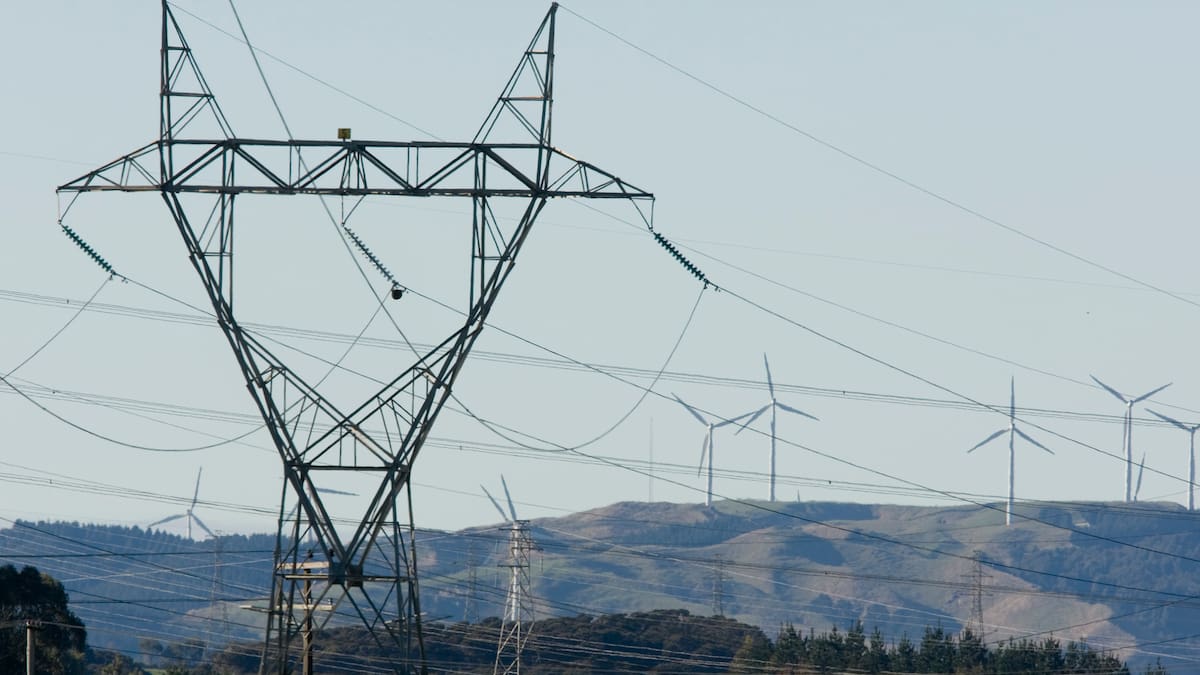
Power companies look set to report strong earnings this reporting season.
The chief executive of the Auckland Business Chamber and former parliamentarian, Simon Bridges, this week made a case for breaking up the four generator-retailers, which control 85% of the country’s generation, and separating out their retail arms.
Against this backdrop, Forsyth Barr said it had a slightly more negative analyst bias relative to recent reporting seasons and that its financial year 2027 earnings estimates have been clipped back in recent months.
In general, Forsyth Barr expects company outlook commentaries to be “cautiously optimistic”.
Power game
For the big power generators, the June year will be a big improvement on the previous financial year, which was hit by the August 2024 power price spike.
Contact Energy (CEN), Mercury (MCY), and Meridian Energy (MEL) have all had very strong years, in sharp contrast to the weak 2025 year, while Genesis Energy had a weak fourth quarter relative to its peers.
Renewable generation topped 95% in the 2026 financial year across the main four generators, lowering thermal generation costs and avoiding the need for demand response payments to Rio Tinto’s New Zealand Aluminium Smelters.
In addition, Contact’s results – to be announced on Monday – would be boosted by the $2.3 billion acquisition of Manawa Energy last year.
“We anticipate a key focus of discussion will be the material fall in ASX futures prices that has taken place over the last six months and what that means for earnings and new generation development going forward,” Forsyth Barr said.
“We are picking 2027 guidance to be on the conservative side, and we expect little intention to slow new developments given expected demand growth.”
“The ebitdaf [earnings before interest, tax, depreciation, amortisation and financial instruments] will be record highs, in large part because 2025 was a challenging year for the sector given low hydro inflows.”
A combination of new renewable generation and high hydro generation volumes meant renewable generation was at record levels throughout much of 2026, reducing the need to run expensive thermal generation.
Forsyth Barr says the decline in electricity futures prices would raise questions for the generator-retailers and their guidance for the 2027 year.
“We do not expect there to be an impact as the futures curve decline has been anticipated (albeit maybe not the timing or speed of the decline), and strong electricity demand growth expectations will require new generation to be built.”
Craigs Investment Partners senior research analyst Joshua Dale expects the big four’s ebitda to reach $3.7b in total, a 35% increase on the previous year’s, due largely to favourable hydro conditions which enabled them to avoid high-cost back-up options such as thermal energy and demand response penalties.
Companies with exposure to the agriculture sector look set to benefit from generally strong commodity prices.
Firm agri
Rural services group PGG Wrightson (August 11) has said its first half was characterised by favourable commodity pricing across a number of key segments.
The company has said it remained on track to deliver its forecast 2026 full‑year operating ebitda guidance of around $64 million, up from the previous year’s ebitda of $56.1m.
Scales Corp (half year, August 26) – which is exposed to horticulture, storage, logistics and food ingredients – will have enjoyed the benefit of a strong apple season.
Management also indicated global proteins growth has been off to a strong start in 2026.
Infant formula company a2 Milk (August 17) suffered supply chain issues that materially impacted its China label infant formula sales in the fourth quarter, with 2026 sales down by about 14% on 2025’s.
Nevertheless, the company has said it expects revenue of about $1.97b, up over 12% on 2025.
Bellwether stock Fletcher Building (August 19) has said it will increase its annual earnings before interest and tax guidance by about 6.4% to between $400m and $403m, inclusive of $52m of earnings from surplus property sales.
Predictably, jet fuel prices will have a big negative impact on Air New Zealand’s result (August 28).
The company said in May that it now expects a loss before taxation in the range of $340m to $390m.
The updated range includes the impact of materially higher fuel costs, partly offset by about $70m of mitigation actions.
“The prospect of higher-for-longer fuel costs will create a meaningful headwind for Air NZ’s return to profits,” Forsyth Barr said.
Jamie Gray is an Auckland-based journalist, covering the financial markets, the primary sector and energy. He joined the Herald in 2011.
Stay ahead with the latest market moves, corporate updates, and economic insights by subscribing to our Business newsletter – your essential weekly round-up of all the business news you need.