
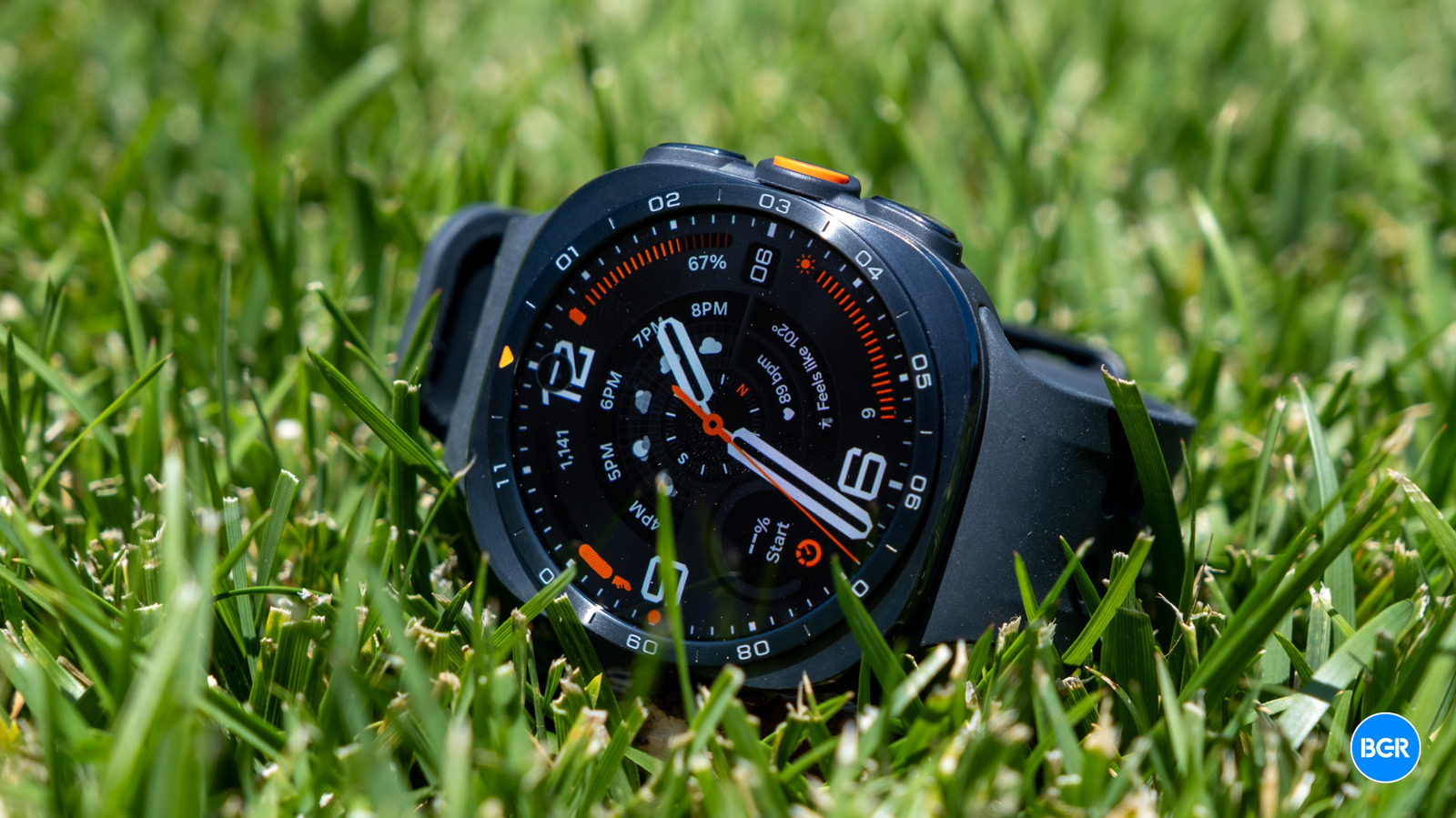
The Ultra 2’s health story starts with Samsung’s BioActive sensor array, which covers optical heart rate, ECG, and BIA body composition, supplemented by skin temperature, accelerometer, barometer, gyroscope, and ambient light sensors. On top of that sits dual-frequency Global Navigation Satellite System, aka GNSS (L1 and L5). The Apple Watch Ultra 3 matches the dual-frequency GPS and the EN13319 dive tracking, so neither watch has an edge on that front.
There are features on the Galaxy Watch Ultra 2 that aren’t really widely available elsewhere. For example, the device offers blood pressure monitoring and body composition on top of the standard heart rate monitoring and sleep tracking. These are features that are becoming more common but still aren’t ubiquitous.
Sleep tracking also performs admirably. The device has all the basic metrics you would expect, including total duration, heart-rate trends, and more. It’s a little hard to tell if sleep stages are all that accurate, though — and at times, they weren’t completely the same as the data from an Apple Watch and an Oura Ring 5 I was using simultaneously.
For the most part, the device seemed to be quite accurate, especially when it came to heart-rate accuracy. It also seemed to mostly match the Apple Watch Ultra 3 I was also using, which has been known to be pretty accurate all around.
I did appreciate the data that was available in Samsung Health. After a workout, you’ll get a suggestion on how much water to drink, for example, and the information presented in the graphs is pretty thorough and detailed. Again, for the most part, the actual information was pretty similar to what was tracked by the Oura Ring 5 and the Apple Watch Ultra, though, so this won’t be a deciding factor for switching if you already own one of those devices.
There are, of course, additional AI features related to health tracking on the device. In the Samsung Health app, you’ll get things like an AI overview of your performance and metrics, and you’ll be able to “Ask coach” for more information. Sleep apnea detection, vitals monitoring, heart health score, daily cardio load, fitness index, and hearing protection all come standard, too, and they’re built around personalized baselines rather than fixed thresholds — so the watch alerts you when a metric actually deviates from your normal. For athletes specifically, the dedicated Trail Run mode provides real-time elevation, climbing progress, and terrain impact metrics, and the Nutrition Alert and Sweat Loss features calculate hydration needs during long activities.
As a whole, there’s nothing missing from the health tracking features on the Galaxy Watch Ultra 2. I wouldn’t say that the device is far and away ahead of anything else, though. So if you were hoping that the Ultra moniker meant that you would get dramatically more from health tracking, then you may be disappointed.