
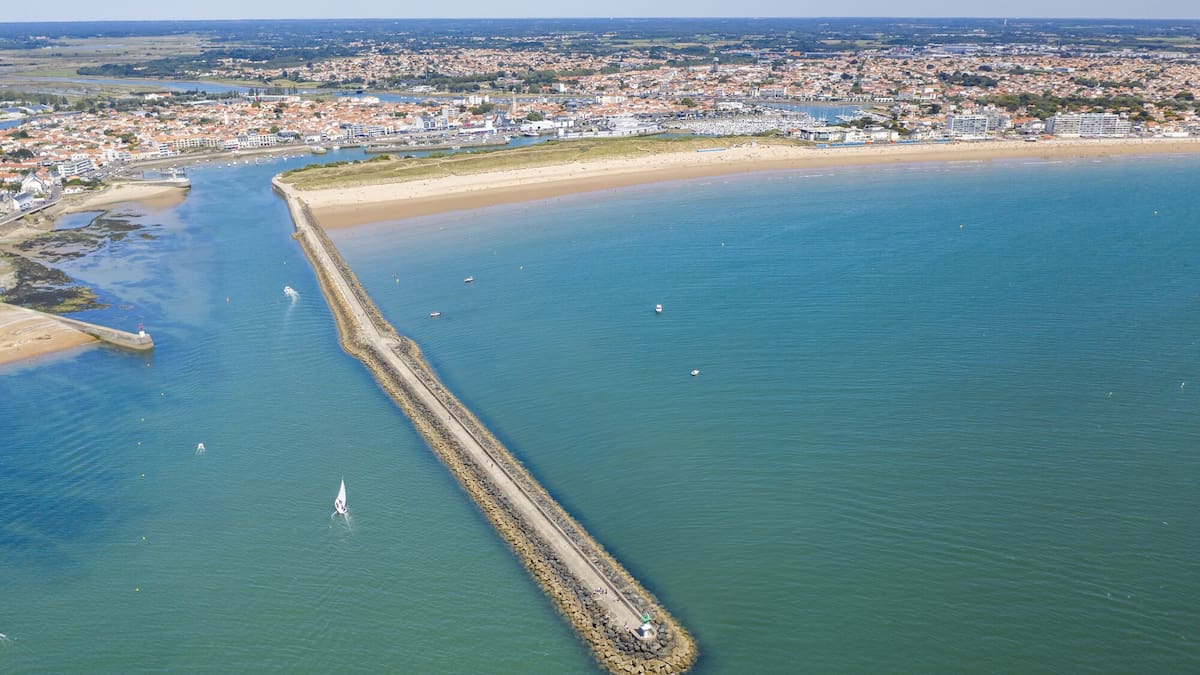
This corner of France has stayed off the radar and that’s because natives (in particular, the Parisians) have been keeping it to themselves. But it’s finally opening up to tourism and I’ve come to see what we’ve been missing.
For Parisians, it’s a two-hour train ride away; for anyone else it’s easiest to fly to Nantes and hire a car.
The Maraichins’ thatched cottages at Le Daviaud reveal life until the 1960s. Photo / Stephane Grossin
And the marshes are where I start at the Le Daviaud eco-museum, a short drive from the northern seaside town of Fromentine.
There’s a collection of distinctive thatched cottages (called ‘bourrines’) that Maraichins lived in until the late 1960s. Guides show how they made butter by hand, navigated marshes by boat and pole-vaulted from bank to bank using giant sticks.
Today, this unusual terroir is used rather differently. There are salt farmers, oyster farmers, and even algae farmers. The newly opened Cabane aux Algues (an algae shop) has developed a range of cosmetics as well as condiments – their samphire mustard’s top notch.
From marsh to magic: The French region quietly opening to the world. Photo / Supplied
My base for the night is a chalet in Fromentine’s beachside Le Grand Corseau campsite. Fromentine is the gateway to two little-known La Vendee islands.
Noirmoutier is the bigger of the duo and is attached to the mainland by a bridge. The other is Ile d’Yeu, a 30-minute hydrofoil ride away.
Known for its marshes and “Maraichins,” it offers cycling routes, beaches, and unique local products. Photo / Getty Images
Arriving at this 9.5km-long island (population 5000) is like stepping back in time. Locals drive vintage Citroen 2CVs and the main town of Port Joie is a charming jumble of backstreets and artisan boutiques.
For $30, you can hire a bike and cycle across the clifftops, stopping to marvel at crumbling chateaux and fortresses sculpted from the rock. I could happily spend my holiday on this island alone.
Back on the mainland, another of the region’s best-kept secrets is the ‘Vendee Velo’, one of France’s longest regional cycling routes which criss-crosses the countryside and tracks the Atlantic coastline. Beaches are deep, blonde, unspoilt and far less crowded than neighbouring Brittany or Normandy.
Not everything about this corner of France, however, has been kept under wraps. Every four years, this region hosts the renowned Vendee Globe round the world solo yacht race.
Les Sables d’Olonne, Vendée, France. Photo / Supplied
It starts in the town of Les Sables d’Olonne and the yacht that won the first competition in 1989 (the T11) is docked in the marina. Everyone’s welcome on board. Be warned, inside’s a tight squeeze and the sleeping quarters are tiny.
What might help sailors win the race are the treats made at Delices Lamarque round the corner, an artisan sweet shop specialising in ‘sardinettes’ – local hand-crafted sardine-shaped lollies. They’re flavoured strawberry, orange, violet, you name it. My favourite’s the salted caramel.
Fresh sardines take centre stage each April at St-Gilles-Croix-de-Vie’s festival. Photo / Joséphine Leroux
But for the real fishy deal, you must head to the town of St-Gilles-Croix-de-Vie, where a Sardine Festival is held every April to mark the beginning of the fishing season.
Locals queue to buy sardines direct from the fishing boats, their silvery scales glinting like precious jewels. They cost $10 a kilo and one couple buys a whopping four bags.
“What will you do with them all?” I ask.
They rattle off their menu for the week: sardines fried, grilled, boiled or bunged in the oven.
Sardines come tinned here too. At the Atelier de la Sardine they sell them in arty collectable cans which cost up to $90 per pack. Why so much?
It’s because, like wine, sardines mature with age. I sample the contents of a 2009 can (yes, 17 years-old vintage sardines) and they are indeed superior. Though not as superb as the ones I’m served for dinner that night at Restaurant Le Casier. They’re freshly grilled, slathered with salted butter and washed down with a bottle of Chenin Blanc from the local Oree du Sabia organic winery.
The area hosts the Vendee Globe yacht race and features attractions like Noirmoutier Island and St-Gilles-Croix-de-Vie. Photo / Supplied
La Vendee’s biggest asset is its diversity. It has world-class beaches, wine, culture and, thanks to the marshes, it’s a bird lover’s dream. During one cycle ride, I’m accompanied by a very vocal cuckoo. Better still, nowhere is far to get to.
What’s lacking are hotels. For now, campsites are the go-to, but B&Bs are starting to emerge. Top picks are the new, rural Damona Lodges (my base for Les Sables d’Olonnes) and the L’Envie guesthouse in St Gilles, which has a pool and delicious home-cooked breakfasts.
Yes, Maraichins sound futuristic, but in reality this region is the antithesis of sci-fi. It’s refreshingly authentic, untouched and like finding the France of yesteryear.
Details
Tailor-made short breaks to La Vendee can be organised by In Vendee Travel Services (in-vendee.com/im-interested/short-stays) from $751pp.
www.in-vendee.com
The writer travelled courtesy of the French tourist board.