
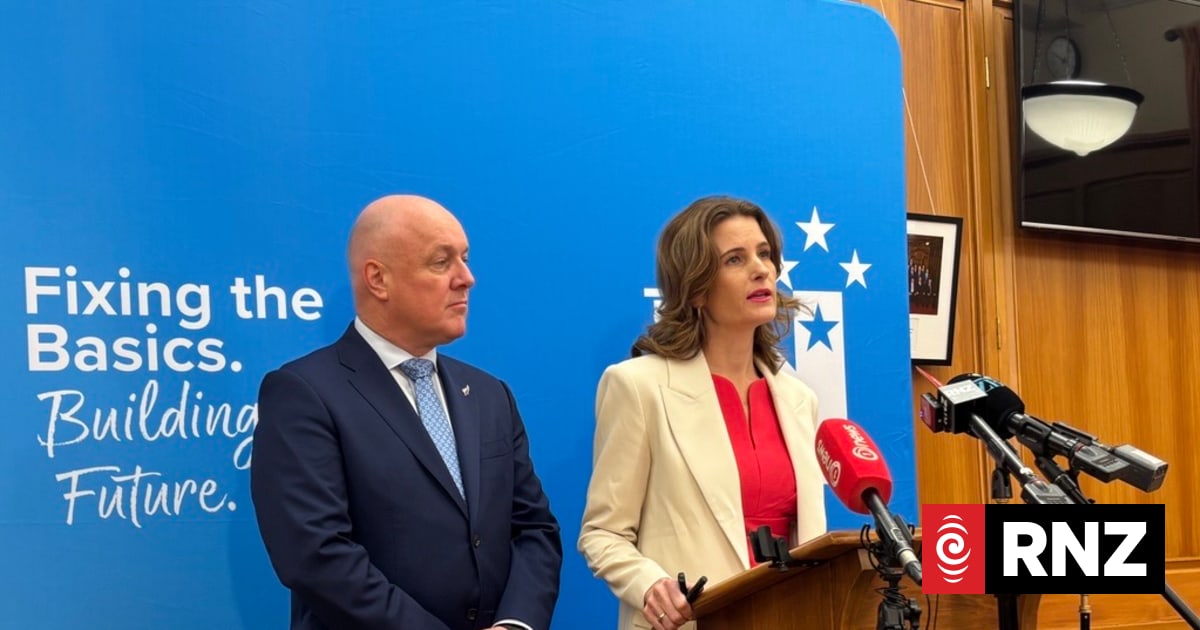
The National Party are calling on Labour, the Greens and Te Pāti Māori to release their plans to get New Zealand back into surplus.
The party has committed to three so-called Budget Responsibility Rules aimed at returning to surplus, cutting debt and keeping taxes low, and promise to adhere to them if re-elected as a bulwark against economic shocks.
National leader Christopher Luxon said an economy that cannot support itself was both a financial and strategic risk.
“If the Crown’s own books aren’t in order, the whole country stays exposed and vulnerable to major shocks here at home and abroad.”
Luxon said the government had historically carried less debt than other developed countries as a buffer against crises, but that buffer had “eroded considerably.”
“Rebuilding it is what allows a future government of whatever colour to meet the next earthquake, the next pandemic, the next global disruption without a fiscal crisis on top of the actual crisis it has to deal with,” he said.
The Budget Responsibility Rules
Prioritising a return to surplus in 2028/29 and staying in surplus over time so the country’s debt curve bends downGetting debt down below 40 percent of GDP and keeping it there over timeKeeping taxes low by cutting Crown expenditure as a share of the economy down towards 30 percent of GDP
Finance spokesperson Nicola Willis said those rules were the “fiscal guard-rails” her party intended to follow, and it “well past time” for parties to set out their own.
“I accept the premise that says they are not yet in a position to provide a detailed fiscal plan, however, they should be well able to say whether they will commit to these three basic things that have informed the fiscal strategies of successive governments and which represents what it is to be a responsible fiscal manager,” she said.
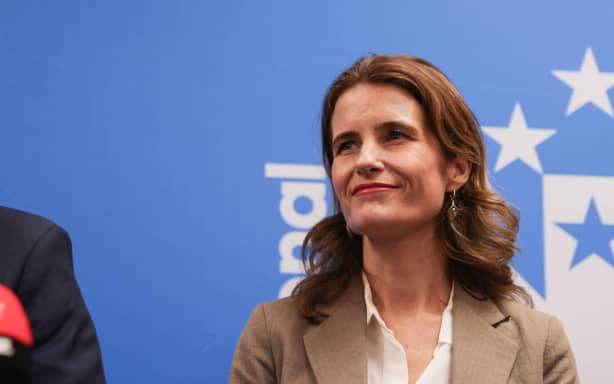
National’s finance spokesperson Nicola Willis.
RNZ/Samuel Rillstone
Willis said it was “striking” to her that Labour and the Greens set out their own fiscal rules leading up to the 2017 election but had not yet released theirs.
“As I stand here today I am not even aware whether they believe a surplus target is appropriate where they think debt should be or whether or not they believe that we need to reduce core crown spending in order to keep taxes low. “
“Those are very basic questions and they do form the parameters for National’s campaign.”
Asked if National would commit to not imposing new taxes if elected, Willis said there would be “no new taxes on working people”.
Pushed again, she said the party’s tax policies would be released over the course of the election.
“Listen to me very carefully, no new taxes on working people… what New Zealanders can expect is no new taxes on their work, their savings, their investments or their capital,” she said.
Budget 2026 forecasted a return to a budget surplus in 2028/29 from a mix of an increased tax take, controls on government spending, capital projects and a reduction in borrowing and debt service costs.
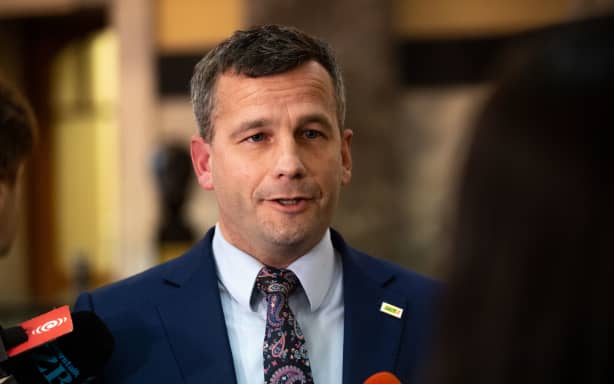
ACT leader David Seymour.
RNZ / Baz Macdonald
Three years too late – ACT’s Seymour
ACT leader David Seymour said National’s promise to follow the rules was three years too late.
In a statement, Seymour said saving money took courage.
“Reducing spending to 30 percent of GDP sounds impressive, but [former Labour finance minister] Grant Robertson spent only 28 percent in his first two budgets before he lost all control during Covid. Today the government is spending 32.6 percent of GDP and isn’t forecast to go below 30 this decade.
“Achieving 30 percent of GDP will take real courage to face down the causes of higher spending. They are rising superannuation and health costs, rising welfare costs, and the size and complexity of cabinet and government departments.”
Seymour said his party had a track record of taking on hard issues, pointing to changes to pay equity and the school lunch programme.
“National wanted to spend $380 [million] on a medical school, we negotiated it down to $80 million. They wanted to spend $250 million on electric car chargers, we got it down to a repayable loan of $60 million. National wanted to pay out $375 million in tax credits for fuel, even if the price went back down.
“ACT may still save the taxpayer hundreds of millions more with the sensible suggestion that the payments end when fuel prices normalise.”
He said ACT “killed” three new taxes while in government.
“Without ACT we would be seeing taxes on housing, tourism and banks that are all ultimately paid by New Zealanders and their businesses. Controlling spending is only half the equation, controlling taxes is the other half … the taxpayer would be on the hook for billions more, but even more savings are needed,” he said.
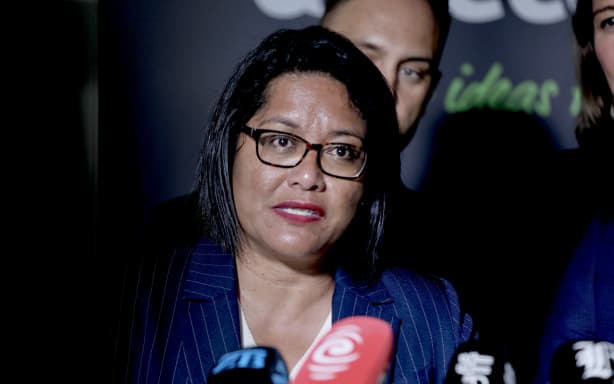
Labour finance spokesperson Barbara Edmonds.
RNZ / Marika Khabazi
Rules nothing new – Labour’s Edmonds
Labour finance spokesperson Barbara Edmonds told RNZ National’s fiscal rules were nothing new.
“That’s what is already in their fiscal strategy as a government. This just seems like it’s putting fake pressure on the rest of the political parties to try and keep up with them.”
Edmonds said Labour did have to “put the umbrella up” during the pandemic but “that’s what every government does to make sure that you can buffer an economic shock”.
“But their track record over the three years has made things worse. We have businesses in record liquidation, we have families who are having to make a choice between food or fuel.
“The government really needs to have a look in the mirror about what they’re trying to say to New Zealand, as opposed to just constantly blaming Labour.”
The party would release its fiscal strategy when it was ready.
“That’s because we are announcing it in our time, not just out of fake pressure from the National Party and Nicola Willis,” Edmonds said.

Green Party co-leader Chloe Swarbrick.
RNZ / Baz Macdonald
Rules silly and meaningless – Greens’ Swarbrick
Green Party co-leader Chloe Swarbrick told RNZ the rules were silly and meaningless.
“If all it takes for you to meet your goals is to set goals or KPIs that are completely untethered from improving people’s lives, then sure, well done, you’re hitting your bingo card,” she said.
“But people’s lives aren’t getting any better, and I think that makes you a pretty bloody irresponsible government.”
Swarbrick said the rules could stand in the way of critical infrastructure investment.
“If you’re just fixated on the headline figures without any meaningful investigation or interrogation of what it is that we’re using this debt or this spending for, where the revenue is actually coming from for the government, how equitable that actually is, then ultimately we’re kind of having a meaningless conversation.”