
“We really feel for the people we’ve had to lay off as part of this change, but it is genuinely about making our business respond to what our customers need,” Witten-Hannah said.
“Our customers want to engage with businesses differently. We’ve been digitising all parts of our customer journey for many years and this is just another step in that direction.”
Fisher & Paykel Appliances chief executive Daniel Witten-Hannah has confirmed that 44 roles have been cut.
Most affected by the layoffs was the company’s customer service team, with 31 staff cut from the business’ call centre.
Witten-Hannah said the team was reduced to about 95 staff. He said while there will always be a strong commitment to real people in New Zealand answering phones for its customers, fewer consumers want to ring up.
“This is just digital change, and I’d really like to emphasise that Fisher & Paykel is committed to New Zealand. We have around 1400 staff here. We’re the global centre for research and development, and we run our global business here.
“Part of the reason why we’re able to do this is that we continue to anticipate the future and take decisions that you need to take in order to stay competitive in a pretty tough global environment.”
Witten-Hannah couldn’t comment on cost savings from the redundancies, but said it would likely be reinvested in the business’ development.
As for how the business is utilising AI, Witten-Hannah said it was investing in AI tokens with Anthropic to help explore opportunities for efficiency.
“AI’s a growing part of many things. You look at software development, AI is assisting with that. If you look at helping consumers solve problems like how to change their clock after daylight saving, we’re using it to solve those problems.
“We’re constantly exploring opportunities where it has value. But my mindset is that this is assisting humans. I see it as an assistive technology; it helps make people more productive.”
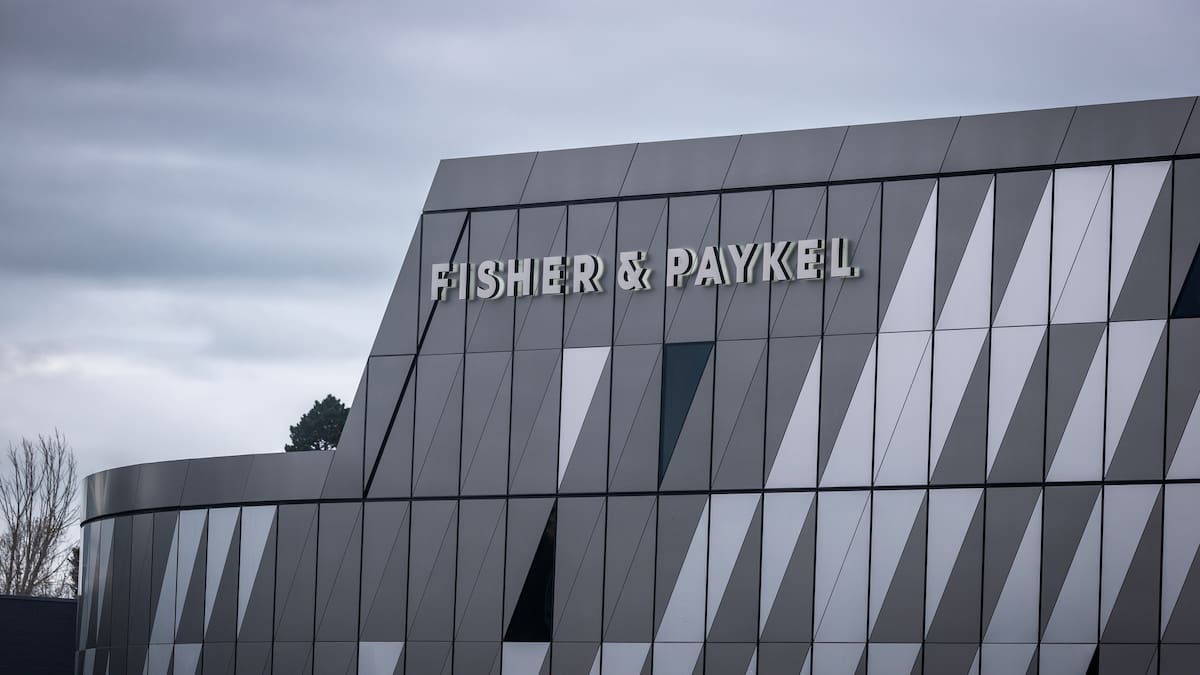
F&P Appliances recently moved into its new $220 million global headquarters in Penrose, Auckland.
The company expects to generate between $1.8 billion and $2b in revenue this financial year.
The site includes a home building for administration, research, design and product development, a shed building for appliance prototype laboratories and a garage building for employee vehicle parking and end-of-trip facilities.
Appliances are not made in New Zealand because manufacturing left here a decade ago for Thailand, China, Italy and Mexico.
Tom Raynel is a multimedia business journalist for the Herald, covering small business, retail and tourism.
Stay ahead with the latest market moves, corporate updates, and economic insights by subscribing to our Business newsletter – your essential weekly round-up of all the business news you need.