
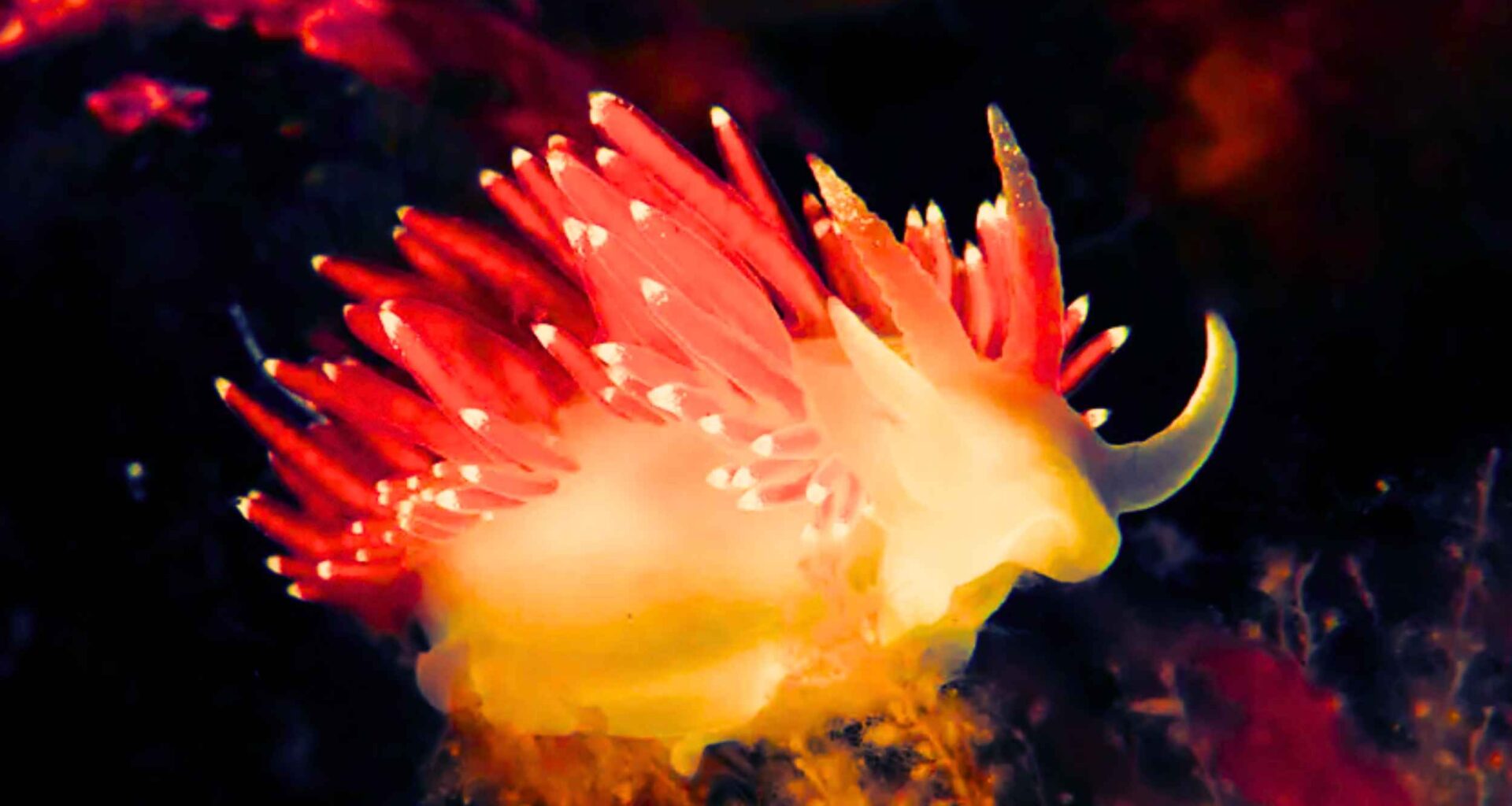
A bright red sea slug barely 0.16 inches long has created an unusual link between Caribbean marine science and the 2026 World Cup.
Researchers Jesús Ortea and Rui Freitas described two specimens collected near Havana, Cuba, and Guadeloupe.

And the name they chose? A tribute to Vozinha, the 40-year-old goalkeeper who helped Cabo Verde hold Spain to a scoreless draw in its first World Cup match.
There is one catch, though. The original work uses the spelling Aldisa vozinha, while marine databases list Aldisa vozinhai and currently consider that name unavailable under zoological naming rules.
So, what does that mean? The animal has been described, and the tribute is clear. But the proposed scientific name has not yet met all the formal requirements needed to become officially available.
A discovery years in the making
The animals were not actually found during the World Cup. Far from it.
One specimen was collected alive from pilings at Havana’s Nautical Club in November 2001. The second was found near Pointe de Malendure, Guadeloupe, in May 2012, on a rocky seabed about 26 feet deep.
Both remained in the lead author’s study collection for years.
Later, researchers examined their anatomy in detail. The material was not in perfect condition, but several features in the mouth, mantle, and feeding structures convinced them they were looking at something different. Something new.
What kind of animal is it?
So, what exactly is a nudibranch? Basically, it is a shell-less marine snail. Most people simply call them sea slugs.
Unlike the garden slugs you might see after rain, nudibranchs live in the ocean. Many also carry their breathing structures openly on their backs, which helps explain the name “nudibranch,” meaning roughly “naked gills.”
They can be surprisingly colorful. This one certainly is.
The new animal belongs to the genus Aldisa, a group of small sea slugs identified through details in their mantle, mouth, foot, and radula.
The specimen was described as glossy carmine red, with six short gill leaves and sturdy sensory organs near the head. Its back also carries low bumps that look a little like tiny floor tiles.
Under the skin, there is more going on. Small internal structures called spicules form a dense supporting network. Think of it as tiny hidden scaffolding helping give shape to a very soft body.
The anatomy behind the discovery
Color alone is not enough to identify a new species. Plenty of unrelated marine animals can look surprisingly similar. So scientists look much closer.
In this case, the researchers focused on microscopic features in the mouth and feeding apparatus. They found two tiny armored structures in the lip lining, along with a radula.
A what? A radula is a ribbon covered with tiny teeth. Sea slugs use it almost like a miniature file to scrape food from surfaces.
The teeth in this animal were described as long, thin, spatula-like structures attached to sturdy bases.
Some details were difficult to study because the preserved specimens had deteriorated over time. The vivid red color also disappeared after preservation.
After all, the entire description is based on just two tiny animals collected more than a decade apart.
Why Vozinha was chosen
This is where soccer enters the story. The proposed name honors Cabo Verde goalkeeper Vozinha, whose full name is Josimar José Évora Dias.
According to the researchers, he “stopped everything” against Spain and was named player of the match. The animal’s bright red color also reminded them of Spain’s famous nickname, La Roja.
A red sea slug. A goalkeeper facing La Roja. The connection was hard to resist. The tribute also reflects the researchers’ long relationship with Cabo Verde.
Ortea has spent years studying marine biodiversity around the archipelago. In June 2023, the Cabo Verdean government awarded him a Medal of Merit for his contributions to the study of the country’s marine life. And this is not his first soccer-inspired species name.
He previously helped name marine species after Costa Rican goalkeeper Keylor Navas and Spanish soccer legend Quini.
The match that inspired the name
Cabo Verde opened its first World Cup campaign against Spain on June 15, 2026. The result? A 0-0 draw.
Vozinha played a huge role. He made several saves and helped the African nation earn a point in its first-ever World Cup match. Quite a debut.
His strong tournament continued later against Argentina, where Cabo Verde eventually lost 3-2 after extra time.
For a 40-year-old goalkeeper appearing on soccer’s biggest stage, the performances quickly drew attention. And apparently, they also caught the eye of a marine biologist.
A name with a technical problem
Here is where things get slightly complicated. The original description repeatedly uses the name Aldisa vozinha. Marine databases, however, record Aldisa vozinhai.
More importantly, the name is currently considered unavailable under the formal rules used to name animals. Why?
Under the International Code of Zoological Nomenclature (ICZN), scientific works published only online after 2011 must meet several requirements.
Among them, the work needs to be registered in ZooBank, the official registry used for zoological names, and that registration must appear in the publication.
Marine databases currently indicate that these conditions were not met. So the problem is not necessarily the animal itself.
The researchers may still have identified a genuinely distinct species. The issue is whether the proposed name was published in a way that satisfies the formal naming code.
Small technicality? Maybe. But in taxonomy, those details matter.
Why this tiny sea slug matters
Beyond the soccer connection, the specimens could add useful information about a poorly known group of Caribbean sea slugs.
Before this work, the researchers noted that the main published Caribbean reference to the genus Aldisa was a photograph of a red specimen from Saint Vincent and the Grenadines. That is not much to work with.
Two specimens will not suddenly explain the entire group. But they do give future researchers a new set of anatomical features to compare against animals found elsewhere in the Caribbean. And there is another interesting part to this story. Scientific discovery can move very slowly.
An animal may be collected, stored for years, studied again much later, and only then recognized as something potentially new to science.
In this case, two tiny red sea slugs collected years apart eventually became linked to a goalkeeper making history on the other side of the Atlantic. Not exactly the usual World Cup story.
The main work describing the proposed species was published in Historias de la Bioadversidad 3.
Image credit: © OCEANA Carlos Minguell.
—–
Like what you read? Subscribe to our newsletter for engaging articles, exclusive content, and the latest updates.
Check us out on EarthSnap, a free app brought to you by Eric Ralls and Earth.com.
—–