
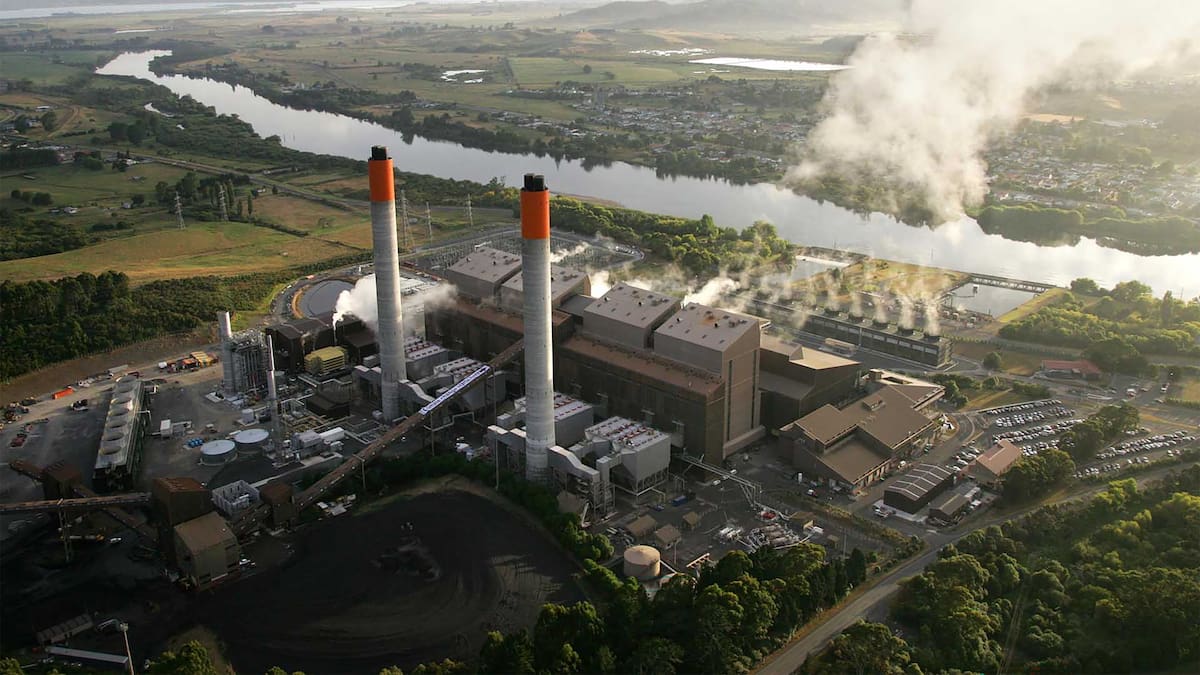
Hickman noted the gas-fired Unit 5, which normally offers continuous, or baseload power to the system, was shut down for three months in 2025.
“This year’s arrangement was supported by high hydro storage levels and an established coal stockpile at Huntly Power Station to fuel the station’s Rankine units,” she said in a statement to the Herald.
“While Unit 5 can be available with a callback period of three to five days, subject to fuel availability and market demand, the market has responded well to the system operator’s calls for additional generation during this week’s cold snap, with no impact on consumers.”
Genesis was among the generators able to offer all available generation to help meet demand.
The gas-powered Unit 5 turbine in the Huntly Power Station. Photo / NZME
“We remain open to returning Unit 5 to service subject to fuel availability and the right market conditions,” Hickman said.
Energy Minister Simeon Brown told Herald NOW last week that gas from Unit 5 had been transferred to fertiliser co-op Ballance.
He said Unit 5 and other gas-fired units being out of action had brought challenges to the system.
Forsyth Barr, in a research note, said July was a strong start to the 2027 financial year for the electricity sector.
Analysts Andrew Harvey-Green and Hugh Lockwood said the system navigated a cold spell at the end of July and into early August, during which peak demand reached new all-time highs on three separate occasions.
“While national hydro storage remains exceptionally strong at 139% of average, North Island hydro generation was modestly below average over July, and Mercury’s Lake Taupō storage at 106% of average is currently the lowest among the country’s major hydro lakes,” they said in a report.
With El Nino conditions expected to emerge over the coming months, North Island hydro inflows may be below average.
Cold weather across the country led to electricity demand reaching a new all-time peak of 7463MW during the morning of August 6.
Wholesale prices spiked, with the national average exceeding $3500/MWh in one trading period, but the system was able to meet demand even with Huntly Unit 5 offline and Contact’s Taranaki Combined Cycle station no longer available.
“Even when a Huntly Rankine tripped during the evening peak on August 4, the lights stayed on,” Harvey-Green and Lockwood said.
Some generators have “demand-response” agreements with big power users, who can pare back their usage when the system is stretched.
“Although periods of tight residual generation reinforce the need for continued investment in capacity and demand response, the system’s performance during this cold spell demonstrates it is operating effectively even as the share of intermittent renewable generation continues to increase,” Forsyth Barr said.
Jamie Gray is an Auckland-based journalist, covering the financial markets, the primary sector and energy. He joined the Herald in 2011.
Stay ahead with the latest market moves, corporate updates, and economic insights by subscribing to our Business newsletter – your essential weekly round-up of all the business news you need.