
However, its Soy & Linseed Toast was noted as one to avoid, as it had lower levels of fibre per 100g than some other brands.
So what should we be looking out for when buying bread at the supermarket?
One improvement in supermarket pre-packaged loaves has happened without most of us noticing – reduced salt levels. According to the Heart Foundation, which has been working in partnership with bread companies since 2007 to gradually reduce the sodium in our loaves, a standard white sliced loaf today contains around 25% less salt than it once did.
Dave Monro, the Heart Foundation’s chief advisor food and nutrition and the co-author of a newly published paper in the Nutrients journal, said the change has happened gradually, meaning consumers haven’t detected any difference.
“This is consistent with research that demonstrates when sodium levels are reduced gradually by 10–20%, consumers don’t detect the change and there is good consumer acceptance,” Monro said.
Lower salt intake is a key factor in reducing high blood pressure, which is a major risk for heart disease. The paper says Kiwis are consuming 70% more than the recommended daily intake of salt, with bread being the leading source of salt in many of our diets.
Aside from lower sodium levels, what else should we be looking for when buying bread from the supermarket?
To help decode the shelves, the Herald asked two registered dietitians – Julia Sekula and Lily Henderson from Dietitians New Zealand – what really matters when choosing a loaf. Their answers may surprise you.
What makes bread ‘healthy’?
Sekula said it starts with the basics.
“If your household adds bread to the trolley each week, swapping to a product with more fibre and wholegrains can make a real difference to the quality of your diet.”
She suggested using the nutrition information panel and comparing products by the 100g column rather than the per-slice values.
“Aim for at least 5g of fibre per 100g – more than 7g is excellent – and choose an option with less sodium per 100g.”
Wholegrain ingredients should sit near the top of the list on your supermarket loaf for a healthier choice. Photo / Aileen Son, The New York Times
Henderson added that ingredients matter more than buzzwords.
“Look for wholegrain ingredients first or near the top of the list. That shows the bread is mostly made from wholegrains rather than refined white flour.”
Wholegrain versus multigrain
Despite sounding similar, the two aren’t interchangeable.
“Under the Food Standards Code, wholegrain bread must contain the entire grain – bran, germ and endosperm – or in their original proportions,” Henderson said.
“Wholemeal bread is a type of wholegrain bread made from milled wholegrains, whereas multigrain isn’t defined in the Code. A manufacturer can add a small amount of grains to white bread and still call it multigrain.”
In short: multigrain may look healthy, but check the fibre numbers before you assume it is.
Don’t fall for the label
Not everything that sounds virtuous delivers.
“Marketing terms like ‘artisan’, ‘stone-ground’, ‘organic’, ‘sourdough’ or ‘light’ don’t automatically mean the bread is healthier or higher in wholegrains,” Sekula said.
Colour can also mislead. “Some darker breads turn brown due to ingredients like malt extract or molasses, not from extra wholegrains.”
And those fancy toppings?
“Seed toppings can add nutrients but don’t guarantee that the bread underneath is wholegrain – it might still be made from refined white flour.”
Sourdough bread can be easier to digest but wholegrains is where the nutrition is at. Photo / 123rf
The truth about sourdough, protein and low-carb
Trendy doesn’t always mean better.
“Sourdough can be easier to digest for some people because the longer fermentation breaks down parts of the gluten and some FODMAPs,” Henderson said. “But nutritionally, it’s not automatically higher in fibre or nutrients unless it’s made with wholegrains.”
Buying freshly baked sourdough – or making your own – is the best option for gut health, as it’s not processed unlike most supermarket-bought pre-packaged loaves.
As for the “high-protein” craze?
“Bread is primarily a carbohydrate food,” she said. “These loaves often cost more but provide only a modest protein boost – around 4-5g per serve. You’ll get better-quality protein from what you eat with the bread, like eggs, peanut butter or lean meat and salad.”
Sekula said low-carb options are rarely worth the price tag.
“It’s better to focus on fibre, sodium and wholegrain content rather than the carbohydrate number. If you want fewer carbs, choose smaller slices or open sandwiches instead of paying more for a label.”
Unless you have an intolerance to gluten, there’s not a lot of point to going gluten-free.
Gluten-free isn’t automatically healthier
Unless you have coeliac disease or a diagnosed gluten intolerance, gluten-free bread isn’t necessary – and often not as nutritious.
“Many gluten-free breads aren’t as good as regular wholegrain options, although there are more choices now than 10 years ago,” Henderson said.
“If you need to eat gluten-free, look for wholegrains in the ingredients list, more fibre and less sodium per 100g. But if you don’t, a wholegrain or wholemeal loaf will generally offer better overall nutrition and value.”
The best bread for families
Getting kids to eat bread with “bits” in it can be a battle, but there’s a middle ground.
“As parents, we all know there’s no point buying the healthiest loaf on the shelf if it comes home uneaten,” Sekula said.
“The happy middle is often a softer wholemeal or mixed-grain bread, where the grains are more finely milled or broken down. These still provide a good amount of fibre without the heavy texture of a dense wholegrain loaf.”
She also suggested mixing it up: “Variety benefits kids. Try wholegrain wraps, wholemeal rolls or pita bread – it’s all about finding a balance your family will actually enjoy eating.”
White vs brown
The old “white bad, brown good” rule doesn’t hold up.
“It’s not that simple,” Sekula said. “We need to move away from seeing foods as ‘good’ or ‘bad’ and think about how they fit into an overall balanced diet.”
She noted that some modern white-style loaves are surprisingly decent.
“These days, some white-looking breads are made with clever food science. They look and taste like white bread but still provide fibre. It’s worth checking the label rather than judging by colour.”
If you want one takeaway, both Henderson and Sekula agreed, keep it simple:
“Choose a wholegrain bread your family enjoys and that fits your budget. The best bread is one you’ll actually eat – ideally with a good source of fibre, lower sodium and real grains you can see.”
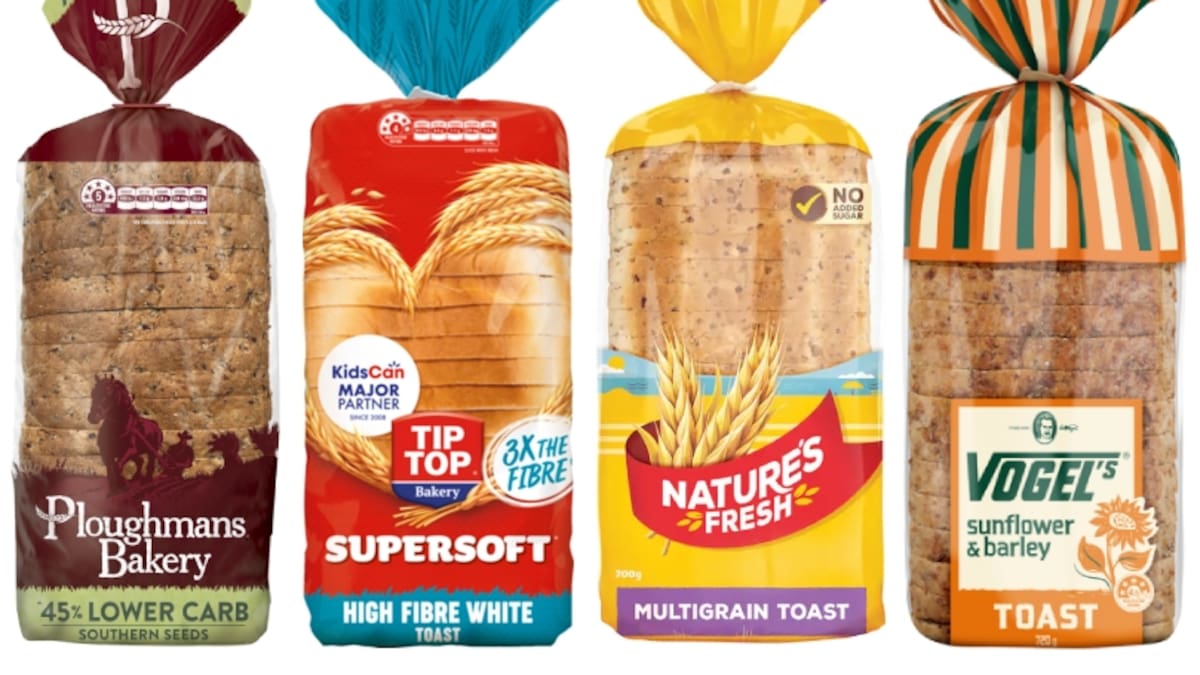
These bread brands are a healthier choice thanks to higher fibre and lower sodium. Photo / Herald composite
Four bread stars
Higher fibre, wholegrain-focused or moderate in sodium – all verified using manufacturer nutrition panels.
Ploughmans Southern Seeds Lower Carb – 12.2g fibre, 336mg sodium. Very high fibre for a soft loaf and moderate in sodium. A strong all-round option.
Tip Top Supersoft High Fibre Toast – 7.3g fibre, 378mg sodium. Looks like classic white bread but delivers wholemeal-level fibre. Great for households who prefer softer styles.
Ploughmans Farmhouse Wholemeal – 7.1g fibre, 375mg sodium. A dependable wholemeal loaf with excellent fibre numbers and a familiar taste.
Vogel’s Sunflower & Barley Toast – 6.5g fibre, 350mg sodium. A wholegrain staple with solid fibre and slightly lower sodium than many grainy breads.
Supermarket bread that doesn’t meet its nutritional claims. Herald composite
Four breads worth checking the label on
These aren’t “bad” choices – but the fibre or wholegrain content may be lower than the name or colour suggests.
Nature’s Fresh Multigrain Toast – 4.2g fibre. Grains make up only 13%; despite the name, it’s mostly refined white flour.
Vogel’s Original Mixed Grain (Very Thin / classic) – 4.5g fibre, 375mg sodium. A popular multigrain loaf, but not as high in fibre as others in the Vogel’s range.
Ploughmans Harvest Rye – 4.7g fibre, 410mg sodium. Dark colour partly comes from roasted barley malt, not wholegrain rye. Fibre is modest.
Tip Top Oatilicious Toast – 4.0g fibre, 380mg sodium. Sounds wholesome and looks grain-dusted, but sits below the dietitians’ fibre benchmark.
Herald contributor Nikki Birrell has worked in food and travel publishing for nearly 20 years.
This story was originally published in November 2026 and has been updated.