
“He wasn’t too deterred about anything,” he said.
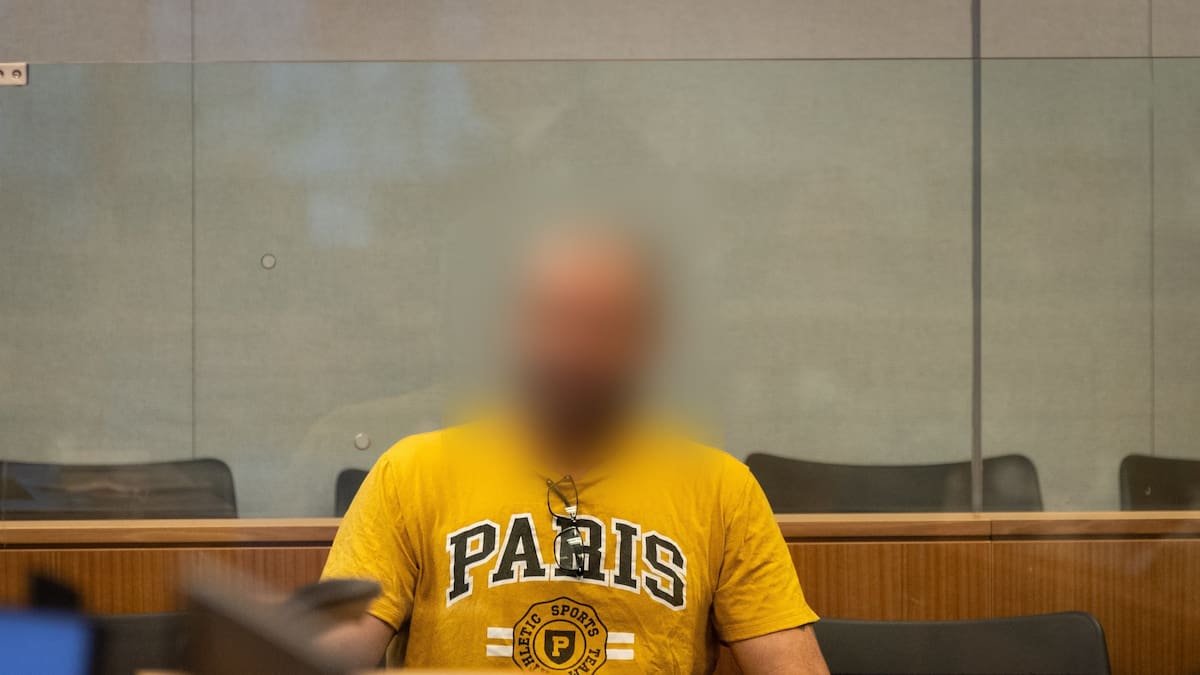
The defendant, who has name suppression, has acknowledged through his lawyers that he beat Judith Rose Cunniffe, 53, to death on the evening of April 10 last year outside the rural South Auckland boarding house where she lived.
But they say the 51-year-old had no murderous intent and should instead be found guilty of manslaughter.
The witness, who wore a long black Western-style duster coat and styled the back end of his grey mullet into a bun as he sat in the witness box, said he “had a little puff” of methamphetamine with the defendant and others in the home not long after the “sorted out” comment.
Moutray said he asked about the whereabouts of some methylated spirits that had been in another bedroom and the defendant explained he had used the cleaning solution to wipe blood off a car.
“I didn’t really think that much of it either,” Moutray said.
About an hour or so later he finally realised it had been no joke when the defendant showed him Cunniffe’s body stuffed into her own car, he told jurors. The revelation came about, he said, when he asked the defendant how Cunniffe was getting along with a possum trap she had put in a nearby tree.
“Oh, I’m not sure but I’ve got a big possum in the back of that car,” he recounted the defendant saying before he opened the back door to Cunniffe’s car and her limp hand spilt out.
The victim had been stuffed upside down in the back, with her head in the footwell behind the driver’s seat, Moutray recalled. She was still wearing the colourful gloves she always put on to feed her chickens, he said.
Prosecutors said at the outset of the trial that Cunniffe and the defendant had clashed repeatedly over his dog chasing her chickens, to the point that the defendant had been trespassed.
Crown prosecutor Chris Howard. Photo / Michael Craig
Cunniffe was described by prosecutors as an animal lover whose interest in chickens had crossed the line to hoarding as her methamphetamine usage increased. She would often sleep in her car at the property while chickens stayed in her room, jurors were told.
“If you knew Judy Rose, you don’t get near her ducks or her chickens and cause any harm to them; otherwise, you’re in the s***,” said Moutray, who figured he knew both Cunniffe and the defendant for “30-odd years”.
He had arrived at the property at around lunchtime that day and had used a connection to get the defendant a half gram of methamphetamine for $150, he recalled.
Shortly after the drug was delivered, Cunniffe came into the room and pushed another woman who lived there off of her chair, the witness said, explaining that Cunniffe was livid because she thought the other woman had put her chooks in cages then neglected to feed them.
“Calm down, Judy Rose, and have a puff,” Moutray recalled telling her.
A man with name suppression appears in the High Court at Auckland after Judith Cunniffe was found dead inside a vehicle in Waiuku in April 2025. Photo / Michael Craig
Cunniffe initially declined but then took the pipe and smoked all of the remnants, he said. Then she took what was left in the bag after finding out the defendant had paid for it, he said.
“He’s ripped me off enough – I’m taking that bag,” he recalled her saying as she left.
After realising the defendant was at the house, Cunniffe said she was going to ring the police and get his dog destroyed, the witness said.
Police did show up at the house later looking for the defendant, but he hid under a bed with his dog and police never found them, Moutray said.
He recalled leaving the house at about 6.30pm to do chores in Pukekohe, including picking up a methadone prescription for the other female resident. He saw Cunniffe sitting in her car as he left, he said.
“I know he’s in there, Davey,” he recalled her telling him. “When he comes out I’m going to take a photo and send it straight to police. I’ll see you when you get back.
“She seemed quite happy, knowing that he was there and she was going to snap him.”
He returned to the home about five hours later and smoked more meth before going inside, at which point he said the defendant first mentioned the killing then showed him the body.
“Something to do with her head didn’t look right,” he said. “To me, it looked like a soccer ball that was flat and pushed in. I didn’t look too much harder.”
After that point, he said, “things turned a little surreal” and “got a little bit fragmented” as he spent the rest of the night with the defendant and others until sunrise, continuing to use drugs.
“I thought, ‘Oh, he might have a gun or something like that,’” he said of not calling 111. “I just wanted to make sure he was gone and everyone was safe.”
Defence lawyer Sacha Norrie pointed to numerous inconsistencies between Moutray’s testimony and the three statements he gave police in the weeks following Cunniffe’s death. His testimony also differed at points with two other witnesses who were there that night.
“I didn’t see any obvious injuries and I didn’t see any blood,” he initially told police of Cunniffe’s body, mentioning nothing about a football.
Norrie suggested her client was “quiet and subdued” that night. She cited one of Moutray’s own police statements.
She also suggested that the witness was lying about hearing the defendant say he “sorted that c*** out” or making a joke about a possum in the back of the car.
“You have a good reason to exaggerate or put the boot in – to cover your own backside,” Norrie told the witness, suggesting that he was the one repeatedly suggesting ways to dispose of the body while her client remained quiet that night.
“That’s hideous,” he replied. “I don’t agree at all.”
Norrie called him the “ideas man” after discovering the body. He had his own violent history with Cunniffe, she suggested, and didn’t want the body found because it could lead police to suspect him.
“You invented or amped up the things [the defendant] had said,” she suggested.
Annoyed, the witness said he wasn’t going to justify the question with an answer. Justice Simon Mount said he had to.
“Bull****,” the witness muttered eventually in response to the question. “What was there to amp up?”
Justice Simon Mount. Photo / Dean Purcell
Moutray’s testimony lasted all but the last 30 minutes of the day. Prosecutors then called witness Miriam Snook, who met Moutray the day after Cunniffe’s death.
“He was distraught,” she said of Moutray. “He was just crying a lot – freaking out.”
She recalled Moutray saying the victim’s “face was caved in” and how the defendant seemed “proud of it”.
That same day she tried to reach her nephew, who is a police officer, she said. She went to police in person later that day, encouraging Moutray to go with her but he never showed, she said.
The trial continues today.
Craig Kapitan is an Auckland-based journalist covering courts and justice. He joined the Herald in 2021 and has reported on courts since 2002 in three newsrooms in the US and New Zealand.